


How can we optimize pellet quality using a wet pet food processing machine?
Leave a message
content
Improving Water Resistance: Enhancing Pellet Binding. Fish feed needs to be stable and not disintegrate in water, with a water resistance of at least 6 hours.
Optimization Technique 1: Improve starch gelatinization by adjusting the extrusion temperature of the wet fish feed pellet processing machine (increasing it to 140-160℃) and extending the residence time of the raw material in the extrusion chamber (reducing the screw speed to 220-250 r/min) to ensure full starch gelatinization and enhance pellet binding.
Technique 2: Add binders. Add appropriate amounts of sodium carboxymethyl cellulose (CMC, 0.5%-1%) or guar gum (0.3%-0.5%). These binders can form a stable network structure in a wet extrusion environment, improving pellet water resistance.
Technique 3: Optimize the cooling and drying process. After pellet discharge, they should be cooled to room temperature by a cooler (to avoid direct storage of hot pellets leading to moisture regain), and then the moisture content should be reduced to 10%-12% by a dryer. The drying temperature should be controlled at 80-100℃ to avoid high temperatures damaging nutrients. For example, when producing grass carp feed, after adjusting using the above techniques, the water resistance of the pellets increased from 4 hours to 10 hours, and the feed waste rate decreased by more than 20%.
Controlling Pellet Uniformity: Precisely controlling the forming process. Uneven pellet size leads to uneven feeding by fish, affecting the uniformity of growth. Optimization Technique 1: Precisely select the die head. Choose a die head with a corresponding aperture according to the fish size. The die head aperture error should be controlled within ±0.2mm. Ensure a tight seal during installation to prevent material leakage and pellet deformation. Technique 2: Adjust the cutting speed of the wet floating fish feed machine. The cutting device speed should be coordinated with the screw speed. For a 100kg/hour model, the cutting speed should be controlled at 200-300r/min. Too fast a speed results in pellets that are too short, and too slow a speed results in pellets that are too long. Adjustments can be made through trial production to ensure that the pellet length is 1.5-2 times the aperture (e.g., a 4mm die head corresponds to a pellet length of 6-8mm). Technique 3: Ensure uniform feeding. Stabilize the feeding speed using a vibrating feeder to avoid fluctuations in extrusion pressure caused by inconsistent feeding speed, which in turn affects pellet size. For example, when producing starter feed for fish fry, a 1mm die head is used, with a cutting speed of 250 r/min and a feeding speed of 60 kg/h, achieving a particle uniformity of over 95%.
Improving palatability: Enhancing fish's feeding desire. Poor palatability leads to low feed intake and reduced feed utilization. Optimization techniques: 1. Control the particle size of raw materials: Grind raw materials to 100-120 mesh. The finer the particle size, the more uniform the mixing, resulting in better palatability for fish. 2. Add attractants: Add appropriate attractants for different fish species, such as fish paste (3%-5%) for carp and shrimp shell powder (5%-8%) for bass. Attractants should be added during the raw material mixing stage to ensure even distribution. 3. Control particle hardness: Adjust the extrusion pressure (3-5 MPa) and die head aperture of the wet fish feed extruder machine to control particle hardness at 15-25 N. Moderate hardness avoids difficulty for fish to eat and reduces breakage during transportation.
Related equipment
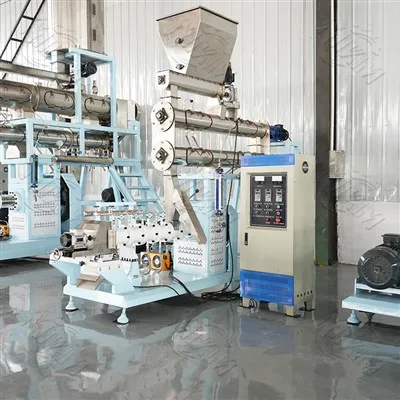


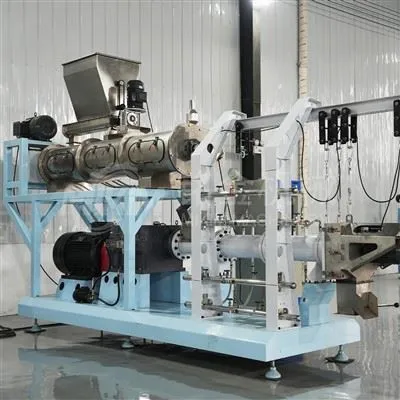
about Us
MIKIM's fish feed pellet production lines and supporting machinery offer excellent value for money. Not only are they affordable, eliminating middlemen markups and allowing small and medium-sized enterprises (SMEs) and fish farmers to purchase complete sets of equipment at reasonable costs, but they also boast exceptional efficiency. The fully automated process, from raw material crushing and precise ingredient mixing to extrusion pelleting and maturation, is completed in one continuous flow. This results in high starch gelatinization rates and uniform pellet formation, significantly improving production efficiency and feed quality, truly achieving "low cost, high output." Choosing a MIKIM fish feed pellet production line means enjoying comprehensive pre-sales and after-sales service, including 24-hour online customer support, a one-year warranty on the entire machine, professional on-site installation, commissioning, and maintenance, and a stable supply of spare parts. Customers can buy with confidence and use with peace of mind, with both excellent value and service quality!!!
Customer visit

Certificate of Honor

FAQ
1. What is the price of the single screw floating fish feed machine?
The price ranges from approximately $1,500-$55,000
2. Do you provide maintenance services for your customers?
Yes, we offer comprehensive after-sales maintenance services to our customers.
If you would like to learn more about MIKIM machinery, please contact us. We offer one-stop service and welcome your inquiries!!!


