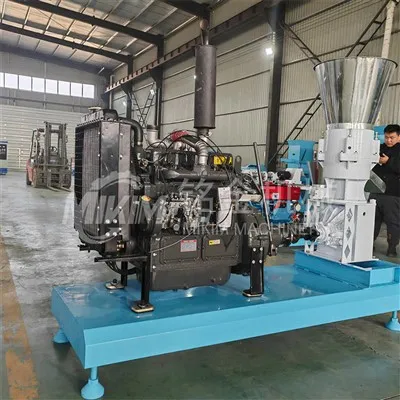
How Pellet Feed Machines Batch Feed: Weighing and Mixing
Leave a message

What Is Batch Feeding in Pellet Feed Production?
Batch feeding is the automatic weighing-and-mixing cycle used by pellet feed machines to produce feed by recipe. In each batch, ingredients are weighed against the active formula, blended into a uniform mixture, and released to the next process stage; the cycle then repeats, batch after batch, under sequence control. Understanding the operating characteristics of the batching and mixing processes is the precondition for planning and designing the automatic control system that runs them, and it is equally important for operators who manage the line day to day.
Operating Characteristics the Control System Must Handle
Six characteristics shape a correct batching design. Sequenced batch operation: each batch moves through the process steps in a defined order, with self-locking and interlocking between machines, so a machine cannot start before its upstream feeder has delivered, and downstream machines stop if upstream feeding fails. Material-difference compensation: materials with different particle sizes, bulk densities, and moisture contents weigh differently on the same scale, so the control system compensates for flow characteristics, such as dribble-feeding at the end of weighing, to hold accuracy within specification, typically plus or minus 0.1% to 0.5% of the target weight. Formula flexibility: formulas change often with user requirements and raw-material inventory, so the system stores multiple formulas with one-key recall and audit logging. Accuracy guarantee: regular scale calibration and check-weighing of micro ingredients are part of routine operation. Level monitoring: real-time bin-level supervision prevents empty-bin and overflow conditions. Production data: batching and mixing records are essential for production management, inventory control, raw-material management, and per-batch traceability.
Typical Small-Line Batching and Mixing Units
| Capacity | Installed Power | Typical Dimensions |
|---|---|---|
| 100-200 kg/h | 15 kW | 1120 x 440 x 1060 mm |
| 200-300 kg/h | 22 kW | 1280 x 560 x 1220 mm |
| 300-400 kg/h | 30 kW | 1300 x 600 x 1250 mm |
| 400-600 kg/h | 37 kW | 1390 x 650 x 1290 mm |
| 600-800 kg/h | 45 kW | 1620 x 700 x 1600 mm |
The values above are typical figures for small-line batching and mixing units; confirm the exact capacity, power, and footprint with the equipment supplier for the chosen configuration.
Why Automatic Batching Matters for Feed Quality
Accurate batching is the foundation of feed quality. Even small weighing errors in micro ingredients, such as premixes, minerals, and additives, cause nutritional imbalance and inconsistent animal performance. Automatic batching delivers repeatable precision, formula flexibility, and per-batch traceability: the control system records every batch's weighing and mixing data, which supports quality management and lets a mill trace any quality issue back to its production run. For operations that make finished feed or semi-finished premixes, these records connect directly to inventory and raw-material management.
Planning Your Batching and Mixing System
When planning or upgrading a batching system, confirm four items with the supplier before design begins: the number of ingredients and material bins the recipe set requires, the batching accuracy each ingredient needs, the formula storage capacity the mill wants, and how the system will integrate with the plant's production-management software. Small farms and mills should match the unit's capacity range to their peak hourly demand, leaving headroom for seasonal variation, and should budget for routine calibration equipment, because an uncalibrated scale quietly erodes the accuracy the whole system was designed to deliver.
FAQ
What does batch feeding mean in feed production?
Batch feeding is an automatic weighing-and-mixing cycle: ingredients are weighed per formula, blended uniformly, and released to the next process, repeating batch after batch under sequence control.
How accurate must batching be?
Typical batching accuracy is plus or minus 0.1% to 0.5% of the target weight. Micro ingredients such as premixes and additives demand the tightest control, supported by dribble-feed compensation and regular scale calibration.
What is material-difference compensation?
Different materials flow and weigh differently because of particle size, bulk density, and moisture. The control system compensates for these flow characteristics, for example switching to a slow dribble feed at the end of weighing, to keep accuracy within specification.
Why do batching machines need interlocking?
Interlocking enforces the process sequence and protects equipment: a machine cannot start until its upstream feeder has delivered, and downstream machines stop if upstream feeding fails, preventing jams and material buildup.
What capacity range is typical for small-line batching units?
Small-line units commonly span 100-200 kg/h at 15 kW up to 600-800 kg/h at 45 kW, with dimensions in the range of roughly 1.1-1.6 m long, 0.44-0.7 m wide, and 1.06-1.6 m high.
How is per-batch traceability achieved?
The control system records every batch's weighing and mixing data, including formula, ingredient quantities, and timing, linking each batch to its production run for quality management and recall purposes.