How Does a Pet Food Extrusion Machine Work
Leave a message
content
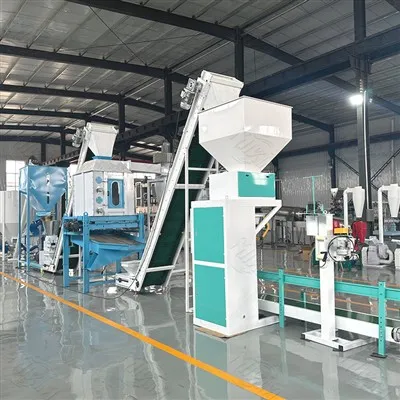
The core function of pet food extrusion equipment is to "generate high temperature and pressure through screw extrusion to achieve raw material maturation and puffing." The complete workflow can be divided into four key stages: feeding and conveying, extrusion maturation, puffing, and cutting and trimming. In the first stage, feeding and conveying, uniformly mixed raw materials (corn flour, soybean meal, meat meal, etc.) enter the extruder through the feeding hopper. The feeding screw pushes the raw materials to the extrusion chamber at a stable speed. The core function of this stage is to ensure a continuous and uniform supply of raw materials, avoiding sudden pressure changes in the extrusion chamber due to interrupted feeding, which would affect the maturation effect. Small pet food extruders often use manual or small automatic feeding devices, while large production lines are equipped with intelligent feeding systems that can adjust the feeding speed in real time according to the pressure in the extrusion chamber.
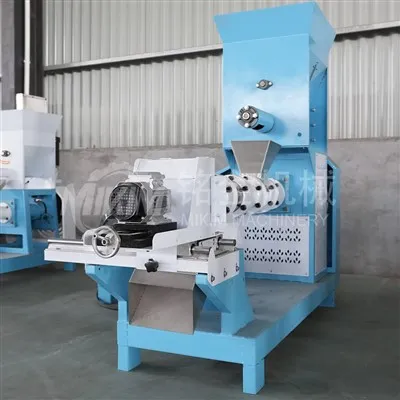
The second stage, extrusion maturation, is the core of the cat food extrusion machine's operation. After entering the extrusion chamber, the raw materials are subjected to strong friction and shearing forces between the screw and the inner wall of the extrusion chamber under the high-speed rotation of the screw (300-600 r/min). Simultaneously, the raw materials are continuously compressed within the confined space, gradually reducing their volume. The heat generated by friction and compression rapidly raises the temperature of the extrusion chamber to 120-160℃, with pressure reaching 3-8 MPa, creating a high-temperature, high-pressure environment. Under this environment, the starch granules in the raw material absorb water, swell, and gelatinize (gelatinization rate exceeding 85%), while the protein molecular structure denatures, making it easier for pets to digest and absorb. Simultaneously, the high temperature kills over 99% of harmful bacteria such as Salmonella and E. coli, ensuring pet food safety from the source.
In the third stage, extrusion molding, the cooked raw material, continuously pushed by the screw, reaches the die at the end of the extrusion chamber and is extruded at high speed through the small orifices on the die. The raw material is suddenly released from the high-temperature, high-pressure, sealed environment to a normal-pressure environment, causing the internal moisture to instantly vaporize and expand, forming a porous, loose granular structure. The die orifice diameter can be changed (2-8mm) to suit the feeding needs of pets of different sizes.
The fourth stage involves cutting and trimming. The extruded pellets, fresh from the die, are at a high temperature (60-80℃) and vary in length, requiring cutting by a rotary cutter配套 with the small pet food extrusion machine. The cutter speed can be adjusted according to production speed to ensure uniform pellet length (typically 3-5mm). After cutting, the pellets enter a cooling and drying process to remove excess moisture (reducing the moisture content to below 12%), ultimately forming a crispy and palatable finished pet food product. Throughout the entire process, the extruder achieves "cooking, sterilization, and shaping" in one integrated mechanical action, eliminating the need for additional preservatives and making it a key piece of equipment for producing high-quality dry pet food.
Related equipment


about Us
MIKIM's fish feed pellet production lines and supporting machinery offer excellent value for money. Not only are they affordable, eliminating middlemen markups and allowing small and medium-sized enterprises (SMEs) and fish farmers to purchase complete sets of equipment at reasonable costs, but they also boast exceptional efficiency. The fully automated process, from raw material crushing and precise ingredient mixing to extrusion pelleting and maturation, is completed in one continuous flow. This results in high starch gelatinization rates and uniform pellet formation, significantly improving production efficiency and feed quality, truly achieving "low cost, high output." Choosing a MIKIM fish feed pellet production line means enjoying comprehensive pre-sales and after-sales service, including 24-hour online customer support, a one-year warranty on the entire machine, professional on-site installation, commissioning, and maintenance, and a stable supply of spare parts. Customers can buy with confidence and use with peace of mind, with both excellent value and service quality!!!
Customer visit

Certificate of Honor

FAQ
1. What is the price of the fish feed making machine?
The price ranges from approximately $1,500-$55,000
2. Do you provide maintenance services for your customers?
Yes, we offer comprehensive after-sales maintenance services to our customers.
If you would like to learn more about MIKIM machinery, please contact us. We offer one-stop service and welcome your inquiries!!!