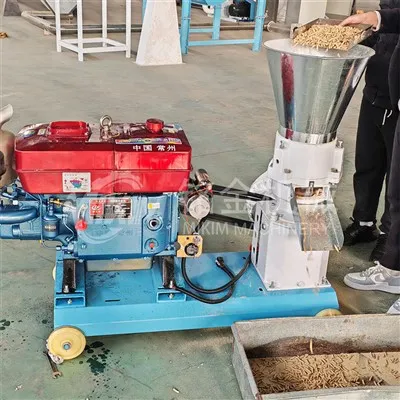
Feed Pellet Equipment Maintenance: Internal Cleaning, Scheduling and Operator Checks
Leave a message
Why Feed Pellet Equipment Maintenance Is Often Done Wrong
Many plants limit maintenance to surface cleaning and never open the machine. In reality, feed production equipment accumulates dust, impurities and residue inside conveyors, mixers, hammer mills, coolers and the pellet machine, where it affects both operation and product quality. Three misconceptions drive most maintenance failures: that cleaning the outside is enough, that maintenance always costs production time, and that maintenance is only the technician's job.
Correcting those three beliefs is the first step towards a maintenance system that actually protects the line, because each one hides a different failure path.
Beyond Surface Cleaning: Internal Cleaning and Lubrication
Surface cleaning keeps the machine presentable but does nothing for the components that do the work. During operation, dust and fine particles migrate into the conveying paths, the mixing chamber and the die area, where they combine with moisture into deposits that restrict flow, raise friction and contaminate the feed. Maintenance should therefore prioritise internal cleaning and lubrication:
Remove accumulated residue from the grinding chamber, the mixer walls and the die area
Clear conveying paths and screw housings so material cannot bridge or pack
Inspect and clean screens and hammers, replacing any that are worn or bent
Lubricate bearings and drive points according to the manufacturer's recommendations
Check seals and covers so that dust cannot re-enter a cleaned machine
Equipment that is clean internally runs cooler, draws less power and fails far less often, because the heat and friction that damage bearings and dies are removed at source.
Scheduling Maintenance Without Stopping Production
The belief that maintenance inevitably causes downtime and damages economic returns is expensive. Unplanned breakdowns are what really stop production, and they always happen at the worst possible moment. A sound plan prevents those unplanned stops by moving the work into windows that already exist.
Perform scheduled maintenance during the off-season or on night shifts when the line is not producing, so the work consumes no lost hours. Using those windows keeps disruption to a minimum and raises overall efficiency, because a well-maintained line starts clean and reaches full capacity on the first day of the busy season instead of being nursed through it.
Operators Are the First Line of Maintenance
Treating maintenance as the technician's exclusive responsibility overlooks the people who know the machine best. Operators work with the equipment every shift, so they notice unusual noise, vibration, a rise in bearing temperature or a change in pellet appearance long before these become failures.
Companies should invest in operator training so that every operator understands basic maintenance, can complete the daily checks and reports anything unusual immediately instead of running the machine until it breaks. That single habit converts a large share of potential breakdowns into planned repairs.
Building a Maintenance Plan That Works
Turn the principles into a written plan. Separate daily operator checks from weekly and monthly technician work, and record every inspection so that wear trends stay visible.
| Frequency | Owner | Main tasks |
|---|---|---|
| Daily | Operator | Visual check, listen for noise, feel for vibration, clean residue, confirm lubrication points |
| Weekly | Technician | Inspect screens and belts, check bolt torque, review die wear, examine electrical connections |
| Monthly | Technician | Bearing lubrication, drive alignment, ammeter trend review, spare part stock check |
| Off-season | Maintenance team | Full inspection, die and hammer replacement, gearbox oil change, calibration |
Keep an inspection log for each machine so that replacement parts can be ordered before a failure occurs, and stock the consumables that stop production when they break, such as screens, hammers, dies and belts. Finally, review the plan with the operators who execute it, because a plan that does not fit the shift pattern will be quietly ignored.
Frequently Asked Questions
Q: Is cleaning the outside of the machine enough?
No. Dust and fine particles collect inside conveyors, mixers, the hammer mill and the die area, where they restrict flow, increase friction and contaminate feed, so internal cleaning is the part that protects the equipment.
Q: Does maintenance always stop production?
Not when it is planned. Unplanned breakdowns are what stop production, so schedule heavy maintenance during the off-season or night shifts when the line is idle and the work costs no lost hours.
Q: What should operators check each shift?
Operators should look for unusual noise, vibration, temperature rise, a change in pellet appearance and any leakage, then report anything unusual immediately rather than running the machine until it fails.
Q: Which spare parts should be kept in stock?
Keep the consumables that halt production when they fail: screens, hammers, dies and belts, plus the seals and fasteners needed for routine replacement work.
Q: How do we know the maintenance plan is working?
Track unplanned downtime hours, the number of emergency repairs and pellet quality complaints each month; falling figures show the plan is being followed and the wear trend in the inspection log confirms it.