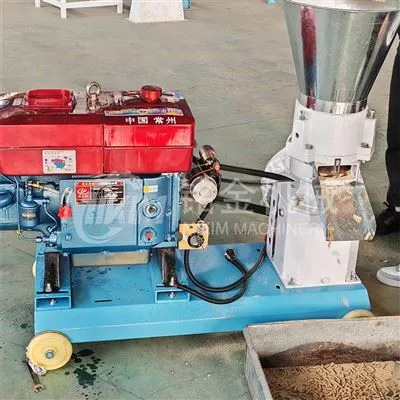
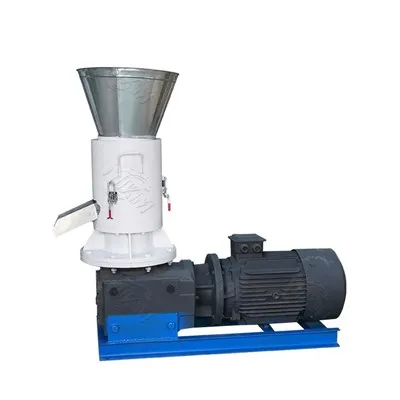
How to adapt fish feed extruder line equipment to multi-category production?
Leave a message
The aquatic feed market demands diverse products and services-from floating pellets for grass carp and crucian carp, to micro-particles (less than 1mm in diameter) for whiteleg shrimp, and slow-sinking pellets for red-eared sliders. If production line equipment can only produce a single product category, companies struggle to adapt to market changes and risk missing out on orders. A complete production line can flexibly adjust parameters and replace components to adapt to multiple product categories, enhancing a company's market competitiveness.
Production line process
Raw material cleaning (general equipment) → crushing (adjustable particle size) → batching (multiple formulas can be stored) → mixing (adjustable stirring speed) → pelleting/expansion (changeable molds) → cooling (adjustable cooling time) → sieving (changeable screens) → packaging (adjustable packaging weight). By adjusting parameters and changing parts, different types of feed such as fish, shrimp, and turtles can be produced.


Core Production Advantages
1.The parameters are flexibly adjustable to adapt to different feed characteristics.
For fish feed (buoyant, particle size 3-5mm), the extruder barrel temperature can be adjusted to 120-130℃, and the pressure to 0.8-1.0MPa to ensure stable buoyancy. For shrimp feed (micro-particles, particle size 0.8-1.2mm), the ultra-fine pulverizer can pulverize the raw materials to over 150 mesh, the mixer speed is adjusted to 40r/min (to avoid material stratification), and the pellet mill ring die diameter is changed to 1mm with an aspect ratio of 1:15. For turtle feed (slow-sinking, particle size 2-3mm), the pellet mill pressure roller is adjusted to 0.7MPa (particle density 1.05g/cm³), and the cooling time is extended to 15 minutes (ensuring moisture content of 11-12%) to achieve a slow-sinking effect (slowly sinking within 30 seconds).
2. High component versatility reduces changeover costs.
Key components of core production line equipment are interchangeable or quickly replaceable. For example, the pellet mill can use interchangeable ring dies with different apertures (from 0.8mm to 8mm) without replacing the entire machine (changing the ring die takes only 1 hour, while replacing the entire machine takes more than 1 day); the mixer's inner liner uses a universal design, capable of mixing both high-starch raw materials for fish feed and high-protein raw materials for shrimp feed (only the inner liner needs cleaning, no modification is required); the screening machine allows for quick screen replacement (from 0.5mm to 10mm) to accommodate the screening of finished products with different particle sizes (changing the screen takes only 20 minutes).
3. The process modules are scalable to meet future needs.
The production line has reserved interfaces for process expansion-for example, if the company plans to produce functional aquatic feed (such as feed with added probiotics) in the future, a probiotic addition module can be added to the mixing stage (low-temperature spray addition to prevent probiotic inactivation); if the company plans to produce sinking fish feed, a pressing module can be added after the extruder (secondary extrusion to increase density); if the company plans to expand production capacity, a raw material cleaning and crushing branch line can be added (parallel to the main line, doubling capacity).


Why Choose Us
MIKIM boasts extensive experience in poultry feed pellet production lines, significantly reducing the incidence of poultry diseases. Its equipment is not only widely used across various industries domestically but also exported to Southeast Asia, Europe, Africa, and South America, earning a high reputation internationally. This global presence not only demonstrates the adaptability and competitiveness of its products, but also demonstrates the company's experience in adapting to diverse market standards and logistics conditions, enabling it to provide a stable supply chain for its overseas customers. Whether serving large domestic farms or cross-border feed companies, MIKIM can leverage its global service network to ensure a consistent, high-quality experience.
For more information on process flow design, equipment layout, factory construction plans, individual equipment pricing, or turnkey project proposals, please feel free to contact us!!!
FAQ
1. What is the price of the pet meal production line?
The price ranges from approximately $10,000-$32,000
2. Do you provide maintenance services for your customers?
Yes, we offer comprehensive after-sales maintenance services to our customers.