How to Produce Floating Fish Feed Without Electricity? A Complete Guide to Diesel Dry-Type Fish Feed Extruder Machines for Zambia
Leave a message

If you are wondering how to produce high-quality pellets without grid power, the answer lies in the Diesel Dry Type fish feed pellet extruder machine. This machine operates on the principle of the principle of High-Temperature Short-Time (HTST) shearing. It utilizes a diesel engine to drive a high-torque screw that compresses a moistened feed mix (15-25% moisture) within a tapered barrel. Heat is generated exclusively through mechanical friction and internal shear, causing starch gelatinization. Upon exiting the die, the instantaneous pressure drop triggers moisture flash-evaporation, creating the expanded, porous structure required for floating pellets.
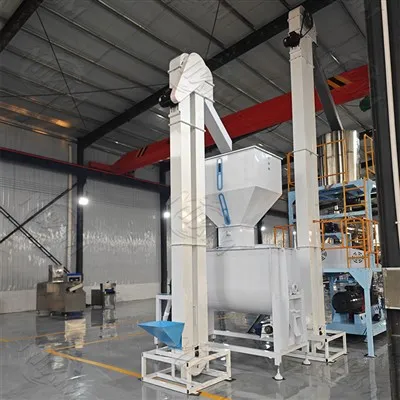
120kg/h Diesel Dry Type floating fish feed making machine test in our factory
I am interested in this product
1. Power Transmission: Overcoming Grid Instability
In regions like Zambia, where load shedding is a structural reality, the power source is the first logical step.
- Mechanical Drive: The diesel engine transfers energy via a multi-belt heavy-duty pulley system to the main shaft.
- Torque Consistency: Unlike electric motors that lose efficiency during voltage drops, a diesel engine maintains consistent torque, which is critical for maintaining the high internal pressure (up to 40 Bar) needed for reliable extrusion.
2. The Extrusion Chamber: Transforming Kinetic Energy to Thermal Energy
The "Dry" in Diesel dry type floating fish food pellet maker machine refers to the absence of external steam boilers. The thermal energy is generated through three distinct mechanical actions:
- Friction: Between the material and the screw/barrel wall.
- Internal Shearing: The "kneading" of the dough as it moves through different screw pitches.
- Compression: The reduction in volume as the material moves toward the die.
- Result: Within 30 seconds, the material temperature rises to 120°C–150°C. This is sufficient to achieve 90%+ starch gelatinization and kill anti-nutritional factors (like urease in soybeans) without the need for complex boiler infrastructure.
3. The Expansion Phase: Phase Change & Porosity
The core reason why pellets float lies in the Pressure Differential.
- Inside the Barrel: Moisture remains in a liquid state due to the high pressure, even though it is well above the boiling point.
- At the Die Exit: As the "dough" exits the die, it hits atmospheric pressure. The superheated water instantly turns into steam (Phase Change).
- The Honeycomb Effect: This rapid expansion creates microscopic air cells. By controlling the Expansion Ratio (typically 1.5:1 to 2:1), the Diesel dry type floating fish food pellet extruder machine produces pellets with a density lower than water (<1g/cm3), ensuring they stay afloat for over 12 hours.

4. Crucial Post-Extrusion Steps: Drying and Cooling
A common engineering oversight is ignoring the state of the pellet post-cutting.
- Moisture Reduction: Pellets exit at ~20% moisture. To prevent mold growth (especially Aflatoxin in tropical climates), they must be dried to below 10% moisture.
- Structural Integrity: Cooling hardens the gelatinized starch "outer shell," making the pellet durable for transportation and preventing it from crumbling upon contact with pond water.
☆Click to explore our customized fish feed extruder solution for Zambia.
5. Technical Constraints & Best Practices
To maintain objectivity, operators must understand the physical limits of Diesel dry type floating fish food pellet making machine:
- Fat Content Limit: If the raw material mix exceeds 8-10% fat, the friction inside the barrel drops. This results in poor heating and pellets that will sink.
- Fiber Considerations: High fiber content (from excessive rice bran or gaga) can weaken the pellet structure. A balance of starch (minimum 20%) is required for the "expansion glue."
- Component Wear: Because the process relies on friction, the screw and barrel are consumables. In my 30 years of experience, using vacuum-quenched 38CrMoAl alloy is the only way to ensure a service life exceeding 500-800 tons of production in abrasive African soil conditions.
6. Dry Type Fish Feed pellet maker machine vs. wet Type floating fish feed pellet processing machine: Which is Right for Your Operation?
Dry Type floating Fish Feed pellet making machine vs. wet Type floating fish feed pellet extruder machine Technology
| Feature | Dry Type floating fish feed pellet extruder machine | Wet Type Floating fish feed extruder machine |
| Heating Method | Mechanical Friction & Shear. Heat is generated through intense friction between the screw, material, and barrel wall. | External Steam Injection. Utilizes a Pre-conditioner to inject high-temperature pressurized steam into the raw mix. |
| Ancillary Equipment | Standalone Operation. The extruder functions independently without external thermal sources. | Industrial Steam Boiler Required. Requires complex steam piping, pressure vessels, and water treatment systems. |
| Gelatinization Degree | High (85%–90%). Sufficient for producing high-stability floating aquatic feed. | Superior (90%–95%+). Provides maximum starch gelatinization, resulting in a more "polished" pellet finish. |
| Production Scale | Ideal for small-to-medium throughput (Typically <1.5 Tons Per Hour). | Optimized for large-scale commercial mills (Typically >2.0 Tons Per Hour). |
| Initial Investment (CAPEX) | Budget-Friendly. Lower entry cost due to the absence of expensive boiler infrastructure. | High Capital Outlay. The cost of the boiler and piping often exceeds the price of the extruder itself. |
| Maintenance & Service | User-Friendly. Can be maintained by general mechanical technicians without specialized boiler certifications. | Demanding. Requires certified boiler technicians for mandatory safety inspections and high-pressure system testing. |
ROI & Technical Comparison
| Feature | Diesel Dry-Type Fish Feed Extruder | Commercial Wet Type floating fish feed making machine |
| Infrastructure | Minimal (Stand-alone) | High (Requires Boiler/Piping) |
| Operational Skill | Medium (Mechanical focused) | High (Steam safety certified) |
| Utility Reliance | None (Self-contained) | High (Grid + Fuel) |
| Target Scale | 100kg/h - 1,000kg/h | >2,000kg/h |
| Best Use Case | Zambia Remote Farms/Off-grid | Large Industrial Feed Mills |
★Learn the key differences between dry and wet fish feed extruders.
How to Choose the Right Fish Feed Extruder in Zambia
Choose the MIKIM Diesel Dry Type fish feed pellet extruder machine IF:
- You are a small-to-medium farm or a rural aquaculture entrepreneur in Zambia.
- Your farm relies on borehole water (eliminating the risk of boiler scaling/explosions).
- You need to operate off-grid or face frequent ZESCO load-shedding.
- You want a low-maintenance, "plug-and-play" system that local mechanics can easily service.
- Final ROI: This is the most sustainable choice for 90% of Zambian farms, offering the fastest payback period and the highest operational uptime.
Choose a wet Type floating fish feed pellet processing machine ONLY IF:
- You are establishing a large-scale industrial feed factory (output >2 tons/hour).
- You have a consistent, high-capacity electrical grid and professional boiler technicians on-site.
- You have an advanced water treatment system to prevent boiler scale.
Contact us to help you choose the right Aquatic feed extruder
7. FAQ
Q1: Which is better for a small-scale farm in Zambia, Dry Type floating fish feed making machine or wet Type Floating fish feed extruder machine ?
Answer: Dry Type fish feed pellet processing machine is superior for small-to-medium Zambian farms.
Expert Logic: Unlike wet extrusion, which requires an expensive steam boiler and certified technicians, dry extruders generate heat through mechanical friction. This significantly lowers your initial investment (CAPEX) and eliminates the maintenance headaches of high-pressure boilers in remote areas with hard water.
Q2: Can MIKIM Diesel Dry Type fish feed production equipment handle local Zambian maize bran (Gaga) and soy cake?
Answer: Yes, they are specifically designed for abrasive local ingredients.
Expert Logic: Zambian raw materials like maize bran can be more fibrous. MIKIM uses vacuum-quenched 38CrMoAl alloy steel for the screw and barrel. This high-hardness material withstands the abrasive nature of local by-products, ensuring a consistent compression ratio and longer service life compared to standard carbon steel.
Q3: Why is my home-made fish feed sinking instead of floating?
Answer: Floating depends on starch gelatinization and the pressure drop at the die.
Expert Logic: To ensure 12+ hours of buoyancy, your mix must have:
Starch Content: At least 20-25% (from maize or cassava).
Moisture: 18%-25% before entering the extruder.
Temperature: Above 120°C inside the barrel.
If the feed sinks, it usually means the friction heat wasn't high enough to "pop" the moisture into steam as it exited the die.
Q4: What are the main wear parts I need to stock in Zambia?
Answer: The "Golden Three": The Screw, the Barrel (lining), and the Cutting Blades.
Expert Logic: Because dry extrusion relies on friction, these parts will eventually wear down. In Zambia's supply chain environment, we recommend keeping a 1-year service kit on-site. MIKIM's modular screw design allows you to replace only the worn section rather than the entire shaft, saving you significant maintenance costs.
Q5: How much fuel does a Diesel Dry Type floating fish feed pellet maker machine consume?
Answer: Fuel consumption typically ranges from 2 to 5 liters per hour, depending on the capacity (100kg/h to 500kg/h).
Expert Logic: While diesel has a cost, the total operational saving is massive. By producing feed locally, you bypass the 30%-50% price markup of commercial brands, making the fuel cost a negligible fraction of your overall profit margin.
Q6: Does the Diesel Dry Type fish feed pellet extruder machine need a professional engineer to operate?
Answer: No, it is designed for "Simplified Operation."
Expert Logic: A Diesel dry type floating fish feed pellet making mill is a purely mechanical system. Any operator capable of managing a farm tractor or a diesel generator can be trained to operate a MIKIM extruder in less than two days. We provide step-by-step video guides tailored for the Zambian workforce.
Q7: Does Dry Type Fish Feed pellet maker machine produce lower-quality pellets than wet Type fish feed pellet extruder machine?
A (Expert Opinion): Not necessarily. While wet Type floating fish feed pellet maker machine produces smoother, more polished pellets, dry type floating fish food extruder machine is more than sufficient for high-quality floating Tilapia and Catfish feed. MIKIM's dry extruders achieve over 90% starch gelatinization, which ensures optimal buoyancy and digestibility-the two most critical factors for fish growth.
Q8: Can a diesel engine power a wet Type floating fish feed pellet maker machine?
A: It is technically possible but rare. Wet systems are highly complex and usually require centralized electrical control for the boiler, conditioner, and extruder motors. For mobile or rural operations, diesel-powered dry extrusion is the industry standard for reliability.
Company Profile