How to Save Money on automatic fish food making equipment?
Leave a message
content
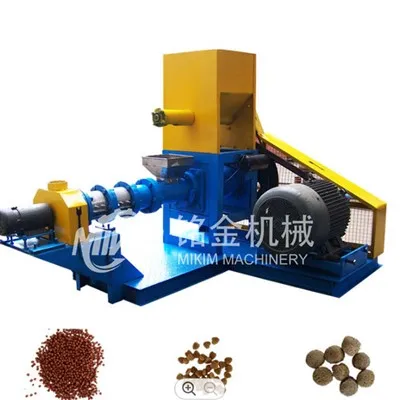
Optimize the parameters of small fish food making machines to increase production capacity per unit time. The core of parameter optimization is to maximize the synergistic efficiency of feed rate and screw speed while ensuring extrusion effect. For single-screw extruders, when producing fish feed, control the screw speed at 320-350 r/min and match the feed rate to 100-120 kg/h (150 kg/h model) to ensure that the raw material is fully melted in the extrusion chamber without excessive retention. For twin-screw extruders, when producing high-end pet food, control the screw speed at 300-320 r/min and increase the feed rate to 200-250 kg/h (300 kg/h model), utilizing the forced conveying characteristics of twin screws to increase production capacity. At the same time, optimize the die orifice diameter. When producing large-particle feed (such as 4mm adult fish feed), use a large-diameter die to reduce extrusion resistance and increase discharge speed. For example, a pet food factory optimized the feeding speed of its twin-screw extruder from 200 kg/h to 230 kg/h, while maintaining the screw speed at 320 r/min. This resulted in a 15% increase in output per unit time and a 12% reduction in equipment depreciation and labor costs per unit of feed.
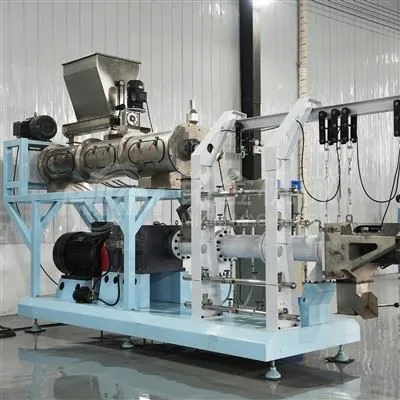
Optimizing the production process enables continuous and efficient production. Breaks in the production process can severely impact efficiency. The core is to achieve seamless integration of the entire process from raw material pretreatment to extrusion, cooling, and packaging. First, raw material pretreatment is centralized, completing crushing and mixing processes in advance and storing sufficient pretreated raw materials to avoid extruder downtime due to insufficient supply. Second, automated conveying equipment is installed, using screw conveyors to connect the raw material silo to the fish feed pellet extruder hopper and belt conveyors to connect the extruder outlet to the cooler, reducing manual handling time. Third, production plans are rationally arranged, with similar types and formulas of feed produced together, reducing the time spent adjusting parameters and changing die heads on the fish pellet making machine (each die head change takes 30-60 minutes). For example, a fish feed factory increased the effective operating time of its extruder from 6 hours to 8 hours per day by installing automated conveying equipment and centralized production planning. Daily output increased from 800 kg to 1200 kg, and the labor cost per unit of feed decreased from 1.5 yuan/ton to 1 yuan/ton.
Ensuring stable equipment operation and reducing ineffective downtime is crucial. Downtime due to malfunctions is the biggest enemy of efficiency in pet food processing machines. Stability must be ensured through daily maintenance and condition monitoring: First, regularly inspect the core components of the extruder to avoid downtime caused by screw and die wear; second, install online monitoring equipment to monitor the extrusion chamber pressure, temperature, and motor current in real time, issuing alarms promptly for early intervention in case of abnormalities; third, maintain a reserve of key spare parts (such as dies, bearings, and seals) to avoid prolonged downtime due to lack of spare parts after a malfunction. For example, a large pet food factory installed an online monitoring system on its twin-screw extruder and maintained a reserve of 3 sets of dies and 2 sets of bearings. This reduced equipment downtime from 8 hours per month to 2 hours, improved production stability by 90%, and reduced unit costs by 8%.
Related equipment


about Us
MIKIM's fish feed pellet production lines and supporting machinery offer excellent value for money. Not only are they affordable, eliminating middlemen markups and allowing small and medium-sized enterprises (SMEs) and fish farmers to purchase complete sets of equipment at reasonable costs, but they also boast exceptional efficiency. The fully automated process, from raw material crushing and precise ingredient mixing to extrusion pelleting and maturation, is completed in one continuous flow. This results in high starch gelatinization rates and uniform pellet formation, significantly improving production efficiency and feed quality, truly achieving "low cost, high output." Choosing a MIKIM fish feed pellet production line means enjoying comprehensive pre-sales and after-sales service, including 24-hour online customer support, a one-year warranty on the entire machine, professional on-site installation, commissioning, and maintenance, and a stable supply of spare parts. Customers can buy with confidence and use with peace of mind, with both excellent value and service quality!!!
Customer visit

Certificate of Honor

FAQ
1. What is the price of the dog food production machine?
The price ranges from approximately $1,500-$55,000
2. Do you provide maintenance services for your customers?
Yes, we offer comprehensive after-sales maintenance services to our customers.
If you would like to learn more about MIKIM machinery, please contact us. We offer one-stop service and welcome your inquiries!!!