How to scientifically select a food production line suitable for pet types
Leave a message
Key Selection Points
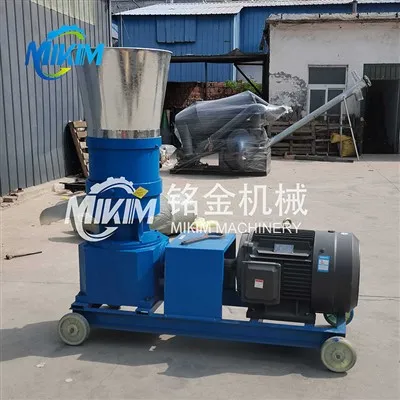
The production line functions are tailored to meet the nutritional needs of pets: cat and dog food requires high protein and high fat, so the production line needs to have a precise batching system (such as a twin-screw feeder) to ensure accurate proportions of meat, grains, and vitamins; fish food needs to be highly waterproof, so the pellet production line needs to add a "coating process" to prevent it from disintegrating upon contact with water; turtles are omnivorous, so the production line needs to be compatible with mixing plant powder and animal protein, and the pellets need to have a moderate hardness (to prevent damage to the turtle's mouth when chewing); rabbit food requires high fiber, so the production line needs to be equipped with a coarse fiber crushing device to crush raw materials such as alfalfa and wheat bran to 80-100 mesh to ensure digestibility and absorption by rabbits.
The production line capacity should be determined based on the scale of the aquaculture operation: For family-run farms (such as small fish farms or pet breeding facilities), a small pellet production line with an hourly output of 50-100 kg, paired with a single-screw extruder, is suitable due to its small footprint and low cost.
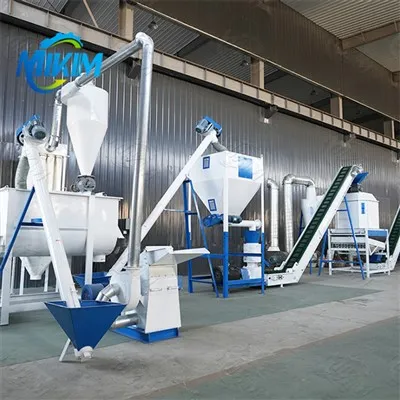
Medium-sized farms or feed processing plants require a production line with an hourly output of 200-500 kg, equipped with a twin-screw extruder and continuous drying equipment to meet mass production needs.
Large enterprises require fully automated production lines with an hourly output of over 1000 kg, integrating an intelligent control system to automate the entire process from ingredient preparation and mixing to pelleting, cooling, and packaging.
Pay attention to the quality of key components in the pellet production line: the die material of the pellet mill (preferably 304 stainless steel, which is wear-resistant and rust-resistant) and the temperature control accuracy of the conditioner (the conditioner temperature for cat and dog feed needs to be controlled at 85-90℃, and for fish feed, it needs to be 90-95℃) directly affect the pellet formation rate and nutrient retention rate. In addition, the cooling system must be adapted to the characteristics of the pellets. For example, rabbit feed pellets are relatively loose, so a slow-speed cooler should be used to avoid pellet breakage.
Main equipment of the pet food processing line
floating pellet machine


parameter
|
|
|
|
|
|
|
|---|---|---|---|---|---|
|
|
|
|
|
|
|
|
|
|
|
|
|
|
|
|
|
|
|
|
|
|
|
|
|
|
|
|
|
|
|
|
|
|
|
|
|
|
|
|
|
|
|
|
|
|
|
|
|
about Us
MIKIM boasts extensive experience in poultry feed pellet production lines, significantly reducing the incidence of poultry diseases. Its equipment is not only widely used across various industries domestically but also exported to Southeast Asia, Europe, Africa, and South America, earning a high reputation internationally. This global presence not only demonstrates the adaptability and competitiveness of its products, but also demonstrates the company's experience in adapting to diverse market standards and logistics conditions, enabling it to provide a stable supply chain for its overseas customers. Whether serving large domestic farms or cross-border feed companies, MIKIM can leverage its global service network to ensure a consistent, high-quality experience.
Customer visit


FAQ
1. What is the price of the animal floating meal extruder line?
The price ranges from approximately $13,000-$39,000
2. Do you provide maintenance services for your customers?
Yes, we offer comprehensive after-sales maintenance services to our customers.