Is Small Fish Food Pellet Production Profitable? Three Business Models Compared
Leave a message
Why the Business Model Decides Profitability
The profit potential of a fish food pellet line is set by the business model, not by the machine alone. A small, medium or large plant sells into a different market, and each scale follows its own profit logic. Small machines earn through customisation and local service, medium lines earn through niche species and quality premiums, and large plants earn through economies of scale and channel control.
That is why the first profitability decision is scale selection. A machine that is idle, or that is oversized for the local market, cannot deliver the returns projected in any model. Before comparing investment figures, estimate how many tons of feed the surrounding farms actually buy each month and how much of that volume your plant can realistically win.
Small Machines: Customisation and Localisation
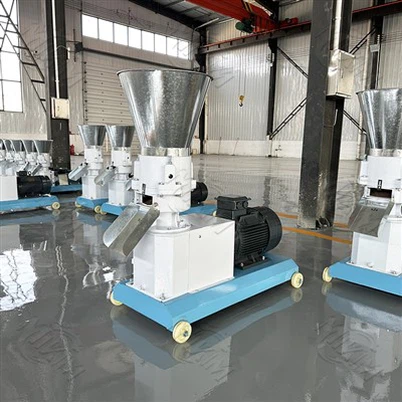
Small fish feed machines running at 50 to 100 kg per hour work on a customisation and localisation model. Equipment investment is modest and suits small-scale fish farmers or rural feed workshops, because the buyer installs a compact line and sells within a short delivery radius.
Target market: smallholders within about a 5 km radius, served on demand.
Customisation: formulas adjusted for grass carp, bass, shrimp and other local species.
Minimum order: around 50 kg batches, which solves the problem of farmers who find a full mill truck wasteful but cannot buy small quantities from large plants.
Pricing: about 0.2 to 0.3 RMB per kilogram above comparable feed from large mills, while still holding a price advantage for the farmer.
Utilisation basis: an average of 8 production hours a day and 300 production days a year.
On that duty cycle, a 50 kg/h machine reaches an annual capacity of roughly 120 tons. At a net profit of about 1000 RMB per ton, annual profit is around 120,000 RMB, which corresponds to a payback period of only 6 to 8 months on the equipment investment. The model is sensitive to one variable above all others: whether the surrounding farmers keep ordering, because local trust and delivery speed are what hold the price premium.
Medium Lines: Niche Species and Quality Premiums
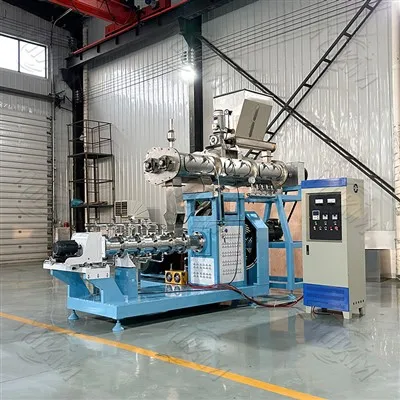
Medium floating fish feed extruders at 1 to 2 tons per hour focus on niche markets and quality premiums, and the investment level suits regional feed companies. Positioning targets speciality species such as high-end ornamental fish and premium aquatic products where ordinary feed cannot meet the requirement.
Using the extrusion advantage, the line produces floating feed with high water resistance, protein content controlled above 45% and a starch gelatinisation rate of around 90%. That quality translates into a selling price in the range of 6000 to 8000 RMB per ton, with net profit per ton after costs reaching 1500 to 2000 RMB. A documented case is a feed mill in Fujian producing eel feed on a line with an annual capacity of 500 tons and an annual net profit exceeding 800,000 RMB, which illustrates how a narrow species focus can support a premium price.
Large Lines: Economies of Scale and Channels
Large floating fish feed pellet making machines with an hourly capacity of 3 tons or more rely on economies of scale and channel advantages. Investment exceeds 1 million RMB and the profile fits established feed companies rather than new entrants.
The profit logic has two parts. First, large-scale production lowers unit cost through bulk raw material purchasing, automation and reduced labour per ton. Second, a distribution channel covering several surrounding cities and counties, reinforced by long-term supply contracts with large aquaculture cooperatives, keeps capacity utilisation at 80% or above. On an annual capacity of 10,000 tons and a net profit of 500 RMB per ton, annual profit can reach 5 million RMB.
The warning inside this model matters as much as the upside. If large equipment stands idle and utilisation falls below 50%, depreciation, labour and maintenance continue while output does not, and fixed costs turn the operation into a loss maker.
Comparing the Three Models Side by Side
| Item | Small (50-100 kg/h) | Medium (1-2 t/h) | Large (3 t/h and above) |
|---|---|---|---|
| Profit logic | Customisation and localisation | Niche species, quality premium | Scale and channel control |
| Buyer profile | Farmers and rural workshops | Regional feed companies | Large feed groups |
| Product focus | Mixed formulas for local species | Speciality floating feed | High-volume standard feed |
| Capacity reference | About 120 tons per year at 50 kg/h | About 500 tons per year in the cited case | About 10,000 tons per year |
| Margin reference | About 1000 RMB per ton | 1500-2000 RMB per ton | About 500 RMB per ton |
| Key risk | Thin local demand | Quality claims that buyers cannot verify | Utilisation below 50% |
The table makes the trade-off clear: profit per ton falls as scale rises, but volume and channel strength rise faster. The correct choice is the model whose market you can actually serve, not the model with the highest headline profit.
What the Numbers Assume
The figures behind all three models are planning estimates, and they rest on specific assumptions: full or near-full utilisation, stable raw material costs, the ability to sell at the stated premiums, and the absence of unlisted costs such as electricity, repairs and spoilage. Payback periods in the range of 6 to 8 months, and the profit per ton values quoted above, should be treated as targets to validate with local prices rather than as guarantees.
Because the reference case is a domestic feed mill and the figures are stated in RMB, producers elsewhere must rebuild the arithmetic with local ingredient costs, local selling prices and local feed regulations. A quick sensitivity check on three numbers, ingredient cost per ton, achievable selling price and realistic utilisation, will show whether a project sits on the profitable or the marginal side of these models.
Frequently Asked Questions
Q: Is small fish food pellet production genuinely profitable?
Yes, when the plant serves a defined local market with customised formulas and keeps equipment utilisation high. Profit comes from the service model and the 0.2 to 0.3 RMB per kilogram premium rather than from scale.
Q: How long does payback take?
In the small-machine model, payback of 6 to 8 months is projected on the stated utilisation and margin. Treat it as a planning target and re-run the calculation with your own ingredient prices and selling prices.
Q: Why do medium lines earn more per ton than large lines?
Medium lines sell speciality feed for species such as eel or ornamental fish at premium prices, where buyers pay for water resistance and high protein content. Large lines compensate for a lower margin per ton through much higher volume.
Q: What is the biggest risk in the large-scale model?
Under-utilisation. Below roughly 50% utilisation, depreciation and labour continue at full cost, so the operation can lose money even with a technically efficient line.
Q: Which raw material assumptions should be checked first?
Ingredient cost delivered to the plant, the achievable selling price for your pellet grade, and the share of local demand you can realistically capture. These three drive the outcome more than equipment price.
Q: Does feed quality really justify a premium price?
Where buyers can observe the difference, yes. Floating feed with high water resistance is eaten cleanly, wastes less and supports faster growth, which gives farmers a reason to pay more per kilogram.