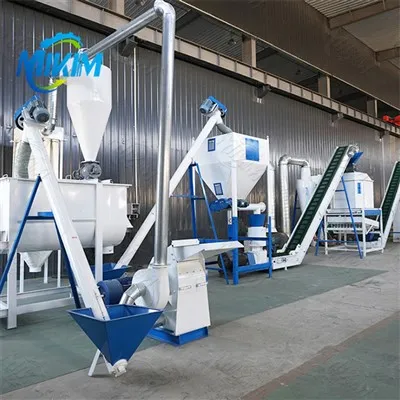
How much can improvements in intelligent power systems enhance the efficiency of floating fish feed production lines?
Leave a message
First, replace the motor with a high-efficiency, energy-saving variable frequency motor. Traditional fish food pellet production lines use fixed-frequency motors, which operate at a constant speed regardless of production load, resulting in high energy consumption. The improvement involves replacing the motor with a variable frequency motor, for example, replacing the original 15kW fixed-frequency motor with an 11kW variable frequency motor. The speed is adjusted via a frequency converter: under heavy production load (e.g., high raw material moisture), the motor speed increases to 2800 rpm; under light production load, the speed decreases to 2200 rpm. This reduces energy consumption by 20%-25%, saving several thousand kilowatt-hours of electricity annually. Furthermore, variable frequency motors have lower starting current, preventing impact on the power grid and reducing wear during equipment startup.
Second, install an intelligent load matching system. The feeding speed and screw speed of the fish feed making production line need precise coordination. Feeding too quickly will overload the extruder, while feeding too slowly will waste production capacity. The upgraded system installs torque sensors on both the feeder and extruder to monitor the equipment's load in real time. If the extruder torque is too high (indicating too much raw material), the system automatically slows down the feeder speed; if the torque is too low (indicating insufficient raw material), it speeds up the feeding process. Simultaneously, the system automatically adjusts the screw speed based on the raw material's moisture content and particle size, ensuring the extruder always operates under optimal load conditions, increasing production efficiency by over 10% and resulting in more stable pellet quality.
Finally, a remote monitoring and fault warning function has been added. Previously, when the power system of the traditional fish feed production line malfunctioned, maintenance personnel had to be dispatched to the site, delaying production. The improved intelligent power system connects to a mobile app or computer backend via the Internet of Things (IoT) to display real-time data such as motor speed, current, and temperature. If the equipment malfunctions (e.g., motor temperature exceeding 70°C, excessive current fluctuations), the system automatically issues an alarm and can preliminarily determine the cause of the fault (e.g., insufficient bearing lubrication, raw material blockage). Maintenance personnel can then prepare tools and spare parts in advance to quickly troubleshoot the problem, minimizing downtime.


about Us
Customer visit

Certificate of Honor

FAQ
1. What is the price of the floating fish feed making production line?
The price ranges from approximately $11,000-$50,000
2. Do you provide maintenance services for your customers?
Yes, we offer comprehensive after-sales maintenance services to our customers.