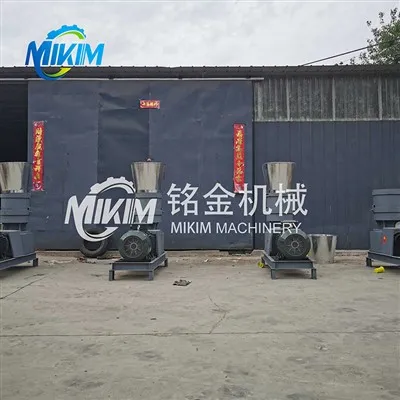
Large-Capacity Dry Extruder for Dog, Cat, Fish, Shrimp and Rabbit Pet Food
Leave a message
Introduction
Fish feed pellet production lines are upgrading towards intelligent technologies, and the large-capacity dry extruder sits at the center of that upgrade. It processes dog, cat, fish, shrimp, bird and rabbit food from the same platform, and when paired with sensors and control systems, it becomes the core of an automated, low-labor feed operation. This article explains the intelligent upgrade path, the raw materials, the capacity range and the automation advantages.
IoT sensors monitor raw-material moisture, pellet temperature and yield in real time.
AI algorithms automatically optimize production parameters, enabling unmanned production.
Raw materials: wheat and corn flour, fish meal, born powder and animal oil.
Capacity: 250-6000 kg/h across seven models with 22-200 kW main motors.
Automation expands one person's managed aquaculture area from 50 mu to 100-150 mu.
The Intelligent Upgrade Path
Future feed production lines will incorporate IoT technology, using sensors to monitor real-time data such as raw-material moisture, pellet temperature and yield. Combined with AI algorithms, these systems will automatically optimize production parameters, enabling unmanned production. For example, if raw-material moisture exceeds the specified value, the system can automatically adjust the conditioning time to ensure stable feed quality. This intelligent upgrade significantly improves production efficiency and reduces labor costs, and it is built into the control architecture of modern extruder lines rather than added later.
Raw Materials and Products
The large-capacity dry extruder processes wheat and corn flour, fish meal, born powder and animal oil into dry dog food, cat food, fish feed, shrimp feed, bird food and rabbit food. Dry extrusion relies mainly on friction heat with minimal added moisture, which suits these formulas and keeps energy consumption moderate. The same platform switches between product lines by changing the formula and die.
Product Parameters
| Model (Electric) | Capacity (kg/h) | Main Power | Cutting Blade Power | Cutting Power | Modulator Power |
|---|---|---|---|---|---|
| 65 | 250-300 | 22 kW | 1.5 kW | 1.5 kW | 3 kW |
| 70 | 500-600 | 45 kW | 1.5 kW | 1.5 kW | 3 kW |
| 75 | 800-1000 | 55 kW | 1.5 kW | 1.5 kW | 3 kW |
| 85 | 1200-1500 | 90 kW | 3 kW | 2.2 kW | 5.5 kW |
| 95 | 2000-2500 | 110 kW | 3 kW | 3 kW | 11 kW |
| 120 | 3000-4000 | 160 kW | 5.5 kW | 3 kW | 15+7.5 kW |
| 136 | 5000-6000 | 200 kW | 7.5 kW | 5.5 kW | 22+7.5 kW |
Automation Advantages
Pellet feed reduces manual intervention, which complements the automated production and feeding characteristics of the aquaculture line. The production line realizes full automation from raw-material processing to packaging, eliminating the need for a large number of manual workers. The pellet feed produced can be fed directly without pre-treatment, and paired with an automatic feeding machine, unmanned feeding can be achieved. For large-scale aquaculture bases, the area that can be managed by a single person can be expanded from 50 mu to 100-150 mu, doubling management efficiency, and avoiding manual feeding errors to ensure consistent growth of fish and shrimp.
Frequently Asked Questions
What products can this dry extruder make? Dog food, cat food, fish feed, shrimp feed, bird food and rabbit food, from wheat and corn flour, fish meal, born powder and animal oil.
What does the IoT upgrade add? Sensors monitor raw-material moisture, pellet temperature and yield in real time, and AI algorithms adjust parameters automatically for stable quality.
How much can automation reduce labor? Full automation from processing to packaging, with direct feeding, expands one person's managed aquaculture area from 50 mu to 100-150 mu.
What is the capacity range? From 250-300 kg/h on model 65 to 5000-6000 kg/h on model 136.
Can the line run unmanned? Yes, when paired with an automatic feeding machine; the pellet feed needs no pre-treatment before feeding.
How does automation improve growth consistency? It avoids manual feeding errors and delivers consistent rations, ensuring even growth of fish and shrimp.