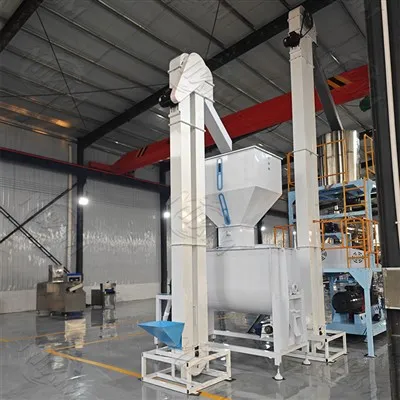
Large-Scale Dry Extruder for Floating and Sinking Fish Feed
Leave a message
What a Large-Scale Dry Extruder Can Produce
The large-scale dry extruder is a multi-purpose machine for the feed and pet food industries. It processes dry food for dogs and cats, feed for birds, piglets, and frogs, and both sinking and floating aquatic feeds. Because one machine handles several product families, producers can widen their output without installing separate lines, changing only the formula and the die for each product.
Raw Materials and Pellet Shapes
The machine processes meat, cereals, grain, vitamins, and minerals. General grains such as soya bean meal, corn meal, cracked wheat, and barley are commonly used to improve product consistency. Particle diameter ranges from 1 mm to 16 mm, and by changing the mould the line can produce triangular, heart-shaped, five-pointed star, bone-shaped, and fish-shaped pet food, which appeals to pet owners and suits different feeding purposes.
Short, low-moisture residence in the dry extrusion barrel limits thermal damage to heat-sensitive vitamins, so the nutrient profile of the finished kibble stays close to the formulated target.
The Complete Production Line
The full line is organised in five systems that run as a continuous sequence:
| System | Function |
|---|---|
| Mixing system | Blends ingredients and micro-additives evenly |
| Extrusion system | Cooks and shapes the pellets |
| Drying system | Reduces moisture for stable storage |
| Flavoring system | Adds oils, flavours, or coatings |
| Packing system | Weighs and bags the finished product |
Running these stages continuously keeps product flow efficient and reduces manual handling between stages.
Model Range and Technical Parameters
The series offers seven models, from 150 kg/h to 5000 kg/h output.
| Model | Output | Installed power | Dimension L×W×H (m) |
|---|---|---|---|
| 65 | 150 kg/h | 80 kW | 17×1.5×2.2 |
| 70 | 250 kg/h | 100 kW | 20×1.5×2.2 |
| 85 | 500 kg/h | 150 kW | 30×1.5×2.6 |
| 90 | 1000 kg/h | 180 kW | 40×2×3.5 |
| 95 | 1500 kg/h | 200 kW | 45×2×3.5 |
| 120 | 3000 kg/h | 245 kW | 60×3×3.5 |
| 140 | 5000 kg/h | 290 kW | 78×3.8×3.5 |
Installed power covers the whole line, and the dimension figures show the footprint required. Factory planning should therefore reserve additional space for access, maintenance, and material handling around the machine.
Automation and Ingredient Precision Benefits
Fully automated operation minimises manual involvement in heavy or high-risk tasks such as lifting large bags of raw material, working near high-temperature equipment, and handling bulky finished products. This lowers physical labour intensity and reduces the risk of burns, strains, and collisions with machinery. Automated systems also include safety interlocks, so equipment shuts down immediately if abnormal conditions are detected or a person enters a dangerous zone.
On the quality side, high-precision weighing and metering systems can add micro-ingredients such as vitamins, minerals, probiotics, or medicinal additives in very small doses. That precision is essential for specialised diets, where the exact nutritional content of every serving has to be controlled and reproduced batch after batch.
Planning Checks Before You Choose a Model
Match the output range to the planned daily tonnage, including peak demand rather than average demand.
Check total installed power against the supply capacity of the site and any future expansion.
Allow floor space for the dimensions listed plus access aisles for maintenance and die changes.
Confirm which pellet sizes and shapes are required, since these determine the mould set.
Plan the drying and flavoring balance so that moisture and coating targets are met without slowing the extruder.
Frequently Asked Questions
Q: What kinds of feed can a large-scale dry extruder produce?
Dry food for dogs and cats, feed for birds, piglets, and frogs, and both sinking and floating aquatic feeds, using the same machine with different formulas and dies.
Q: What pellet diameter range is possible?
The line covers particle diameters from 1 mm to 16 mm, with moulds available for shapes such as triangular, heart, star, bone, and fish profiles.
Q: How large is the available output range?
Seven models span 150 kg/h to 5000 kg/h, with installed power for the whole line from 80 kW to 290 kW.
Q: How much floor space should be reserved?
Dimensions run from 17×1.5×2.2 m to 78×3.8×3.5 m depending on model, and extra space should be allowed for access and maintenance.
Q: Why does dosing precision matter for pet food and specialised feed?
Vitamins, minerals, probiotics, and medicinal additives are used in very small amounts, so accurate weighing and metering is needed to reproduce the intended nutritional content in every batch.
Q: Does automation replace the need for an operator?
Automation removes the heaviest and most hazardous manual tasks and adds safety interlocks, but the line still needs supervision, routine maintenance, and formula control by trained staff.