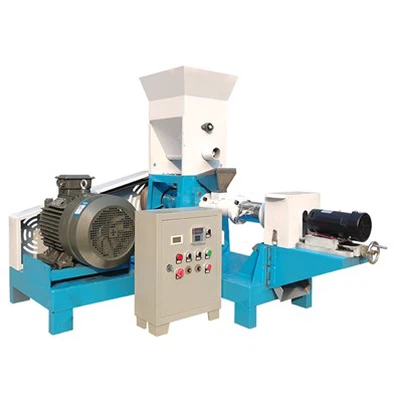
What distinguishes extruded feed from pellet feed in breeding situations
Leave a message
Granular feed is suitable for bottom-feeding aquatic animals (such as crucian carp, black carp, and shrimp), and is also suitable for livestock and poultry with higher requirements for feed hardness (such as laying hens and beef cattle). Due to its high density and low transportation cost, it is more suitable for large-scale land or deep-water aquaculture. Extruded feed is more suitable for aquatic animals that feed in the middle and upper layers (such as grass carp, sea bass, and ornamental fish), as well as young livestock and poultry with weak digestive functions (such as piglets and chicks). The loose texture makes it easy to chew and digest, and its buoyancy can reduce the waste of feed sinking to the bottom, making it suitable for shallow water aquaculture models such as ponds and cages.
Specific applicable objects
Pelleted feed is mainly used for ruminants (cattle, sheep) and some poultry (chickens, ducks) in large-scale livestock farming. Ruminants have complex digestive systems that can handle partially undigested starch and fiber, so the lower digestibility of pelleted feed is acceptable. Poultry also adapt well to its hard texture. In terms of cost, pellet mills are cheaper (equipment investment is 30–50% lower than extruders) and consume less energy (electricity use is 40–60% less per ton of feed). This makes pelleted feed cost-effective for low-margin, high-volume production.
Extruded feed is ideal for monogastric animals (pigs, especially weaned piglets), aquatic animals (fish, shrimp), and pets (dogs, cats). Monogastric animals have simple digestive systems and require highly digestible feed to avoid gut issues; aquatic animals need floating or slow-sinking pellets (which extruders can produce) to prevent feed loss in water; pets demand palatable, nutrient-dense feed. However, extruders have higher equipment costs and energy consumption-production costs per ton of extruded feed are 15–25% higher than pelleted feed. Despite this, its advantages in digestibility and safety make it worthwhile for high-value animal farming (e.g., aquatic breeding, pet food production).
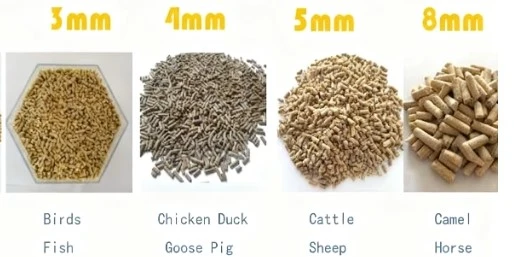
Finished product display

FAQ
1. What is the prices of poultry pellet production lines and extruded feed production lines?
The price ranges from approximately $15,000-$60,000
2. Do you provide maintenance services for your customers?
Yes, we offer comprehensive after-sales maintenance services to our customers.
For more information on process flow design, equipment layout, factory construction plans, individual equipment pricing, or turnkey project proposals, please feel free to contact us!!!