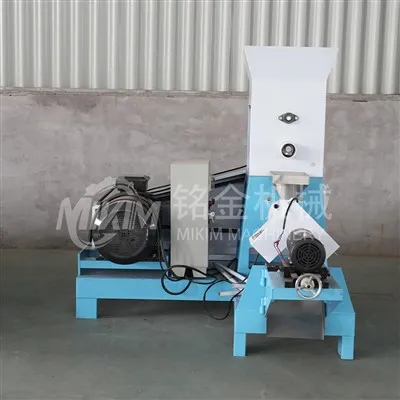
Mini Poultry Feed Pellet Production Line 500-1000 kg/h: Models, Layout and Efficiency
Leave a message
What a Mini Poultry Feed Pellet Production Line Is
A mini poultry feed pellet production line is a compact processing system built for small farms that need 500 kg to 1 ton of pelleted feed per hour. It combines crushing, mixing, pelleting, cooling and packing in one continuous process, with a compact structure, small floor space, low energy consumption and high output per installed kilowatt. The whole line is supervised from a single electric cabinet and needs only two to three workers, which keeps labour cost low for small operations.
Equipment Configuration
A typical line includes the following machines in sequence, so that material moves from raw grain to packed bag without manual handling:
Hammer mill - crushes corn, soybean meal and other raw materials to the required fineness
Screw conveyor - lifts the ground material to the mixing stage
High output horizontal mixer - blends raw materials, vitamins and minerals uniformly
Feed bin - buffers mixed mash ahead of pelleting
Feed pellet machine - conditions and presses the mash into pellets
Cooler with bucket lifting - lowers pellet temperature before handling
Belt conveyor - transfers cooled pellets to the packing station
Automatic packing machine - weighs and bags the finished feed
A dust collector keeps the working environment clean by capturing dust released at the crusher and the mixer. The equipment list can be adjusted to the customer requirements, so the final configuration should be agreed before the layout is drawn.
Technical Specifications by Model
Eight BH series models are available so that capacity can be matched to the size of the farm. The table lists the main parameters of each model.
| Model | Capacity (kg/hr) | Power (kW) | Weight (kg) | Dimension (cm) |
|---|---|---|---|---|
| BH-125 | 80-100 | 3 | 95 | 110 x 35 x 70 |
| BH-150 | 110-150 | 4 | 98 | 115 x 35 x 80 |
| BH-210 | 200-300 | 7.5 | 280 | 115 x 45 x 95 |
| BH-230 | 350-450 | 11 | 300 | 138 x 46 x 100 |
| BH-260 | 500-600 | 15 | 315 | 130 x 53 x 105 |
| BH-300 | 700-800 | 22 | 600 | 145 x 62 x 120 |
| BH-360 | 800-900 | 22 | 795 | 160 x 67 x 145 |
| BH-400 | 1000-1200 | 30 | 1000 | 160 x 67 x 145 |
The BH-125 to BH-210 models serve very small farms and home use, while the BH-260 to BH-400 models cover the 500 kg to 1 ton per hour range that gives this line family its name. Matching the model to the daily feed requirement keeps the pellet machine working near its rated output instead of idling.
Why Pelleting Improves Nutrition and Efficiency
Two mechanisms make pellet feed more efficient than powder feed. First, a precise batching system mixes corn, soybean meal, vitamins, minerals and other raw materials in controlled proportions, which prevents the uneven nutrient intake caused by selective feeding. The conditioning and pelleting steps also reduce the loss of heat sensitive nutrients such as vitamins, so every pellet carries a consistent nutritional content. Second, after high temperature conditioning in the double layer conditioning and pelleting machine, starch gelatinisation and protein denaturation make the feed easier for poultry to digest and absorb. Published figures for this process show a feed conversion rate 8-15% higher than powder feed. Pellets are also dust free and scatter free, which cuts the waste rate from 5-8% for powder feed to 1-2% for pellets and reduces feed cost directly.
Operational Considerations for Small Farms
Because the line is compact it fits into a small feed room, but the layout should still follow the process order so that material flows smoothly from the crusher to the packing machine, with enough clearance for maintenance access on the pellet machine and the mixer. Two to three workers are enough: one feeding raw materials, one supervising the pellet machine and cooler, and one at the packing end. Keep the dust collector in service at all times, because dust from the crusher and mixer affects both product hygiene and working conditions. Finally, check the local voltage against the electric cabinet specification, which forms part of the standard configuration.
Frequently Asked Questions
Q: How much feed can a mini line produce per hour?
The line family covers 500 kg to 1 ton per hour, with the BH-260 to BH-400 models matching that range.
Q: How many workers does the line need?
Two to three workers: one at raw material feeding, one at the pellet machine and cooler, and one at packing.
Q: Which model suits a very small farm?
The BH-125 to BH-210 models are intended for very small farms and home use, from 80 kg/hr upwards.
Q: How much does pelleting reduce feed waste?
Waste falls from about 5-8% with powder feed to about 1-2% with pellets, because pellets are dust free and scatter free.
Q: How much does the feed conversion rate improve?
Reported improvement is 8-15% over powder feed, driven by starch gelatinisation and protein denaturation during conditioning and pelleting.
Q: Why is a dust collector part of the line?
Crushing and mixing release fine dust; the collector protects product hygiene and keeps the working area clean for the operators.