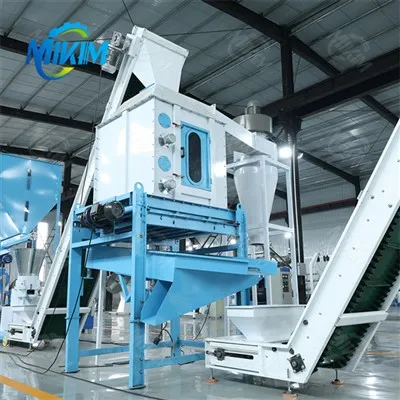
How Feed Pellet Equipment Affects Pellet Density
Leave a message
Why Equipment Affects Pellet Density and Uniformity
Ring die pellet mills are widely used in pelleting processes and play a particularly important role in the feed, fertilizer, and food industries. Their primary function is to form uniform pellets by extruding and shearing powdered materials through a ring die. This process affects not only the shape and size of the pellets but also directly impacts their density and uniformity, which in turn determines how the product behaves in storage, transport, and feeding.
Pellet Density: What It Is and Why It Matters
Pellet density refers to the mass of material contained per unit volume. Density directly impacts the storage, transportation, and usability of the product. A ring die pellet mill increases pellet density by compressing and extruding the material: the high pressure exerted as the material passes through the ring die squeezes the spaces between the particles, raising the overall density. This physical change increases material utilization and improves the flowability of the product, which in turn makes subsequent processing and application easier and more predictable.
Pellet Uniformity: Size and Shape Consistency
Pellet uniformity refers to the consistency of pellet size and shape. Uniform pellets ensure more stable performance during use. Especially in the feed and fertilizer industries, uniformity directly impacts nutrient release and absorption efficiency, because pellets of the same size break down at a similar rate in the animal or in the soil. The design and operating parameters of the ring die pellet mill, such as the die hole geometry, roller pressure, and feed rate, all have a direct influence on pellet uniformity.
Example Line: 15-20 t/h Chicken Feed Production Line
The table below summarizes the main specifications of a complete chicken feed pellet production line that uses a ring die pellet mill as the core.
| Item | Value |
|---|---|
| Capacity | 15-20 t/h |
| Range of application | Large commercial feed factories; can make chicken, sheep, cow, and shrimp feed |
| Workers required | 4-5 people |
| Shipment requirement | 6 x 40ft containers |
| Particle size | 1-12mm, selectable |
| Control | Fully automatic intelligent batching with computer control, stable output, efficient and continuous operation |
The line is designed for continuous commercial operation with direct packaging, and the size of the whole line is arranged according to the available land and layout.
Main Equipment of the Line
Six main modules make up the line. The hammer mill is a feed grinder used to process crop straw, grain, soybean meal, and other raw materials into powdered feed; it belongs to the crushing machinery category and is used in feed processing, biomass energy, and straw utilization. The screw conveyor moves grain and powdery raw materials with a sealed structure that is reliable, clean, hygienic, and residue-free. The stainless steel mixer blends powdered raw materials with high efficiency and fast mixing speed. The feed pellet machine produces pellets of various specifications with a simple structure, wide adaptability, small footprint, and low noise. The cooler uses the countercurrent cooling principle so that the pellets are cooled fully and evenly, running smoothly and discharging smoothly. The packer combines automatic weighing and packaging, conveying, and sewing units, and is suitable for quantitative packaging of granular and mixed granular-powder materials.
FAQ
What is pellet density?
Pellet density is the mass of material contained per unit volume. It directly impacts storage, transportation, and the usability of the product, and it is increased by the compression and extrusion of the ring die.
What is pellet uniformity?
Pellet uniformity is the consistency of pellet size and shape. Uniform pellets perform more stably during use, and in feed and fertilizer they influence nutrient release and absorption efficiency.
How does a ring die pellet mill increase density?
As the powder passes through the ring die, high pressure squeezes the spaces between the particles, increasing the overall density, raising material utilization, and improving flowability.
Why does uniformity matter in feed production?
Uniform pellets break down at a similar rate during digestion, so nutrients are released and absorbed consistently. The design and operating parameters of the pellet mill directly affect this uniformity.
What capacity is typical for a commercial feed line?
The example line in this article has a capacity of 15-20 t/h, is operated by 4-5 workers, and is shipped in six 40-foot containers. It suits large commercial feed factories.
What particle sizes can the line produce?
Particle size can be selected from 1-12mm, which covers chicken, sheep, cow, and shrimp feed requirements with the appropriate die choice.