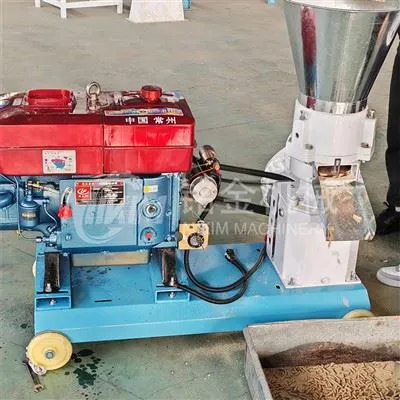
150 Kg/H Yabbie Feed Pellet Production Line
A compact line for round, sinking pellets for yabbies. The animal feeds on the pond floor, so the pellet has to sink and stay down, and it has to read round from every direction... the cutter holds length to diameter at 1:1.
Description
Quick answer
A yabbie feed pellet production line at 150 kg/h makes round, sinking pellets on a DGP series dry extruder. Grinder, mixer, extruder, dryer and cooler draw 34.8 kW, and one eight hour shift delivers the one tonne a day a grow out farm needs.
In this guide
01
Why Does a Yabbie Pellet Need to Be Round and Sinking?
Because the animal feeds on the bottom and picks up what it can see. A round pellet presents the same profile from every direction, and a sinking pellet stays where the animal walks rather than drifting to the surface.
ROUND AND SINKING
Sinking feed is made by holding expansion low, so the pellet keeps its density and drops. Round is made at the die and the cutter, by cutting the pellet to the same length as its diameter.
The two requirements pull in opposite directions. Expansion is what makes a pellet float, so a sinking pellet needs the extruder held at a lower temperature and a lower screw speed than a floating feed line would run.
What sinking means for the extruder setting
Sinking feed runs at a low expansion ratio, which means less steam flash at the die and a denser, heavier pellet. The barrel runs cooler than a floating feed barrel and the die carries a longer compression length.
What round means for the die and the cutter
The die hole is round in every case. Roundness in the finished pellet comes from the cutter: a pellet cut to the same length as its diameter reads as a sphere, and one cut long reads as a cylinder.

02
How Is a Round Pellet Made on a Dry Type single screw floating fish feed pellet extruder machine?
By cutting the extruded strand to a length equal to its diameter. A 2 mm hole cut at 2 mm gives a pellet that reads as round; the same hole cut at 3 mm gives a short cylinder that a yabbie nudges rather than takes.
LENGTH EQUALS DIAMETER
The cutter sets length, the die sets diameter, and the ratio between them is what makes a pellet read as round. A 1:1 ratio is the working setting; 1:1.5 shows as a cylinder.
The cutter on a DGP series extruder is a rotating blade at the die face, and its speed is adjusted against the extruder output rather than set once.
Why the cutter speed has to follow the output
Cutter speed sets pellet length at a fixed throughput. When output rises, the strand moves faster and the same blade speed cuts a longer pellet, so the cutter is adjusted with the feeder rather than left alone.
What a spherical die adds
A die with a spherical entry and a short land makes a pellet that is round before the cutter touches it. It is a die order, not a machine change, and it is the option to take when a buyer wants a true sphere rather than a 1:1 cylinder.
03
Why a DGP Series floating fish feed extruder machine for Sinking Feed?
Because the barrel runs one screw at a steady load while a separate feeder motor trims the inflow, which is what keeps a small die fed evenly at the low expansion a sinking pellet needs.
| Model | Main Power | Feeder | Cutter | Capacity | Weight |
|---|---|---|---|---|---|
| DGP50 | 11 kW | 0.4 kW | 0.4 kW | 60-80 kg/h | 320 kg |
| DGP60 | 15 kW | 0.4 kW | 0.4 kW | 120-150 kg/h | 480 kg |
| DGP70 | 18.5 kW | 0.4 kW | 0.4 kW | 180-250 kg/h | 600 kg |
| DGP80 | 22 kW | 0.4 kW | 0.75 kW | 300-350 kg/h | 800 kg |
Table 1: DGP series dry single screw extruders.
SEPARATE FEED MOTOR
The feeder has its own 0.4 kW motor and its own speed dial, so the barrel is not asked to absorb a feed fluctuation on top of the die load. A sinking pellet runs at a low expansion and leaves less room for that fluctuation than a floating one.
The DGP series is a dry extruder, so no boiler and no conditioner. It cooks on friction and heater bands inside a heating chamber, and a die change is what moves the line between 1.5 mm and 4 mm. The 150 kg/h build sits at the top of the 120-150 kg/h band, so a farm that wants reserve for a wet batch orders the next size at 180-250 kg/h.


What the single screw gives up
Twin screw extruders hold a more stable melt at high fat inclusion, and they self clean between recipes. At 150 kg/h the single screw is the cheaper route and the difference in melt stability does not show in a sinking pellet.
Where the heater band matters
The barrel is brought to temperature on the bands before material runs. A barrel started cold and fed immediately plugs, because the first material meets a cold screw and a cold die.
04
What Pellet Sizes Does a Yabbie Grow Out Need?
Four sizes cover a grow out cycle, from a 1.5 mm starter to a 4 mm pellet for adults, and all four run on the same extruder with a die change.
FOUR SIZES, ONE BARREL
A juvenile yabbie takes 1.5-2 mm, a maturing animal 3 mm, and an adult 3-4 mm. The die changes, the cutter is reset against the new diameter, and the dryer time shifts with the smaller size.
Why small pellets need a different dryer time
A 1.5 mm pellet carries the same surface moisture on a much larger surface area, so it dries faster and over dries if the belt speed is left at the 4 mm setting. The dryer belt and its temperature are set per size.
Sinking time as an acceptance figure
A sinking pellet that floats for a minute is a pellet that has drifted off the pond floor. The factory test drops pellets into water and records the time to sink, and that figure goes into the acceptance sheet beside the output.
05
What Does a 150 kg/h Yabbie Feed Line Draw?
34.8 kW connected, with the extruder carrying 15.8 kW of it and the dryer 10.05 kW. The supply is sized against the total rather than against the extruder alone.
| Stage | Machine | Power |
|---|---|---|
| Grinding | HM-198B hammer mill | 3 kW |
| Mixing | KW-500 vertical mixer | 3 kW |
| Extrusion | DGP60 main motor | 15 kW |
| Feeding | DGP60 feeder | 0.4 kW |
| Cutting | DGP60 cutter | 0.4 kW |
| Drying heat | 150 model dryer heater | 9 kW |
| Drying turn | Dryer turner | 0.75 kW |
| Drying air | Dryer fan | 0.3 kW |
| Cooling and sieving | GMC-LQSF50 | 2.95 kW |
| Total | 34.8 kW |
Table 2: Connected power of the 150 kg/h yabbie feed line.

TWO LOADS, TWO SIZING CASES
The 10.05 kW of drying is a resistive load and the motors are inductive. The cable is sized against the total, and the start arrangement is sized against the extruder motor, which is the largest inductive load on the line.
Where the surplus sits
The grinder is rated 120-250 kg/h and the cooler screener 250-350 kg/h, both above the 150 kg/h extruder. That surplus is what allows the line to run a wet batch or a coarse grind without the extruder starving.
06
What Does a 150 kg/h Yabbie Feed Pellet Line Include?
Four machines and one transfer: a grinder, a mixer, the extruder with its cutter, a dryer, and a cooler screener. The line is short because sinking feed needs no coater.
| Stage | Machine | Duty |
|---|---|---|
| Grinding | Hammer mill | Grain and meal to a flour |
| Mixing | Vertical mixer | Blend before extrusion |
| Extrusion | DGP extruder with feeder and cutter | Cook, form and cut the round pellet |
| Drying | Multi layer dryer | Moisture down to a stable pellet |
| Cooling | Cooler screener | Cool and take out fines |
Table 3: The five stages of the yabbie feed line.
NO COATER ON A SINKING LINE
Sinking feed for a bottom feeder does not carry a surface oil film, because the film washes off before the animal reaches the pellet. The coater comes off this line and the capital with it.


Why the mixer stays small
At 150 kg/h the mixer is a buffer rather than a process stage. A vertical mixer holding 1000 kg/h of throughput gives the operator time to weigh the next batch while the extruder runs.
Why the grinder is oversized
A hammer mill at 120-250 kg/h sits above a 150 kg/h extruder deliberately. Grinding runs in campaigns, and a mill sized exactly at the extruder output would starve it every time the screen was changed.
07
Can One Yabbie Feed Pellet Line Make Shrimp Feed?
Yes. A shrimp feed production line and a crab feed line run on the same barrel, and the change is a die, a cutter setting and a drying time.
SHRIMP, CRAB AND YABBIE
All three are bottom feeders taking a sinking pellet. A shrimp feed production line plant runs smaller diameters than a yabbie line, and a crab line runs larger, but the machine list does not change.
Shrimp feed runs from 0.8 mm to 2 mm and needs a tighter size tolerance than a yabbie pellet. Crab feed runs larger, from 3 mm to 6 mm, and sinks faster.
What a shrimp line needs that a yabbie line does not
A finer grind and a tighter sieve. Shrimp feed at 0.8 mm is unforgiving of a coarse particle, so the hammer mill screen and the screener mesh are specified against the smallest pellet rather than the largest.
Where sinking aquatic feed lines differ from floating lines
A sinking aquatic feed pellet production line runs a low expansion and a dense pellet, and it needs no coater. A floating line runs a high expansion, a closed skin and a coater, and the two are specified from opposite ends of the same extruder.
08
What Dryer Does a Yabbie Feed Pellet Line Need?
A sinking pellet feed production line dries on a multi layer tray dryer at 150 kg per batch, with 9 kW of heating, a turning motor and a fan. A sinking pellet is dense, so it gives up moisture more slowly than an expanded floating pellet.
DENSE PELLET, LONGER PASS
A dense pellet holds its internal water longer, so the dryer pass is set by the largest size in production. A 4 mm sinking pellet takes a longer pass than a 4 mm floating one.
Tray dryer against belt dryer
A tray dryer suits a line that changes size several times a season, because the batch is set by the tray load rather than by a belt speed. A belt dryer suits a plant running one size for weeks.
What the dryer costs in power
9 kW of heating plus 1.05 kW of turning and fan. On this line the dryer is the second largest load, behind the extruder, and it is the stage that sets the daily schedule.
9
What Spare Parts Does a Yabbie Feed Line Keep?
Dies in the sizes sold, cutter blades, heater bands, screens and bearings. A sinking line has no coater, so the wear list is shorter than a floating feed line of the same output.
DIES AND BLADES FIRST
A die per size in production plus one spare of the size that runs most, and a spare set of cutter blades. Those two items decide whether a cracked die stops the line for a day or a month.
What the extruder wears
The screw and the barrel, and the die face. A worn screw gives a pellet with a torn skin, and a worn die gives an oversized pellet that reads as a cylinder rather than a sphere.
10
What Ships With a Yabbie Feed Pellet Line Quote?
A line by line quotation in process order, with the die set and the cutter blades named against the pellet sizes sold.
QUOTED BY STAGE
Each line names the machine, the motor that drives it, and what travels in the crate with it. The die set is quoted by size, because a yabbie line sells four sizes and the dies are the product range.
Send the pellet sizes sold, the daily tonnage and the water temperature of the pond. Send the pellet size and sinking time and the quotation comes back against a build rather than a range.
The order of the stages is the whole design. Grain is ground to a flour, the mixer blends it, the DGP extruder cooks it at a low expansion and cuts it to a round profile, and the dryer and cooler screener deliver a sinking pellet.
Two settings decide whether the pellet is right. The cutter length against the die diameter decides whether the pellet reads as round. The expansion setting decides whether it sinks and stays on the pond floor.
Start with the sizes sold and the sinking time the animal needs, not with the machine. A 150 kg/h yabbie feed pellet production line is five stages, and it works when the die, the cutter and the dryer are set against the smallest size in production.
1
Is the line 150 kg/h or 150 t/h?
150 kg/h. One tonne a day over an eight hour shift is 125 kg/h, and the 150 kg/h unit is rated there, which leaves a reserve for a wet batch or a die change.
2
Can the extruder make a true round pellet?
Yes, in two ways. Cutting the strand to the same length as its diameter gives a pellet that reads as round, and a spherical die gives a true sphere.
3
Why does the pellet have to sink?
A yabbie feeds on the bottom. A pellet that floats drifts away from the animal, and a pellet that sinks slowly is off the pond floor by the time it reaches it.
4
What pellet sizes cover a grow out cycle?
Four: 1.5 mm and 2 mm for juveniles, 3 mm for maturing animals and 3-4 mm for adults. All four run on one extruder with a die change.
5
How much power does the line draw?
34.8 kW connected, of which 15.8 kW is the extruder with its feeder and cutter and 10.05 kW is the dryer. The supply is sized against the total, the start against the extruder motor.
6
Does a sinking line need an oil coater?
No. A surface oil film washes off before a bottom feeder reaches the pellet, so the coater comes off the line and the capital with it.
7
Can the same line make shrimp and crab feed?
Yes. Shrimp feed runs 0.8-2 mm with a finer grind and a tighter sieve, crab feed runs 3-6 mm. The machine list is the same, the die and the screen change.
8
What decides the drying time?
The largest pellet size in production. A dense sinking pellet holds its internal water longer than an expanded floating one, so the tray load and the pass time are set per size.
9
What Should Be Compared Between Suppliers?
The die range and the screen, in that order. Two shrimp & crab feed production line manufacturers can quote the same 15 kW barrel and still differ on how small a die they carry, and the die range is what decides whether the line sells 0.8 mm shrimp feed as well as 6 mm crab feed.
Hot Tags: 150 Kg/H Yabbie Feed Pellet Production Line, China 150 Kg/H Yabbie Feed Pellet Production Line manufacturers, suppliers, factory, chicken feed pellet mill, small pelleting machine, development feed pelletizer, distributor feed pellet mill, chicken feed pellet maker, producer feed pellet machine
Send Inquiry
You Might Also Like