


Top Tips & Techniques For Fish Feed Pellets Making With wet fish feed extruder machine
Leave a message
content
Precise Raw Material Selection: Adapting to Wet Extrusion Characteristics. The wet extrusion process for wet floating fish feed machines requires raw materials with good water absorption and binding properties. Core raw materials are recommended to be high-starch grains such as corn and wheat flour (30%-40%). Starch gelatinizes under high temperature and pressure, improving pellet binding and water resistance. For protein, fishmeal and soybean meal are preferred (25%-35%). Fishmeal should be fresh with a crude protein content ≥60% to avoid spoilage and off-flavors. Soybean meal needs to be defatted beforehand to reduce the impact of anti-nutritional factors on fish digestion. Auxiliary raw materials can include an appropriate amount of wheat bran (5%-10%) to increase fiber content and enhance intestinal motility, while fish oil (3%-5%) can supplement unsaturated fatty acids. It is important to avoid using raw materials with poor water absorption (such as cottonseed meal, not exceeding 10%), otherwise, insufficient extrusion and pellet breakage will occur.
Scientific Nutritional Ratio: Adapting to the Growth Needs of Different Fish Species For herbivorous fish such as grass carp and common carp, the ratio of grains and plant protein needs to be increased: corn 35%, soybean meal 30%, fishmeal 15%, supplemented with 10% wheat bran and 5% fish oil, ensuring a crude protein content of 28%-32%. For carnivorous fish such as bass and mandarin fish, the ratio of animal protein needs to be increased: fishmeal 40%-50%, soybean meal 20%, corn 20%, fish oil 5%-8%, ensuring a crude protein content of 40%-45%. Simultaneously, compound premix (1%-2%) should be added to supplement vitamins and minerals. The premix should be heat-resistant to prevent degradation at the 120-160℃ high temperature of wet extrusion. In practice, feed formulation software can be used to calculate nutrient components, ensuring a balanced intake of essential amino acids such as lysine and methionine. For example, juvenile carp feed needs to ensure a lysine content ≥1.8% to meet the needs of rapid growth.
Precise moisture control: matching the requirements of wet extrusion. The wet fish feed pellet processing machine relies on steam to melt the raw materials. The initial moisture content of the raw materials needs to be controlled at 15%-18%, and then the steam system is used to replenish the moisture to 25%-30% (the optimal moisture range for wet extrusion). Too low a moisture content will result in insufficient frictional heat from the raw materials, requiring additional steam pressure and increasing energy consumption; too high a moisture content will reduce the extrusion pressure, resulting in poor pellet formation and insufficient water resistance. In practice, this requires two steps: First, the initial moisture content of the raw materials is adjusted by drying or adding water, and measured with a moisture meter; second, during processing, the amount of water replenished is precisely controlled through the equipment's steam regulating valve, and the pressure in the extrusion chamber is monitored in real time (normal range 4-6 MPa). Stable pressure indicates that the moisture content is suitable. For example, when producing grass carp feed, the initial moisture content of the raw materials is controlled at 16%, the steam pressure is adjusted to 0.3-0.5 MPa during processing, and the amount of water replenished is about 8%-10%, resulting in a final raw material moisture content of 26%, ensuring sufficient extrusion and compact pellets.
Related equipment


about Us
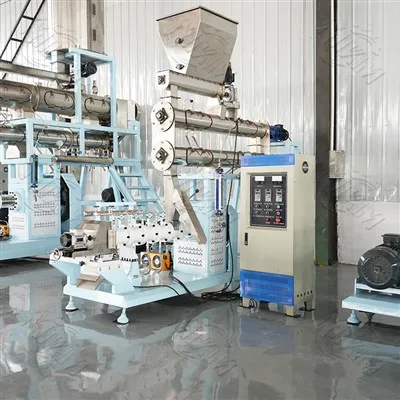
MIKIM's fish feed pellet production lines and supporting machinery offer excellent value for money. Not only are they affordable, eliminating middlemen markups and allowing small and medium-sized enterprises (SMEs) and fish farmers to purchase complete sets of equipment at reasonable costs, but they also boast exceptional efficiency. The fully automated process, from raw material crushing and precise ingredient mixing to extrusion pelleting and maturation, is completed in one continuous flow. This results in high starch gelatinization rates and uniform pellet formation, significantly improving production efficiency and feed quality, truly achieving "low cost, high output." Choosing a MIKIM fish feed pellet production line means enjoying comprehensive pre-sales and after-sales service, including 24-hour online customer support, a one-year warranty on the entire machine, professional on-site installation, commissioning, and maintenance, and a stable supply of spare parts. Customers can buy with confidence and use with peace of mind, with both excellent value and service quality!!!
Customer visit

Certificate of Honor

FAQ
1. What is the price of the wet pet food processing machine?
The price ranges from approximately $1,500-$55,000
2. Do you provide maintenance services for your customers?
Yes, we offer comprehensive after-sales maintenance services to our customers.
If you would like to learn more about MIKIM machinery, please contact us. We offer one-stop service and welcome your inquiries!!!


