


How to choose between a dry-type fish feed making machine or a wet fish feed pellet processing machine?
Leave a message
content
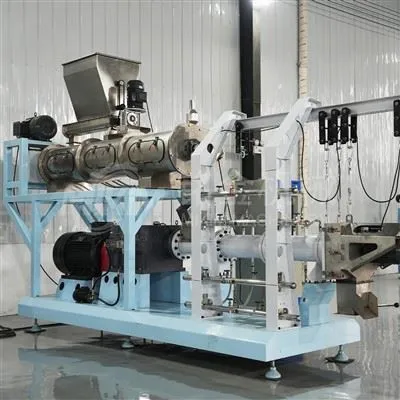
Select the appropriate machine based on production needs: Match the feed type to the species being farmed. For products requiring high extrusion and palatability, such as floating aquatic feed, starter feed for kittens/fish fry, and highly extruded pet treats, a wet pet food processing machine is the preferred choice, as its high extrusion effect and uniform pellet characteristics precisely match the requirements. For example, if planning to produce high-end kitten food, requiring fine, fluffy, and easily digestible pellets, a wet extruder is the best choice. For products with lower extrusion requirements, such as sinking aquatic feed, chew-resistant adult pet food, and high-fiber feed, a dry-type floating fish feed pellet making machine will suffice. For example, for producing sinking carp feed, a dry extruder produces compact pellets with strong water resistance, suitable for bottom-feeding habits. Furthermore, if heat-sensitive ingredients (such as probiotics and vitamins) need to be added during production, a dry extruder is preferred, as its short-term high temperature better preserves nutrients.
Select the appropriate machine based on cost budget: Balance initial investment with long-term benefits. For businesses with limited budgets (≤200,000 RMB) and small-to-medium-scale production (capacity ≤500kg/h), dry-type fish feed pellet processing machines are the preferred choice. Their low procurement and operating costs reduce startup risk and facilitate rapid cost recovery. For example, family farms and small-scale feed processing startups with a budget of around 100,000 RMB can start production with a dry extruder. For businesses with ample budgets (≥500,000 RMB) and large-scale industrial production (capacity ≥500kg/h), wet extruders are preferable. Their high production efficiency and stable product quality enhance long-term profitability. For example, large pet food companies and large-scale aquatic feed processing plants with sufficient budgets and complete supporting facilities can enhance their market competitiveness by using wet extruders to form continuous production lines.
Selecting the right machine based on site and supporting conditions: ensuring smooth production. For businesses with small sites (≤30㎡) and incomplete infrastructure (no steam supply, limited water supply), dry extruders are the preferred choice. They require no auxiliary equipment, have low site requirements, and can be installed and operated immediately. For example, small-scale farmers in rural areas with limited space and no steam supply find dry extruders to be the optimal choice. For sites with ample space (≥50㎡) and well-developed infrastructure (stable steam supply, sufficient water source, and drainage system), wet extruders can be selected to ensure the normal operation of supporting equipment. Alternatively, if operators have limited skill levels, dry extruders are preferred due to their ease of operation and maintenance. If a professional technical team is available, a wet floating fish feed machine can be chosen to ensure the stable operation of complex production lines.
Special Scenario Selection Recommendations: Flexible Adaptation to Needs. If planning to produce multiple types of feed, a switchable wet/dry extruder can be considered to accommodate different product needs, but the equipment purchase cost is relatively high. If the production site has strict environmental requirements, dry extruders are preferred because they produce no wastewater, consume less energy, and better meet environmental requirements; wet extruders require treatment of wastewater and exhaust gas generated during the drying process, resulting in higher environmental investment.
Related equipment



about Us
MIKIM's fish feed pellet production lines and supporting machinery offer excellent value for money. Not only are they affordable, eliminating middlemen markups and allowing small and medium-sized enterprises (SMEs) and fish farmers to purchase complete sets of equipment at reasonable costs, but they also boast exceptional efficiency. The fully automated process, from raw material crushing and precise ingredient mixing to extrusion pelleting and maturation, is completed in one continuous flow. This results in high starch gelatinization rates and uniform pellet formation, significantly improving production efficiency and feed quality, truly achieving "low cost, high output." Choosing a MIKIM fish feed pellet production line means enjoying comprehensive pre-sales and after-sales service, including 24-hour online customer support, a one-year warranty on the entire machine, professional on-site installation, commissioning, and maintenance, and a stable supply of spare parts. Customers can buy with confidence and use with peace of mind, with both excellent value and service quality!!!
Customer visit

Certificate of Honor

FAQ
1. What is the price of the single screw fish feed making machine?
The price ranges from approximately $1,500-$55,000
2. Do you provide maintenance services for your customers?
Yes, we offer comprehensive after-sales maintenance services to our customers.
If you would like to learn more about MIKIM machinery, please contact us. We offer one-stop service and welcome your inquiries!!!


