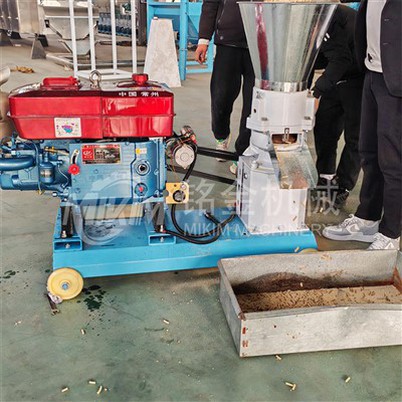
Pellet Mill Advantages in a Modern Feed Production Line
Leave a message
The Role of the Pellet Mill in a Production Line
A feed pellet mill is the forming machine at the heart of a feed pellet production line. It presses mixed and conditioned powder into dense, uniform pellets, and in doing so it changes not only the shape but also the behaviour of the feed: how it flows, how it stores, how it is eaten and how much of it is wasted. Modern livestock, poultry and aquaculture farms rely on pellet mills because the finished pellets support higher efficiency, a wider range of applications and cleaner production than loose powder feed.
Environmental Benefits of Pelleting
The pellet mill brings a clear environmental advantage: it reduces the pollution and residue created during feed processing. Powder feed is dusty and settles unevenly, and dust is lost at every transfer point, from the mixer to the truck to the feeder. Pellets, by contrast, are compact and free-flowing, so far less dust escapes into the air or accumulates as residue on equipment and floors.
This keeps the mill and the farm cleaner, reduces the amount of feed wasted before it reaches the animals, and supports the hygiene and safety of the feed itself. Because dust is also a combustion risk in enclosed buildings, fewer airborne particles mean a safer working environment as well.
Better Palatability and Digestibility
Pelleting also improves feed quality from the animal's point of view. The heat, moisture and pressure applied in the pellet mill cook the starch and protein in the formula, which makes the feed more palatable and easier to digest. Animals take pelleted feed more readily than powder, and their digestive systems extract more nutrients from every kilogram consumed.
In practical terms, a farm that switches from mash to pellets often records better feed intake and a lower feed conversion ratio, which is one of the main reasons pellet mills are used in modern feeding programmes.
| Machine setting | Effect on the finished pellet |
|---|---|
| Die hole diameter | Sets pellet size for the target species |
| Conditioning heat and moisture | Cooks starch and protein, raising digestibility |
| Die compression ratio | Controls pellet hardness and durability |
| Cooling after pressing | Stabilises moisture for safe storage |
Reduced Waste and Pollution in Daily Operation
The compact, uniform shape of the pellets reduces waste and pollution in daily operation. Pellets are difficult for animals to pick through selectively, so every animal receives a complete, balanced ration instead of eating only the most palatable parts. Pellets also survive handling and transport better than powder, so less feed is broken, blown away or left behind in the feeders.
For the farm this means cleaner feeding areas and less feed that has to be discarded. For the environment it means fewer unused nutrients entering the soil and water around the operation, which is especially relevant where several houses or ponds share a site.
Why Pellet Mills Are Essential in Modern Farming
As an important piece of feed processing equipment, the feed pellet mill combines high efficiency, a wide range of applications and environmental protection in one machine. By changing the die size and the conditioning parameters it can process formulas for poultry, swine, ruminants and aquatic species, which makes it adaptable to farms of every scale.
Because pelleting improves both the feed quality and the efficiency of the whole production line, the pellet mill makes a direct contribution to raising feed quality and production efficiency while reducing waste and pollution. These benefits together explain why the pellet mill is regarded as indispensable equipment in the modern farming industry.
Frequently Asked Questions
Q: What does the pellet mill actually do in the line?
It is the forming machine: it presses conditioned powder into dense, uniform pellets, which changes how the feed flows, stores and is eaten.
Q: How does pelleting improve feed conversion?
Heat, moisture and pressure cook the starch and protein, so the feed is more palatable and easier to digest, which typically improves intake and lowers the feed conversion ratio.
Q: Can one pellet mill handle several species?
Yes. Changing the die size and the conditioning parameters allows the same mill to process formulas for poultry, swine, ruminants and aquatic species.
Q: How does pelleting reduce dust and pollution?
Compact, free-flowing pellets release far less dust than powder at each transfer point, so less feed is lost to the air and less residue builds up on equipment and floors.
Q: Does pelleting reduce feed waste at the feeder?
It does. Animals cannot sort through pellets the way they can sort through mash, and pellets resist breakage in handling, so less feed is discarded or left unused.