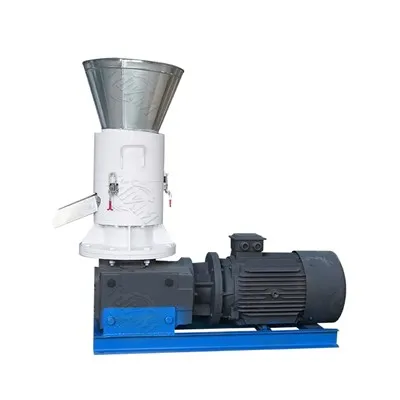
Small Feed Pellet Machines: Efficiency and Energy Savings on the Farm
Leave a message
Why Small Feed Pellet Machines Are Gaining Popularity
Small feed pellet machines have become common on-farm equipment because they combine efficiency with low energy consumption. The machine crushes and mixes raw materials and then compresses them into dense, uniform pellets. Pelleting raises feed utilization and reduces waste, because pellets are eaten completely instead of being spilled, sorted or lost as dust. For a farm that used to feed mash or depend on a distant mill, a small pellet machine brings feed quality and on-site control together.
How Pelleting Raises Feed Utilization
Every pellet carries the same blend, so animals cannot sort out preferred ingredients and leave the rest.
Heat and pressure during pelleting improve starch and protein digestibility, so more nutrients are actually absorbed.
The compact form handles, stores and feeds with minimal breakage and dust.
These effects compound. Less sorting, better digestion and lower handling loss all increase the output obtained from each kilogram of raw material, which is why farms report a visible drop in the feed bill after switching to on-farm pelleting.
Energy Efficiency of the Compact Design
Small pellet machines are efficient because they process only the volumes a farm actually feeds. A compact machine does not heat, drive and convey the batch sizes of an industrial line, so the energy a large plant spends on conditioning and moving material is simply not consumed. Modern motors and transmission systems keep the drive train efficient, so output per kilowatt-hour stays high even when the machine runs for only a few hours a day. That rhythm matches a small farm far better than a large line, which must run almost continuously to stay economical.
| Machine class | Typical drive power | Best operating pattern | Energy profile |
|---|---|---|---|
| Small on-farm pellet machine | 7.5-45 kW | 2-6 hours a day, on demand | Low standby and stop-start loss |
| Medium mill line | 45-160 kW | Shift based | Needs steady loading to stay efficient |
| Large industrial line | 160 kW and above | Continuous multi-shift | High fixed power for conveying and conditioning |
The pattern is the same in every size class: efficiency comes from matching installed power to the real workload, not from the size of the machine on the floor.
What Energy Savings Mean for Small and Medium Farms
For small and medium-sized farms the electricity saving is not an abstract number. Money not spent on power can be invested in better raw materials, additional storage or other parts of the operation, so the overall economic benefit improves. A lower power draw also reduces the load on the farm electrical installation, which matters where the supply is limited or a connection upgrade is expensive. A machine with a modest rated power can sometimes start on-farm feed production without upgrading the electrical service at all.
What to Check When Choosing a Small Machine
Rated motor power and transmission type, because an efficient drive train is what turns electricity into useful work.
Die changeover, since the same press should serve several pellet diameters for different growth stages.
Construction quality of the crushing and mixing section, because consistently ground and blended material pelletizes with less energy.
Rated output matched to the farm feeding schedule, so the machine is not oversized and running half loaded.
Frequently Asked Questions
Q: Are small pellet machines really cheaper to run than large lines?
Per hour of operation a small machine draws far less power, and it runs only when feed is needed, so total energy use on a small farm is lower.
Q: What output can a small pellet machine reach?
Rated output depends on the model and drive power; the practical rule is to match rated output to the daily feed requirement of the herd.
Q: How does pelleting reduce feed waste?
Uniform pellets cannot be sorted, they produce little dust and they are eaten completely, so the share of feed lost at the trough falls.
Q: How often should the die be replaced?
Die life depends on abrasive content and moisture of the raw material; replace it when output falls or pellet quality drops visibly.
Q: Can one machine serve several animal growth stages?
Yes. Changing the die ring and adjusting the roller clearance produces different pellet diameters on the same press.