


What are the differences between a professionally manufactured diesel fish feed extruder machine and an electric fish feed extruder?
Leave a message
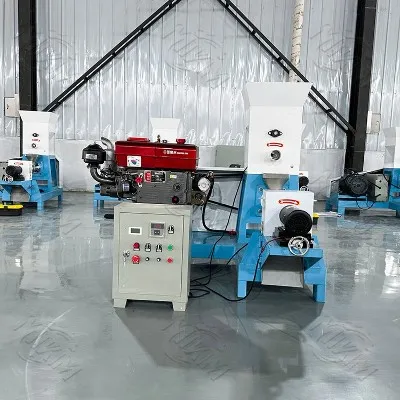
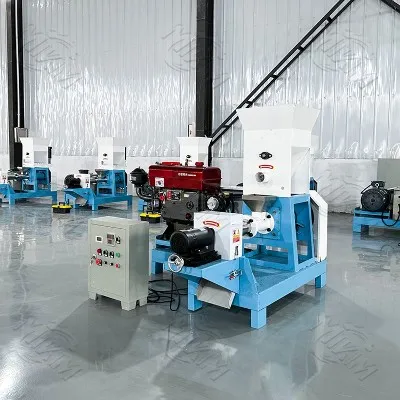
The power sources and independence differ significantly. Diesel fish extruder machines use a diesel engine as their core power source, converting diesel fuel into mechanical energy to drive the pelleting structure. They are completely independent of the power grid, requiring only a diesel supply for continuous operation. This independence makes them the preferred choice for remote mountainous areas, islands, and wild aquaculture bases, especially during power outages caused by extreme weather such as typhoons and torrential rains, ensuring uninterrupted feed production. Electric fish feed processing machines, on the other hand, rely on three-phase AC power to drive the motor. Their use is strictly limited by power grid coverage and power supply stability. Even with a generator, equipment investment and energy costs increase. A field test at an island aquaculture farm showed that the diesel engine model could continue production normally for 72 hours after a power outage, while the electric model completely stopped, resulting in feed loss exceeding ten thousand yuan.
The power output characteristics and load adaptability also differ. Diesel engines offer more stable torque output and can achieve stepless speed regulation by adjusting the throttle, adapting to the pelleting needs of raw materials with different hardness. They are less prone to power attenuation when facing heavy loads such as mixed straw feed. The power output of electric floating fish extruder machines is limited by the motor's power. While starting smoothly, they are prone to tripping or overheating under sudden load changes. Furthermore, speed adjustment requires a frequency converter, resulting in a slower response time. For example, when processing high-protein hard pellet feed, diesel models can increase torque by increasing throttle, while electric models require stopping to adjust the feeding speed if the load exceeds the rated power, impacting production efficiency.
The applicable scenarios differ significantly in terms of location and scale. Diesel floating fish feed extruders are suitable for small to medium-sized aquaculture operations in remote areas without stable power supply, especially for outdoor mobile production, eliminating the need for additional power infrastructure. Electric extruders, on the other hand, are more suitable for large-scale aquaculture bases or feed mills with well-developed power grids, relying on a stable power supply for continuous and efficient production. They also better meet environmental and noise control requirements in indoor production environments. The difference in scenario suitability between the two is essentially a balance between power characteristics and operating costs.
Related equipment


about Us
MIKIM's fish feed pellet production lines and supporting machinery offer excellent value for money. Not only are they affordable, eliminating middlemen markups and allowing small and medium-sized enterprises (SMEs) and fish farmers to purchase complete sets of equipment at reasonable costs, but they also boast exceptional efficiency. The fully automated process, from raw material crushing and precise ingredient mixing to extrusion pelleting and maturation, is completed in one continuous flow. This results in high starch gelatinization rates and uniform pellet formation, significantly improving production efficiency and feed quality, truly achieving "low cost, high output." Choosing a MIKIM fish feed pellet production line means enjoying comprehensive pre-sales and after-sales service, including 24-hour online customer support, a one-year warranty on the entire machine, professional on-site installation, commissioning, and maintenance, and a stable supply of spare parts. Customers can buy with confidence and use with peace of mind, with both excellent value and service quality!
Customer visit

Certificate of Honor

FAQ
1. What is the price of the fish feed pellet extruder?
The price ranges from approximately $3,500-$55,000
2. Do you provide maintenance services for your customers?
Yes, we offer comprehensive after-sales maintenance services to our customers.
If you would like to learn more about MIKIM machinery, please contact us. We offer one-stop service and welcome your inquiries!!!


