What are the differences in the processing principles of buoyant and sinking fish feed pellets?
Leave a message
Fish feed scattered in fishponds sometimes floats on the surface and sometimes sinks to the bottom-many people assume that "floating feed is light and sinking feed is heavy," but it's not that simple. The key difference between floating and sinking fish feed lies in the processing principle: floating feed becomes lighter by "producing gas," while sinking feed becomes heavier by "compacting." Even the operation of fish feed production lines is completely different. If you don't understand the principle, even if you buy the right equipment, you won't be able to produce qualified floating and sinking feed.
The core difference between floating and sinking materials
Whether feed floats on water depends on the density of the pellets. We all know that water has a density of 1 g/cm³. If the density of the feed pellets is less than 1 g/cm³, they will float; if it's greater than 1 g/cm³, they will sink. The density of the feed pellets is determined by whether air bubbles are created within the pellets during processing.
Processing principle of floating fish feed
1. Raw Material Combination
The formula should include 20%-30% corn flour and wheat flour (high in starch). These starches act as "gas-generating agents"-they gelatinize at high temperatures, preparing for subsequent gas production. Simultaneously, 5%-10% wheat flour (with its stickiness) helps to "lock" air bubbles within the particles, preventing them from escaping.
2. High-Temperature Heating in the Production Line
After the raw materials enter the extruder in the production line, the barrel temperature rises to 110-160℃ (similar to cooking rice porridge). The starch gelatinizes, becoming a viscous "paste." At the same time, the moisture in the raw materials (12%-14%) turns into supersaturated vapor, which is firmly encapsulated by the gelatinized starch.
3. Instantaneous Pressure Reduction
When the high-temperature, high-pressure raw material is extruded from the die of the extruder, the pressure drops instantly from several MPa to atmospheric pressure-like opening a cola bottle cap and the bubbles suddenly bursting out. The vapor in the raw material also expands rapidly, forming numerous tiny bubbles (0.1-0.5 mm in diameter) inside the particles.After cooling, the bubbles solidify, and the particle density becomes 0.8-0.9 g/cm³ (less than water), naturally allowing it to float.
Processing principle of sinking fish feed
1. Raw Material Combination: Less Starch, More High-Protein Ingredients. The formula uses only 10%-15% starch (corn flour) (just enough for binding and shaping), and more oilseed meal and fishmeal (high-protein ingredients with high density). At the same time, it avoids ingredients that easily generate gas (such as wheat bran, which is high in fiber and easily traps gas) to prevent air bubbles in the pellets.
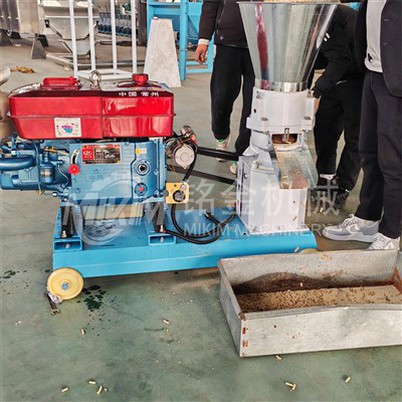
2. Low-Temperature, Low-Pressure Production Line: Preventing Gas Generation from Raw Materials. Instead of an extruder, a regular pellet mill (higher pressure, lower temperature) is used-the barrel temperature is controlled at 60-80℃ (just enough to soften the raw material, preventing starch gelatinization and gas generation), and the pressure roller pressure is increased to 8-12MPa (2-3 times higher than for floating materials), tightly compressing the raw material into compact pellets and squeezing out the air.
3. Rapid Cooling: Preventing Particles from "Absorbing Air" Immediately after granulation, rapidly cool the granules with cold air (to room temperature in 5-10 minutes) to prevent the granules from absorbing air and forming tiny bubbles during cooling. After cooling, the particle density becomes 1.1-1.2 g/cm³ (greater than water), and the particles will naturally sink to the bottom.


about Us
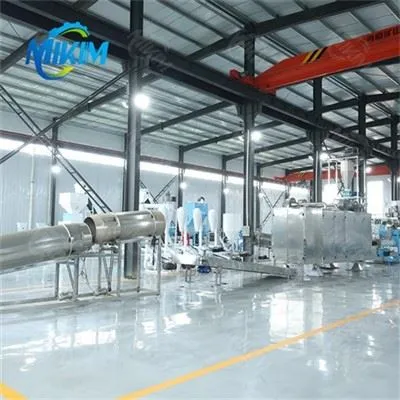
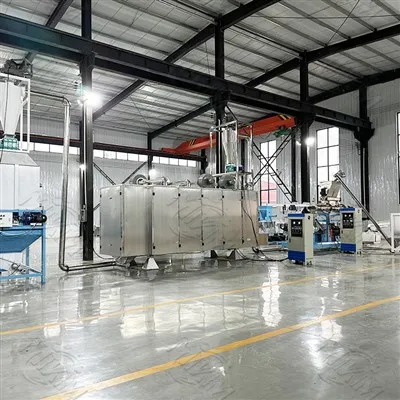
MIKIM boasts extensive experience in poultry feed pellet production lines, significantly reducing the incidence of poultry diseases. Its equipment is not only widely used across various industries domestically but also exported to Southeast Asia, Europe, Africa, and South America, earning a high reputation internationally. This global presence not only demonstrates the adaptability and competitiveness of its products, but also demonstrates the company's experience in adapting to diverse market standards and logistics conditions, enabling it to provide a stable supply chain for its overseas customers. Whether serving large domestic farms or cross-border feed companies, MIKIM can leverage its global service network to ensure a consistent, high-quality experience.
For more information on process flow design, equipment layout, factory construction plans, individual equipment pricing, or turnkey project proposals, please feel free to contact us!!!

FAQ
1. What is the price of the fish meal pellet production line?
The price ranges from approximately $8,000-$36,000
2. Do you provide maintenance services for your customers?
Yes, we offer comprehensive after-sales maintenance services to our customers.