


What are the key pieces of equipment in a fish feed pellet production line?
Leave a message
The Extruder: Core Equipment
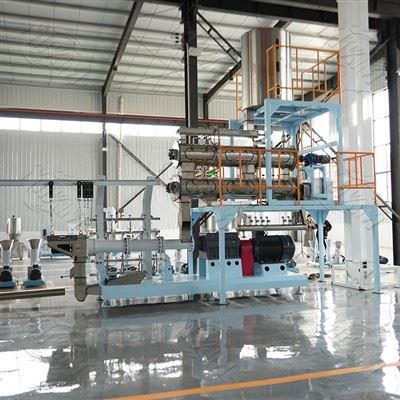
The extruder is considered the core equipment in a fish feed pellet production line, playing a crucial role in producing floating fish feed pellets. Its working principle is based on a high-temperature, high-pressure, and high-shear environment. When the mixed raw materials enter the extruder, driven by the screw, the materials are subjected to intense compression, shearing, and friction within the barrel, causing a rapid increase in temperature and pressure. Under this high-temperature, high-pressure condition, the starch in the feed gelatinizes, breaking down its originally compact molecular structure and making it easier to digest and absorb. Simultaneously, nutrients such as proteins in the raw materials denature, allowing for full nutrient release. When the material is extruded through the die, the pressure drops instantly, and the moisture rapidly vaporizes and expands, causing the feed volume to increase instantly, forming extruded feed pellets with a porous structure. These pores allow the feed to float on the water surface, making it easy for fish to consume. For example, in some modern fish feed production enterprises, advanced extruders can precisely control parameters such as temperature, pressure, and screw speed to produce fish feed pellets with stable quality and excellent buoyancy.


Overview of Auxiliary Equipment
Besides the extruder, the production line contains many other indispensable auxiliary equipment. The pulverizer is used to crush various raw materials to achieve the appropriate particle size for better subsequent mixing and processing. Raw materials such as corn and soybeans need to be pulverized into fine particles before entering the production line. This not only increases the surface area of the raw materials and improves the uniformity of mixing, but also promotes the degree of maturation during the extrusion process. The mixer is responsible for uniformly mixing the pulverized raw materials according to the preset formula, ensuring that each grain of feed contains a balanced nutritional composition.
Whether it's protein raw materials, energy raw materials, or various additives, they all need to be thoroughly mixed in the mixer to ensure the nutritional completeness of the feed. The dryer is also an important auxiliary equipment; its function is to reduce the moisture content of feed pellets and extend the shelf life of the feed. Extruded feed pellets contain a certain amount of moisture, and if not dried in time, they are prone to the growth of mold and other microorganisms, leading to feed spoilage. The dryer uses hot air and other methods to quickly remove moisture from the feed, bringing it to a safe storage standard.
Factors to Consider When Selecting Equipment
When choosing equipment for a fish feed pellet production line, multiple factors need to be considered. Production scale is a primary consideration. Large-scale aquaculture enterprises requiring daily feed production of several tons or even tens of tons need to choose large-scale equipment with high capacity and automation, such as large twin-screw extruders and supporting large crushers and mixers. Small-scale farmers or feed processing plants with lower daily output requirements can choose smaller equipment to reduce equipment and operating costs. Budget is also an important consideration.
Different brands and specifications of equipment have significant price differences; it's necessary to choose the most cost-effective equipment within the budget. Energy consumption cannot be ignored. In the long run, energy costs will account for a certain proportion of total production costs; therefore, energy-efficient equipment should be selected to reduce electricity consumption during production. Ease of maintenance is equally important. Equipment with a simple structure that is easy to disassemble and repair can reduce downtime due to equipment failure and improve production efficiency. For example, some modular designs allow for quick module replacement and resumption of production in case of failure.


Why Choose Us
MIKIM boasts extensive experience in poultry feed pellet production lines, significantly reducing the incidence of poultry diseases. Its equipment is not only widely used across various industries domestically but also exported to Southeast Asia, Europe, Africa, and South America, earning a high reputation internationally. This global presence not only demonstrates the adaptability and competitiveness of its products, but also demonstrates the company's experience in adapting to diverse market standards and logistics conditions, enabling it to provide a stable supply chain for its overseas customers. Whether serving large domestic farms or cross-border feed companies, MIKIM can leverage its global service network to ensure a consistent, high-quality experience.
For more information on process flow design, equipment layout, factory construction plans, individual equipment pricing, or turnkey project proposals, please feel free to contact us!!!
FAQ
1. What is the price of the fish food pellet production line?
The price ranges from approximately $10,000-$36,000
2. Do you provide maintenance services for your customers?
Yes, we offer comprehensive after-sales maintenance services to our customers.


