What are the selection strategies for automatic fish food making equipment?
Leave a message
Equipment selection should focus on core functions, avoiding redundant configurations. A basic production line includes five core pieces of equipment: crushing, mixing, pelleting, cooling, and packaging. There's no need to blindly pursue automation upgrades. For the crusher, choose a hammer mill with a capacity of 100-200 kg, investing approximately 30,000-50,000 RMB. This ensures it can handle common raw materials like corn and soybean meal, and can be adapted to different particle size requirements by changing the hammers and screens later. For the mixer, choose a twin-shaft paddle mixer with a capacity of 200-300 kg, investing 40,000-60,000 RMB. The mixing uniformity only needs to meet basic requirements (coefficient of variation ≤10%). For the pellet mill, choose a ring mill with a capacity of 150-250 kg, investing 80,000-120,000 RMB. The ring die can be quickly replaced (3-8mm aperture) to meet the needs of different animal feeds.
The core strategy for equipment selection is "ensuring quality with core equipment and controlling costs with auxiliary equipment." Core production equipment (crushers, pellet mills) should be selected from reliable mid-range brands to ensure stable operation and minimize downtime losses. For example, domestically renowned brands should be prioritized for pellet mills, with a ring die lifespan of ≥3 months. Auxiliary equipment (conveyors, storage) can be basic models with high cost-effectiveness, such as simple auger conveyors for raw material conveying (investment of 10,000-20,000 RMB) and vertical carbon steel silos for raw material storage (costing 40% less than stainless steel silos; proper anti-corrosion treatment is sufficient).
Flexible upgrades and cost control must be integrated throughout the selection process. Upgrade interfaces should be reserved when selecting equipment, such as allowing for motor power upgrades in crushers and additive inlets in mixers, facilitating future capacity expansion or product upgrades. A combination of "new core equipment + used auxiliary equipment" can be adopted; for example, a used cooler (80% new) costs only 50% of a new machine. If core components are in good condition, initial investment can be significantly reduced. Simultaneously, attention should be paid to equipment energy consumption and maintenance costs. Variable frequency motor equipment should be prioritized, reducing energy consumption per ton of feed by 15%. Brands with readily available spare parts should be selected to ensure controllable maintenance costs. Establish an equipment selection evaluation form, scoring it from four dimensions: capacity, cost, quality, and upgradeability. The option with the highest overall score is the optimal choice, avoiding the pitfall of making decisions solely based on price.
Related equipment


about Us
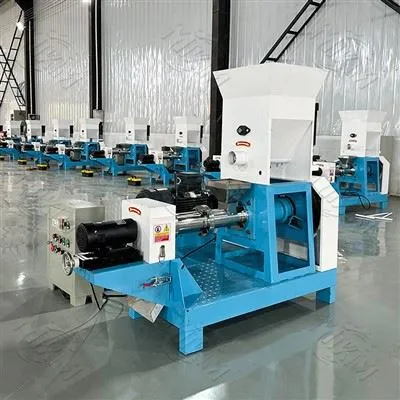
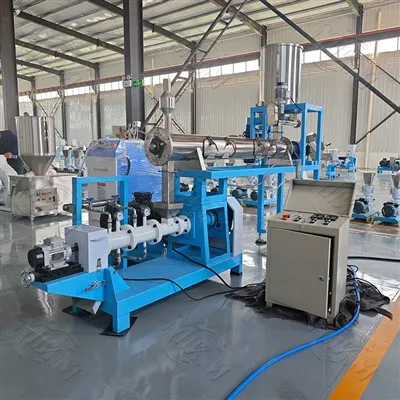
MIKIM's fish feed pellet production lines and supporting machinery offer excellent value for money. Not only are they affordable, eliminating middlemen markups and allowing small and medium-sized enterprises (SMEs) and fish farmers to purchase complete sets of equipment at reasonable costs, but they also boast exceptional efficiency. The fully automated process, from raw material crushing and precise ingredient mixing to extrusion pelleting and maturation, is completed in one continuous flow. This results in high starch gelatinization rates and uniform pellet formation, significantly improving production efficiency and feed quality, truly achieving "low cost, high output." Choosing a MIKIM fish feed pellet production line means enjoying comprehensive pre-sales and after-sales service, including 24-hour online customer support, a one-year warranty on the entire machine, professional on-site installation, commissioning, and maintenance, and a stable supply of spare parts. Customers can buy with confidence and use with peace of mind, with both excellent value and service quality!
Customer visit

Certificate of Honor

FAQ
1. What is the price of the small floating fish food machine?
The price ranges from approximately $3,500-$55,000
2. Do you provide maintenance services for your customers?
Yes, we offer comprehensive after-sales maintenance services to our customers.
If you would like to learn more about MIKIM machinery, please contact us. We offer one-stop service and welcome your inquiries!!!