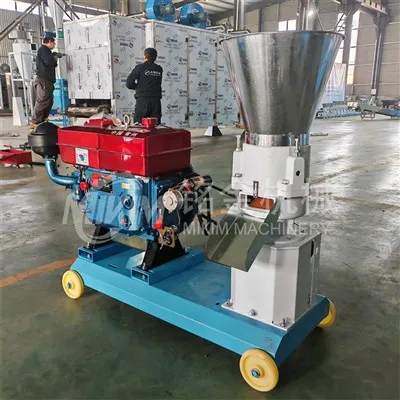
What aspects should be considered for feed pellet machines?
Leave a message
1. Applicable feed type: First, determine the type of feed to be processed, such as pellet feed, pellet material, etc., to ensure that the selected equipment can meet production needs.
2. Production scale and capacity requirements: According to the expected production scale and capacity requirements, select a suitable pellet machine model to ensure that the equipment can meet the expected output requirements.
3. Equipment performance and quality: Select a pellet machine with a well-known brand and reliable quality, and consider the durability and stability of the equipment to ensure long-term stable operation.
4. Particle size range: Different pellet machines can produce pellets of different sizes. Select the appropriate particle size range according to your needs.

| Model | Capacity | Power | Dimension | Weight |
| 125 | 80-100kg/h | 3kw | 110*35*70 cm | 95 kg |
| 150 | 120-150kg/h | 4kw | 115*35*80cm | 100 kg |
| 210 | 200-300kg/h | 7.5kw | 115*45*95cm | 300 kg |
| 260 | 500-600kg/h | 15kw | 138*46*100cm | 350 kg |
| 300 | 700-800kg/h | 22kw | 130*53*105cm | 600 kg |
| 360 | 900-1000kg/h | 22kw | 160*67*150cm | 800 kg |
| 400 | 1200-1500kg/h | 30kw | 160*68*145cm | 1200 kg |
5. Energy consumption and efficiency: Consider the energy consumption and production efficiency of the equipment, and choose a pellet machine that can save energy and improve production efficiency.
6. Maintenance and maintenance: Consider the maintenance and maintenance requirements of the equipment, and choose a pellet machine that is easy to maintain and maintain to reduce downtime and maintenance costs.
7. Degree of automation: Consider the degree of automation of the equipment. Automated pellet machines can reduce manual operations and improve production efficiency.
8. After-sales service and technical support: Choose a company with good after-sales service and technical support to ensure that the equipment can be repaired and supported in time during operation.
9. Cost and budget: Determine the budget range and choose a pellet machine with high cost performance to avoid exceeding the budget.
10. Wear resistance and life of equipment: Consider the wear resistance and service life of the equipment, especially for the treatment of harder particles.
11. Safety and environmental protection: Ensure that the equipment meets safety and environmental protection standards to reduce potential safety risks and environmental impacts.