What is the process for making pellet feed for farm animals (cattle and sheep)?
Leave a message
Production process description
The first step is roughage pretreatment. Roughages such as alfalfa and corn stalks are cut into 2-4 cm segments using a hay chopper and then crushed to 3-5 mm using a kneading machine, preserving some fiber structure and facilitating rumen fermentation. Concentrates (corn and soybean meal) are ground to 2-3 mm without excessive fineness.
The second step is mixing. Following a "ratio of 6:4" (roughage to concentrate), the roughage, concentrate, and additives (urea ≤1%, mineral premix 2%) are added to a vertical mixer and stirred for 3-5 minutes. Since ruminants have lower uniformity requirements (a coefficient of variation of ≤10%), mixing time can be shortened.
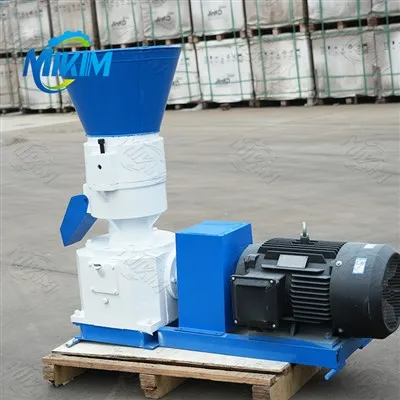
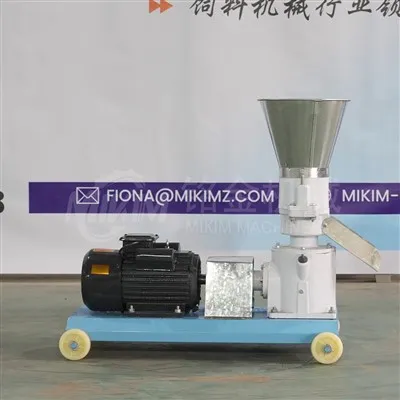
The third step is low-temperature pelleting. Unlike livestock and poultry feed, ruminant feed is pelletized using a flat die pelletizer. No additional heating is required, relying solely on mechanical pressure (2-3 MPa) to compress the mixture into large pellets of 6-8 mm. This prevents high temperatures from damaging the fiber structure necessary for rumen microorganisms.
The fourth step is natural cooling. No specialized cooling equipment is required. The pellets are spread out in a ventilated drying area and allowed to cool naturally for 1-2 hours. The moisture content should be controlled at 12%-14%. Overdrying can easily cause pellets to break.
The final step is simple packaging, using woven bags (50 kg each) without sealing. Because ruminant feed is used in large quantities and has a fast turnover rate, storage requires only stacking in a dry, ventilated shed to prevent mold. Complex storage conditions are not required.


Flat Die Poultry Feed Pellet Making Machine parameters
|
|
|
|
|
|
|
|---|---|---|---|---|---|
|
|
|
|
|
|
|
|
|
|
|
|
|
|
|
|
|
|
|
|
|
|
|
|
|
|
|
|
|
|
|
|
|
|
|
|
|
|
|
|
|
|
|
|
|
|
|
|
|
Main Products


Advantages of Flat Die Pellet Mills in Production Lines
1. Lowers the barrier to entry for small- and medium-sized production processes
The flat die pellet mill has a low unit cost. When combined with a simple production line (such as auxiliary equipment for raw material crushing, screening, and cooling), the overall investment is far lower than that of a ring die pellet mill production line, making it suitable for small processing plants or farms with limited budgets.
The production line can be flexibly configured to meet actual needs, eliminating the need for a complete set of complex equipment all at once. This allows for a gradual transition from "single-machine processing" to "semi-automated processes," reducing initial construction pressure.
2. Adapts to Flexible Production Scenarios and Raw Material Characteristics
When combined with mobile auxiliary equipment (such as a small mobile crusher), a "mobile production line" can be formed, allowing pellet processing to be completed directly at the raw material source (such as farmland or pasture), reducing raw material transportation costs. This is particularly suitable for bulky and difficult-to-transport raw materials such as straw and forage.
The flat die pellet mill has relaxed raw material pretreatment requirements, eliminating the need for additional high-precision drying and crushing equipment in the production line. Raw materials with slightly unstable moisture content and particle size can be directly processed, reducing the technical and equipment requirements for raw material pretreatment.
FAQ
1. What is the price of the farm feed pellet production line ?
The price ranges from approximately $8,000-$34,000
2. Do you provide maintenance services for your customers?
Yes, we offer comprehensive after-sales maintenance services to our customers.