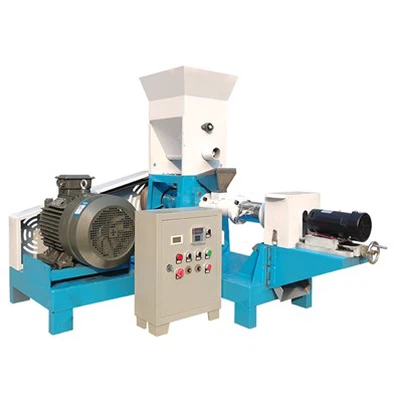
Raw Materials Suitable for Feed Pellet Machines and Their Practical Limits
Leave a message
Almost any dry, free-flowing ingredient can be pelleted, but the raw material mix determines pellet durability, throughput and die life. Feed pellet machine users should therefore think in terms of three functional groups: energy materials, protein materials and fibre-rich by-products, plus a small quantity of minerals and additives that carry the nutritional value of the finished pellet. The practical question is not whether a material can be pressed into a pellet, but at what inclusion level the process stays stable and the equipment is not worn out prematurely.
Energy Raw Materials
Maize, wheat, rice and its by-products, sorghum, barley and cassava are the structural backbone of most formulas because their starch gelatinises under steam and binds the pellet. Maize commonly carries 8 to 9 percent crude protein and around 3.5 percent crude fat, and it is the easiest energy source to pellet. Wheat contributes natural gluten, which improves pellet hardness at inclusion rates up to about 20 percent, while high levels of finely ground wheat flour can create sticky material that blocks the die. Whole-fat rice bran and other high-oil by-products should be limited to about 10 to 15 percent because free fat reduces inter-particle bonding and pellet durability.
Protein Raw Materials
Soybean meal, rapeseed meal, cottonseed meal, peanut meal, sunflower meal and animal protein sources such as fish meal form the protein part of the formula. Solvent-extracted soybean meal normally contains 43 to 46 percent crude protein and is the reference protein source for poultry and aquatic feeds. Rapeseed meal typically analyses 34 to 38 percent crude protein and is limited by its glucosinolate content, while cottonseed meal reaches 40 to 44 percent but is restricted by free gossypol, particularly in feeds for monogastric animals. Fish meal with 60 to 72 percent crude protein is used at low inclusion rates, generally 3 to 8 percent, because of cost and because excess oil reduces pellet strength.
Fibrous Roughages and By-Products
Grass meal, alfalfa meal, straw powder, rice husk, distillers dried grains and brewers grains are used to reduce formula cost and to supply bulk. They are also the materials that most often cause die blockage, because their crude fibre content is high and their particles do not deform under pressure. As a rule, crude fibre in the finished mash should stay below about 10 percent for poultry feed and below about 8 percent for aquatic feed; above these levels the compression ratio of the die has to be reduced and throughput falls sharply.
| Raw material group | Typical crude protein | Practical inclusion | Main process constraint |
|---|---|---|---|
| Maize, sorghum, cassava | 8 to 10 percent | 40 to 65 percent | Grinding fineness and moisture |
| Wheat and wheat by-products | 11 to 14 percent | Up to 20 percent | Sticky mash at high levels |
| Rice bran, full-fat by-products | 12 to 14 percent | 10 to 15 percent | Free fat lowers pellet durability |
| Soybean meal | 43 to 46 percent | 15 to 30 percent | Urease activity must be controlled |
| Rapeseed meal | 34 to 38 percent | 5 to 15 percent | Glucosinolate content |
| Cottonseed meal | 40 to 44 percent | Up to 10 percent | Free gossypol limit |
| Fish meal | 60 to 72 percent | 3 to 8 percent | Cost, oil content and odour |
| Grass and straw powders | 6 to 12 percent | 5 to 15 percent | High crude fibre, poor bonding |
Moisture, Particle Size and Additives
Two physical properties decide whether a formula will pellet. First, mash moisture: material entering the conditioner should normally be between 12 and 14 percent, so that added steam can bring it to 16 to 20 percent without exceeding the capacity of the cooler. Second, particle size: the geometric mean diameter of the mash, expressed according to ASAE S319.4, should be matched to the die. A coarse mash raises die wear and produces crumbly pellets, while an over-ground mash consumes more energy per tonne and can blind the die holes. Minerals, salt, limestone, vitamin and mineral premixes and small amounts of specialty additives are added at 0.1 to 3 percent and require premixing with a carrier to avoid localised over-concentration.
Verifying the Mix Before Pelleting
Incoming raw materials should be analysed against the values assumed in the formula, using ISO 5983-1 for crude protein, ISO 6492 for crude fat, ISO 6865 for crude fibre, ISO 5984 for crude ash and ISO 6496 for moisture. Sampling follows ISO 6497. Where feed is produced for commercial sale, the production site and its hygiene controls should also be organised in line with ISO/TS 22002-6, the prerequisite programme standard for feed and animal food production, and, where a management system is required, ISO 22000. Checking the material before it reaches the die is far cheaper than correcting a batch of pellets that has already been produced.
Frequently Asked Questions
Q: Can a feed pellet machine process materials with a high crude fibre content?
A: Yes, but only within limits. Crude fibre above roughly 10 percent in the mash prevents proper particle bonding, so the die compression ratio must be reduced and the throughput expectation lowered accordingly.
Q: What is the ideal mash moisture before pelleting?
A: Between about 12 and 14 percent. This allows steam conditioning to raise both temperature and moisture to the working range of 16 to 20 percent without leaving the cooler with product that is too wet to stabilise.
Q: Why does pellet durability fall when rice bran or full-fat material is added?
A: Free oil coats the particle surfaces and prevents the starch particles from bonding under pressure, so high-fat by-products are usually limited to 10 to 15 percent of the formula.
Q: How fine should raw materials be ground?
A: The target depends on the animal and the die. For aquatic feed a geometric mean diameter of 250 to 400 micrometres is common, while poultry mash is usually ground to 500 to 700 micrometres, measured by the method of ASAE S319.4.
Q: Are premixes and minerals difficult to pellet?
A: They are not difficult in themselves, but they must be pre-blended with a carrier and dosed at 0.1 to 3 percent, because localised concentrations of salt or minerals can corrode the die and reduce the nutritional uniformity of the batch.
Q: What tests confirm that the raw materials match the formula?
A: Crude protein, crude fat, crude fibre, crude ash and moisture are determined with ISO 5983-1, ISO 6492, ISO 6865, ISO 5984 and ISO 6496 respectively, on samples taken according to ISO 6497.