


What steps should we take if the particle size in my automatic chicken Feed Production Line is inconsistent?
Leave a message
In livestock and poultry feed production line, even if the raw materials are qualified and the equipment is functioning properly, improper process parameters-such as fluctuating conditioning temperature or excessively rapid feeding speed-can still lead to uneven pellet size. Many production personnel adjust parameters based on experience, failing to recognize the correlation between these parameters, which exacerbates the problem. In fact, by precisely controlling key process parameters such as conditioning, feeding, and cooling, pellet uniformity can be effectively improved.
Problem Causes and Solutions
1.Unstable conditioning temperature and steam consumption.
Causes: Fluctuations in steam boiler pressure (e.g., from 0.5MPa to 0.3MPa) lead to insufficient steam supply in the conditioner, causing raw material temperature to fluctuate (from 80℃ to 65℃). When the temperature is too high, the starch in the raw material is over-gelatinized, resulting in excessive viscosity and causing the extruded granules to easily clump together and form coarse particles. When the temperature is too low, the starch gelatinization rate is insufficient (below 70%), the raw material has poor viscosity, is easily broken into fragments, and exhibits significant differences in particle size.
Solution: Install a pressure stabilizing valve on the steam pipeline to ensure the steam pressure remains stable at 0.4-0.6 MPa; install a temperature sensor at the conditioner outlet to monitor the raw material temperature in real time and control it at 75-85℃ (slight variations depending on the raw material; 75-80℃ for high-starch raw materials and 80-85℃ for high-protein raw materials); if the temperature is too low, appropriately increase the steam usage (controlled by a steam flow meter, adding 5-8 kg of steam per 100 kg of raw material); if the temperature is too high, reduce the steam usage to ensure that the starch gelatinization rate of the raw material reaches over 80% after conditioning.
2.Feeding speed fluctuations or mismatch with equipment
Causes: A faulty feeder frequency converter causes the feeding speed to fluctuate (e.g., from 30 r/min to 45 r/min); When the speed is too high, too much material accumulates in the barrel, and some material is squeezed out without being fully compressed, forming coarse particles; when the speed is too low, the material in the barrel is insufficiently filled, and the pressure rollers cannot evenly grasp the material, easily producing debris; The feeding speed is mismatched with the screw speed (e.g., screw speed 300 r/min, feeding speed only 20 r/min), resulting in uneven distribution of material in the barrel.
Solution: Inspect the feeder frequency converter, replace faulty components, and ensure stable feeding speed (fluctuation range ≤ ±2r/min); adjust the feeding speed according to the screw speed, such as when the screw speed is 300r/min, control the feeding speed at 30-35r/min (determined through production testing, ensuring a raw material filling rate of 80-85% in the barrel); install a material level sensor at the feeder outlet to monitor the amount of raw material in the barrel in real time, automatically increasing the feeding speed when the material level is too low and decreasing the speed when the material level is too high to maintain a stable material level.
3.Excessive cooling speed or uneven airflow
Causes: The cooling fan has an excessive airflow (over 4000 m³/h) or the cooling time is too short (less than 8 minutes), causing the high-temperature particles (90℃) to cool down rapidly to 20℃. The large temperature difference causes uneven stress inside the particles, resulting in cracking (cracking rate exceeding 10%) and the formation of debris. Uneven airflow distribution within the cooler (such as insufficient airflow in corners) causes some particles to not cool sufficiently, making them prone to sticking together and forming coarse particles, while some particles are overcooled, making them prone to breakage and resulting in uneven particle size.
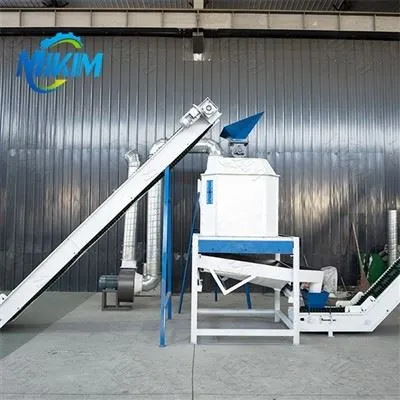
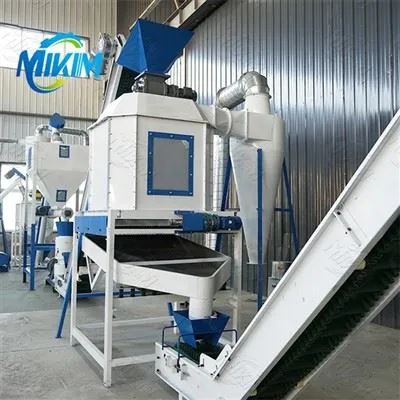
Solution: Reduce the cooling fan airflow to 3000-3500 m³/h and extend the cooling time to 12-15 minutes to ensure the particle temperature slowly drops to room temperature (temperature difference ≤5℃); check the baffles inside the cooler and adjust their angle to ensure uniform airflow distribution (by testing the wind speed at different locations in the cooler, the difference should be ≤1 m/s); after cooling, sieve the particles (using a standard sieve, such as a 4mm sieve for 4mm particles), and return the undersize particles to the mixer for secondary granulation to improve the particle size distribution rate.


Why Choose Us
MIKIM boasts extensive experience in poultry feed pellet production lines, significantly reducing the incidence of poultry diseases. Its equipment is not only widely used across various industries domestically but also exported to Southeast Asia, Europe, Africa, and South America, earning a high reputation internationally. This global presence not only demonstrates the adaptability and competitiveness of its products, but also demonstrates the company's experience in adapting to diverse market standards and logistics conditions, enabling it to provide a stable supply chain for its overseas customers. Whether serving large domestic farms or cross-border feed companies, MIKIM can leverage its global service network to ensure a consistent, high-quality experience.
For more information on process flow design, equipment layout, factory construction plans, individual equipment pricing, or turnkey project proposals, please feel free to contact us!!!

FAQ
1. What is the price of the Pellet feed production line?
The price ranges from approximately $7,000-$25,000
2. Do you provide maintenance services for your customers?
Yes, we offer comprehensive after-sales maintenance services to our customers.


