

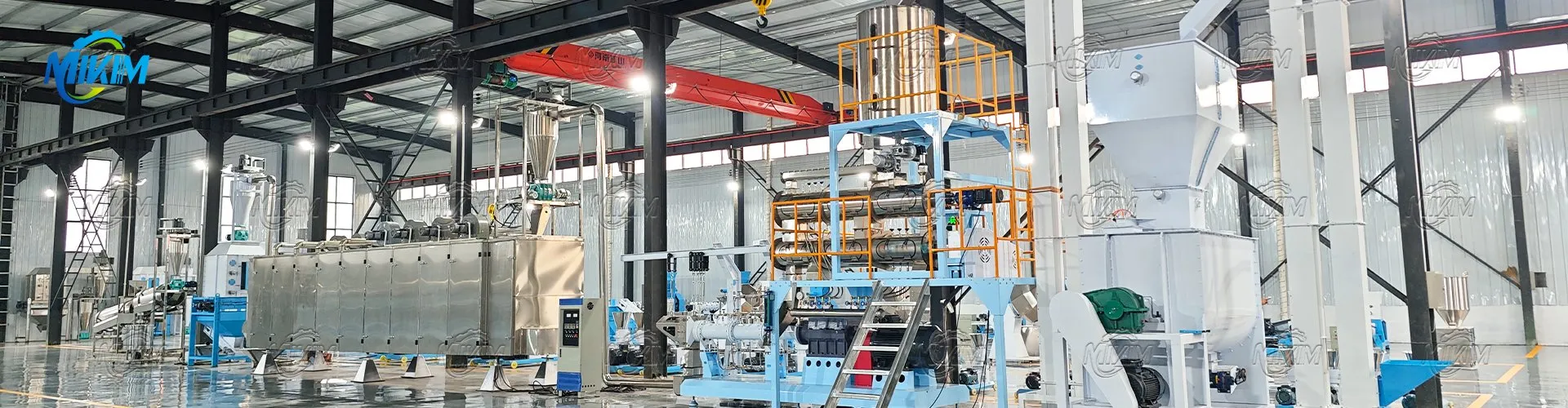
Do You Know The Role Of Feed Grinder in The Production Line?
Leave a message
The following are the specific applications and advantages of feed grinder in farm production:
Crushing of multiple raw materials: Farms usually need to handle a variety of raw materials, including grains, beans, straw, etc. Feed grinders can efficiently grind these raw materials and provide basic materials for making feeds of various formulas.
Improve feed utilization: The feed particles after grinding are more uniform, and livestock and poultry can better digest and absorb nutrients, improve feed utilization, and reduce breeding costs.
Improved palatability: The crushed feed particles are more suitable for the taste of livestock and poultry, which is conducive to improving appetite, prompting livestock and poultry to actively eat, thereby promoting growth and development.

| Model | Capacity | Power | Dimension | Weight |
| 125 | 80-100kg/h | 3kw | 110*35*70 cm | 95 kg |
| 150 | 120-150kg/h | 4kw | 115*35*80cm | 100 kg |
| 210 | 200-300kg/h | 7.5kw | 115*45*95cm | 300 kg |
| 260 | 500-600kg/h | 15kw | 138*46*100cm | 350 kg |
| 300 | 700-800kg/h | 22kw | 130*53*105cm | 600 kg |
| 360 | 900-1000kg/h | 22kw | 160*67*150cm | 800 kg |
| 400 | 1200-1500kg/h | 30kw | 160*68*145cm | 1200 kg |
Formula feed preparation: Feed grinders can adapt to different feed formula requirements. By mixing different raw materials and adjusting the grinding particle size, feed that meets the growth stages and breed requirements of different livestock and poultry can be prepared.
Increase feed types: The flexibility of feed grinders enables farms to handle more types of feed raw materials, and can adjust feed types at any time according to market demand and livestock and poultry needs.
Customized feed production: Farms can customize feed production plans according to their own needs, and through the rational use of feed grinders, realize personalized customization of feed and improve production efficiency.
