


What Is The Role Of Feed Grinders in The Breeding Industry?
Leave a message
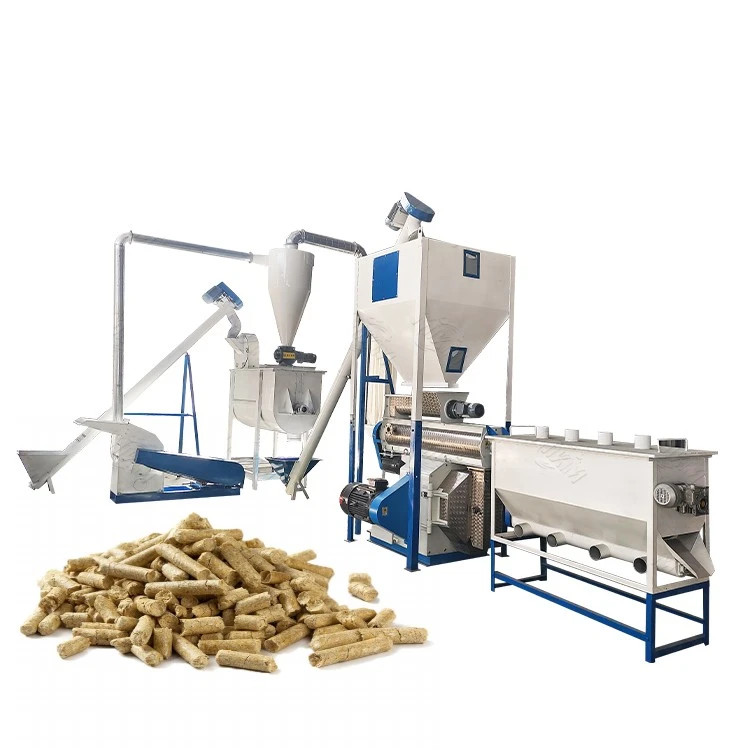
It is a key equipment for converting hay, feed and other raw materials into granular materials that are easy for livestock to digest. This article will explore the role and importance of feed grinders in the breeding industry.
First of all, the main function of a feed grinder is to grind large pieces of feed materials into smaller particles, which can increase the surface area of the feed, thereby increasing the appetite and digestion and absorption rate of animals. In addition, the crushed feed particles are also easier to store and transport, reducing feed waste caused by crushing during transportation and storage.
| Model | Capacity | Power | Dimension | Weight |
| 125 | 80-100kg/h | 3kw | 110*35*70 cm | 95 kg |
| 150 | 120-150kg/h | 4kw | 115*35*80cm | 100 kg |
| 210 | 200-300kg/h | 7.5kw | 115*45*95cm | 300 kg |
| 260 | 500-600kg/h | 15kw | 138*46*100cm | 350 kg |
| 300 | 700-800kg/h | 22kw | 130*53*105cm | 600 kg |
| 360 | 900-1000kg/h | 22kw | 160*67*150cm | 800 kg |
| 400 | 1200-1500kg/h | 30kw | 160*68*145cm | 1200 kg |
Secondly, feed grinders also help improve the nutritional intake of livestock. Some studies have shown that if the cellulose in the feed cannot be fully decomposed and utilized, it will affect the health and productivity of livestock. Grinding cellulose into small particles through a feed grinder can increase the intake rate of these nutrients by livestock.
Furthermore, feed grinders can also provide customized feed according to different animal species and growth stages. For example, some studies have found that for young animals, higher energy density is needed to support their growth, so high-protein raw materials can be ground into smaller particles to increase energy density. For elderly animals, due to their weakened digestive function, crude fiber raw materials can be ground more finely to prevent them from swallowing difficulties or causing gastrointestinal diseases.


