


How Does The Feed Extruder Work?
Leave a message
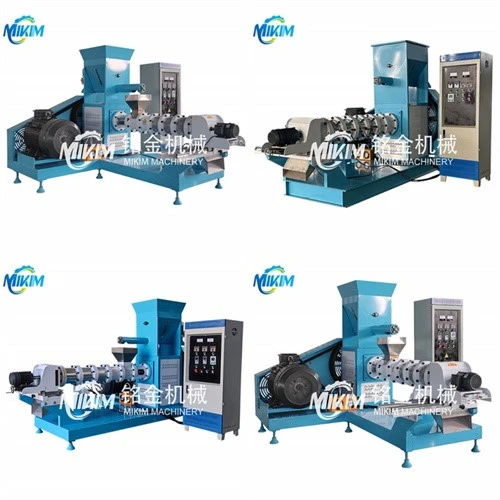
When the feed extruder is working, the raw materials are evenly fed into the screw extrusion chamber from the feeder. The space volume of the extrusion chamber gradually becomes smaller along the direction of material advancement, and the expansion force on the material gradually increases. At the same time, the movement of materials in the extrusion cavity is accompanied by strong shearing, rubbing and friction. Sometimes, if necessary, an electric heating chip can be installed outside the puffing chamber to assist heating. As a result of this combined effect, the temperature of the material rises sharply, and the starch in the material is gelatinized. The entire material becomes a molten plastic colloid.
|
Model |
40 |
60 |
70 |
80 |
|
Power |
5.5KW |
15KW |
18.5KW |
22KW |
|
Yield(kg/h) |
40-50 |
120-150 |
150-200 |
200-250 |
|
Weight |
300KG |
360KG |
450KG |
850KG |
|
Size(mm) |
1350-1100-1250 |
1450-1150-1250 |
1650-1250-1350 |
1800-1600-1300 |
At the moment when the material is discharged from the extrusion die hole, the pressure suddenly drops to 0.1Mpa, the water quickly turns into steam and increases the volume, causing the material volume to expand rapidly. The water vapor further evaporates and escapes, causing the material moisture content to decrease. At the same time, the temperature It also dropped quickly. The material solidifies immediately, and many micropores appear in the coagulated colloidal material. The continuously extruded columnar or sheet-shaped puffed products are cut by a rotary cutter and then cooled. Sometimes, post-processing steps such as drying and spraying of additives (such as oils and vitamins, etc.) are required.

