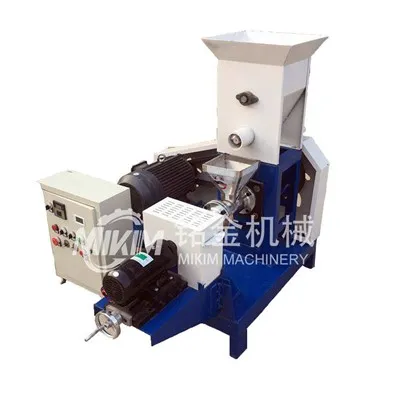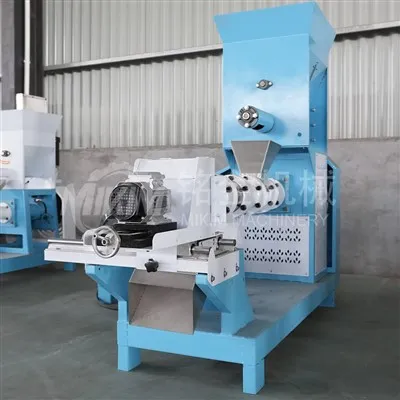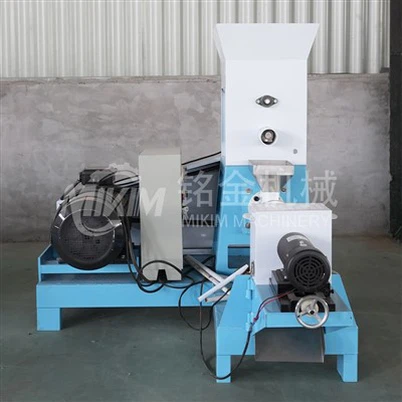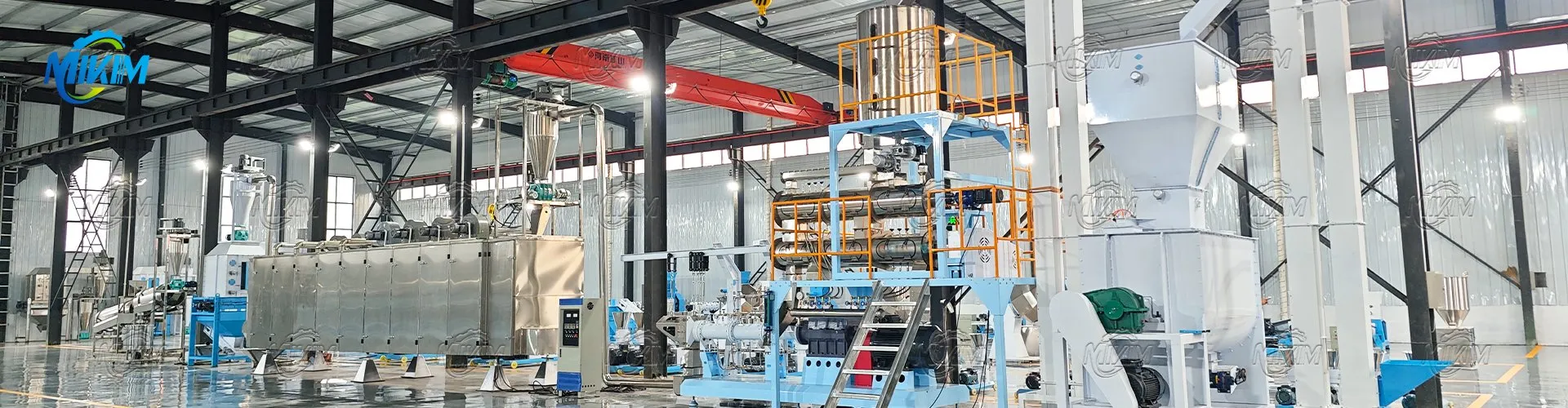
Reasons For And Solutions To Poor Quality Of Finished Products From Fish Food Extruder Lines
Leave a message
reason
1. Raw material stage: The starch content in the raw material formula is too low (below 25%), or the crude fiber content is too high (above 15%). Starch is the "binder" of puffed pellets. When the content is too low, the material cannot form a stable binding structure during the puffing process, and the pellets are easy to break apart. When the content of crude fiber (such as bran, straw powder) is too high, it will destroy the binding properties of the material, resulting in a loose internal structure after the pellets are formed, which will break easily under external force.
2.Excessive gap between the pressure roller and the ring die, severe wear of the ring die orifice, or insufficient screw thrust in the extruder can all cause problems. If the gap between the pressure roller and the ring die exceeds 0.3mm, the material cannot be fully compressed, resulting in low particle density (below 0.9g/cm³) and poor forming. Wear of the ring die orifice increases its diameter (e.g., a 3mm orifice worn down to 3.5mm), preventing the material from being tightly compacted during extrusion. Insufficient screw thrust (e.g., worn screw threads or insufficient motor power) leads to insufficient pressure within the extrusion chamber, preventing the material from fully filling the die orifice and resulting in a loose particle structure.
3. Drying and cooling process: If the drying temperature rises too quickly or the cooling air velocity is too high, the temperature will rise sharply in the initial stage of drying (from room temperature directly to 80℃). The surface moisture of the particles will evaporate and shrink rapidly, and the internal moisture cannot be discharged in time, resulting in cracks in the particles. If the air velocity is too high during cooling (exceeding 5m/s), it will blow the cracked particles apart, increasing the breakage rate.


Final product display

Solution
1. Raw material formulation optimization: Adjust the formulation to increase the starch content to 28%-35% (corn, potato starch, and other starchy raw materials can be added), while controlling the crude fiber content to within 10%-12%. If crude fiber raw materials (such as bran) need to be added, they must first be crushed to at least 100 mesh to reduce damage to binding properties.
For aquatic feed production, 0.5%-1% bentonite (a natural binder) can be added to improve pellet binding strength, but care should be taken to ensure that the amount of bentonite added does not exceed 1.5% to avoid affecting digestibility.
2. Compaction and reinforcement during the puffing and molding process: Use a feeler gauge to check the gap between the pressure roller and the ring die, adjusting it to 0.1-0.2mm. If the pressure roller is worn, replace the roller skin (choose a high-wear-resistant rubber material); Inspect the ring die hole. If the wear exceeds 0.2mm, replace it with a new ring die, choosing one with higher hardness (such as 40Cr material) to extend its service life.
3. Gentle drying and cooling process: Employ a "step-by-step drying" method, initially controlling the temperature at 55-60℃ (maintaining for 5 minutes), then increasing to 70-75℃ to prevent sudden shrinkage and cracking of the particle surface; Adjust the cooler fan speed to 3-4 m/s, while extending the cooling time to 8-10 minutes to ensure slow cooling of the particles and reduce crack formation;
about Us
MIKIM is a high-tech enterprise integrating R&D, production, and sales. Its feed extrusion equipment utilizes a high-temperature, high-pressure process, which sterilizes, improves puffing density and digestibility, and saves 8%-15% on feed costs. Pellet diameters are adjustable from 1-16 mm, and it features controllable cutting and floating adjustment to suit the needs of fish, shrimp, crab, and pet food. Core components are sourced from international brands and undergo special treatment, ensuring stability and durability while balancing safety, efficiency, and peace of mind.
Qualifications and Honors

Customer visit


FAQ
1. What is the price of the extruder pellet machine line?
The price ranges from approximately $25,000-$60,000
2. Do you provide maintenance services for your customers?
Yes, we offer comprehensive after-sales maintenance services to our customers.