

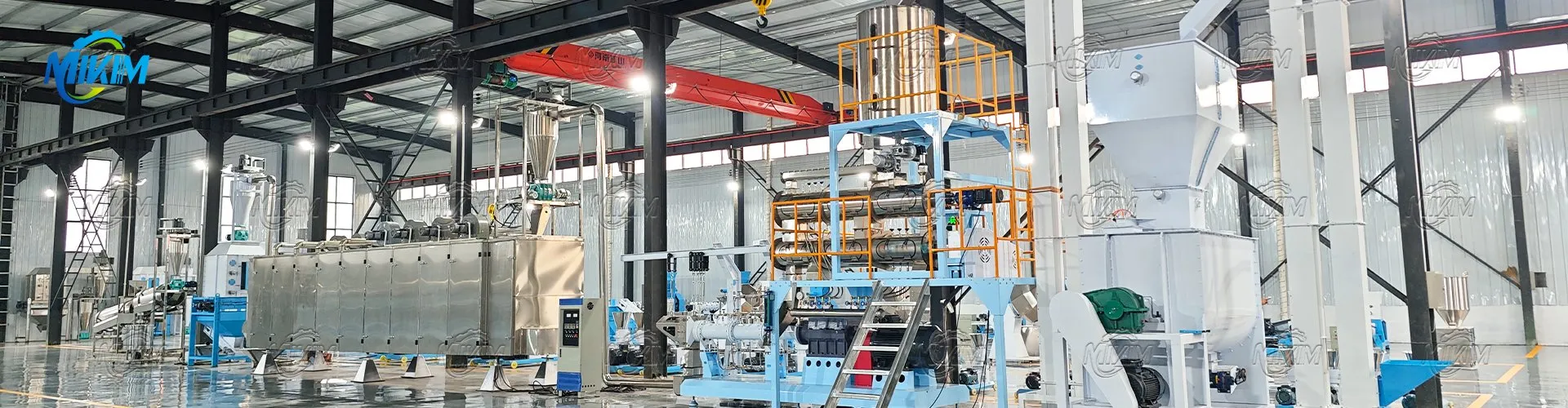
Solutions For Aquarium Floating Fishfeed Extruder's Inability To Granulate
Leave a message
Prawn feed has high requirements on pellet water resistance and nutrition retention, and the pelletizing difficulty is relatively large. The main reasons for the failure of prawn feed pelletizing are insufficient bonding and low starch gelatinization rate. The solution is: first, adjust the raw material formula, increase the content of starch raw materials (such as wheat flour) to 25%-30%, and add 1%-2% of sodium alginate as a binder; second, reduce the screw speed to 180-200r/min, extend the residence time of raw materials in the machine, and improve the extrusion and bonding effect; third, increase the die temperature to 95-105℃, ensure the starch gelatinization rate reaches more than 85%, and enhance the water resistance of the pellets. The cooperative initially used the same formula as tilapia feed to produce prawn feed, resulting in insufficient bonding. After adjusting the formula and parameters according to the above methods, the prawn feed pelletizing was successful.
Tilapia feed has high starch content and strong bonding performance, and the pelletizing difficulty is relatively small. The failure of pelletizing is mostly due to improper moisture or parameter setting. The solution is: control the raw material moisture at 14%-16%, set the screw speed at 220-250r/min, and the die temperature at 100-105℃. If the pellets are loose, you can appropriately increase the die compression ratio to 1:10-1:12, and increase the extrusion force. At the same time, ensure that the raw material particle size is uniform, and the corn is crushed to 40-60 mesh.
Catfish feed has high protein content and high fat content, and the raw materials are easy to agglomerate or slip, resulting in difficulty in pelletizing. The solution is: first, control the raw material moisture at 13%-15%, avoid excessive moisture leading to raw material agglomeration; second, add 2%-3% of bran to improve the fluidity of raw materials; third, set the screw speed at 200-220r/min, and the die temperature at 85-95℃, avoid high temperature causing fat oxidation; fourth, choose a die with a larger compression ratio (1:10-1:12) to enhance the extrusion bonding effect. In addition, the catfish feed should be mixed fully to ensure that the fat is evenly distributed, avoiding local fat content too high leading to pelletizing failure.
For other fish species feed, the core idea is to grasp the two key points of "feed characteristics + equipment adaptation". For herbivorous fish feed with high fiber content, the screw speed should be reduced and the die compression ratio should be increased; for carnivorous fish feed with high protein content, the appropriate binder should be added and the temperature should be controlled to avoid nutrient loss.
Why choose us?
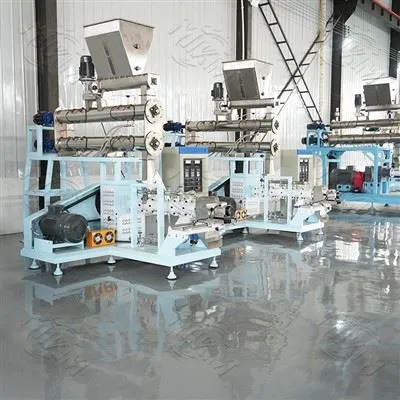
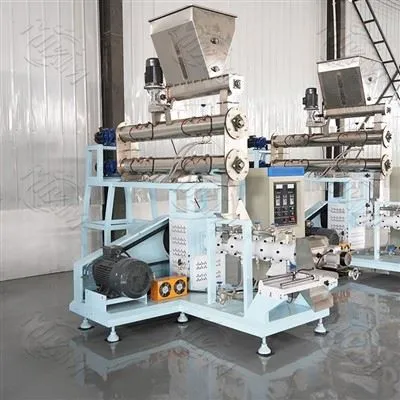
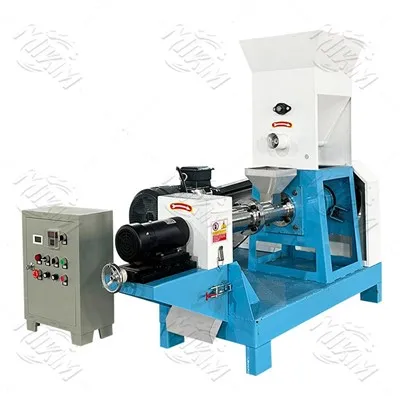
The MIKIM extruder is constructed entirely of food-grade 304 stainless steel, fully complying with food processing hygiene standards. It is corrosion-resistant, easy to clean, and eliminates potential contamination at the source. The core screw is made of high-quality alloy steel through special heat treatment, offering outstanding wear resistance and corrosion resistance. Combined with its integrated structural design, this significantly extends its service life. The entire machine has passed CE and ISO international authoritative certifications, aligning with global quality standards and ensuring safer and more reliable processing.
Our equipment

Our Services
We offer:
One-Year Whole Machine Warranty Service
On-site Installation, Commissioning, and Technical Guidance
24/7 Online Technical Support
Qualifications and Honors

Customer visit


