The Distinction Between Extruded And Aqueous Pellet Production Techniques
Leave a message
Differences in production methods
1. Pelleted feed: Made from corn, soybean meal, wheat bran, etc., the feed is crushed and mixed according to the formula. It is then conditioned by steam (moisture content controlled at 15%-18%) and fed into a pellet mill. It is formed under mechanical extrusion at a temperature of 80-90℃. No subsequent puffing process is required. The finished pellets have a high density and a relatively smooth surface.

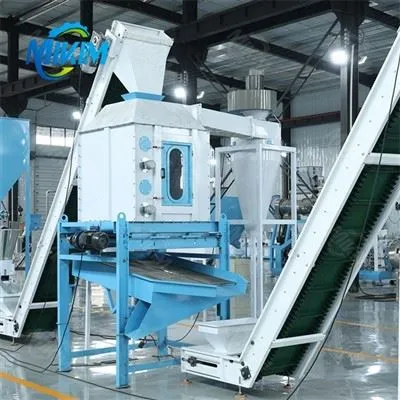
2. Extruded feed: The raw materials are ground into finer particles (usually requiring 80 mesh or higher). In addition to steam, an appropriate amount of water is added during mixing to bring the moisture content after conditioning to 22%-25%. Then it enters the extruder and is extruded under high temperature and high pressure at 110-130℃. Some products are also coated with liquid (to supplement oils, vitamins, etc.). The finished pellets have a loose texture, honeycomb-like pores inside, and low density.



Advantages and disadvantages of both
1. Pelleted Feed
Advantages: Low production cost, 15%-20% lower than extruded feed, suitable for large-scale freshwater fish farming; lower processing temperature, better retention of heat-sensitive nutrients such as B vitamins and amino acids; high pellet density, fast settling speed after being added to water, suitable for bottom-feeding fish.
Disadvantages: Poor stability in water, usually dissolving within 30 minutes, easily polluting water; low starch content (approximately 50%-60%), relatively low digestibility and absorption by fish, and higher organic matter content in feces.

2. Extruded Feed
Advantages: High starch content (80%-90%), good digestibility and absorption by fish, feed conversion ratio can be reduced by 0.1-0.2; strong stability in water, can remain in water for 1-2 hours without dissolving, reducing water pollution; the extrusion process can kill harmful bacteria such as E. coli and Salmonella in the raw materials, reducing the risk of fish diseases. Disadvantages: High production costs, and the high temperature during processing can lead to the loss of 10%-15% of heat-sensitive nutrients; low particle density, mostly suspended in the upper layer of the water, making it unsuitable for bottom-dwelling fish.

Particle selection
1. Fish species suitable for pelleted feed: Bottom-feeding fish such as carp, crucian carp, and black carp. These fish are accustomed to foraging at the bottom of the water, and pelleted feed, after rapid settling, can precisely meet their feeding needs. Additionally, juvenile grass carp (5-10 cm in length) are also suitable for pelleted feed, as their digestive systems are not yet fully mature, and the nutrients retained by pelleted feed better match their growth requirements.
2. Fish species suitable for extruded feed: Mid-to-upper-level feeding fish such as adult grass carp (over 10 cm in length), silver carp, and bighead carp. The suspension properties of extruded feed allow fish to easily feed in the mid-to-upper levels. Furthermore, high-density farmed carp and crucian carp can also use extruded feed, as its high digestibility reduces water pollution and maintains a stable farming environment.
FAQ
1. What is the price of the fish feed processing line?
The price ranges from approximately $15,000-$55,000
2. Do you provide maintenance services for your customers?
Yes, we offer comprehensive after-sales maintenance services to our customers.