150-250 Kg/H Dry Type Floating Fish Feed Production Line For Tilapia And Barramundi
A dry type floating fish feed line for tilapia and barramundi, built for a 380 V 60 Hz supply.
Description
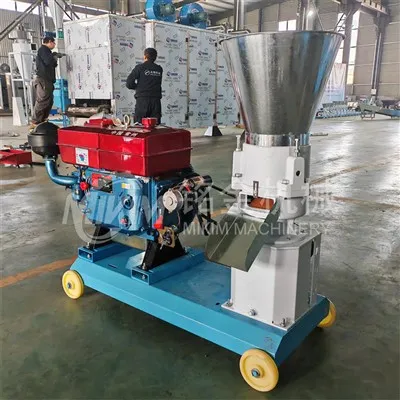
Quick answer
A 150-250 kg/h dry type floating fish feed production line runs an LX series extruder on a 380 V 60 Hz supply, with a mixer, screw conveyor, pneumatic transfer, five layer dryer, oil coater, cooling conveyor and control cabinet. The line draws 101.25 kW and ships in one 40 ft container.
In this guide
floating fish feed pellet making production line test
01
What Does a Dry Type Floating Fish Feed Production Line Include?
Nine machines and one control cabinet on a dry type fish feed extruder line at 150-250 kg/h: mixer, screw conveyor, extruder, two pneumatic conveyors, tumble dryer, oil injector, rotary seasoning drum and cooling conveyor.
NINE MACHINES, ONE CABINET
The line runs from raw meal to a coated, cooled, bagged pellet. Every transfer between stages is mechanical or pneumatic, so no stage depends on manual handling between the mixer and the bagger.
| ITEM | MACHINE NAME | PIECTURE | MACHINE PARAMETER | QUANTITY | UNIT |
|---|---|---|---|---|---|
| 1 | Mix and blender |  |
ModelJB-2 Power :7.5 KwCapacity: 5-8min/batch, 50kg/batchWeight: 100KGMaterial: Frame: 201 stainless steel;Material contact: 304 stainless steel | 1 | UNIT |
| 2 | Screw conveyor |  |
ModelSSJ-5 stainless materialPower: 1.5 KwCapacity : 300kg/h | 1 | UNIT |
| 3 | Feed extruder |  |
The hoist is constructed from stainless steel.It facilitates easy cleaning, ensuring a clean and tidy appearance.ModelMIK-70-4Power: 18.5 Kw +0.75 Kw+1.5 Kw+2 KwVoltage:3 phase, 380 V, 50 HzThe hopper of the extruder facilitates automatic feeding, automated expansion and cutting into pellets.Simply changing the die allows production of different shapes and varieties of feed, such as dog food, cat food, fish feed, poultry feed, livestock feed, and other types of animal feed. | 1 | UNIT |
| 4 | Pneumatic conveyor |
|
ModelSSJ-Q2Capacity: 300kg/hFan power: 2.2 KwAirlock power: 1.1 Kw201 Stainless Steel Square Tube Frame,Connect the outlet of the feed extruder to the inlet of the dryer, conveying the material by airflow to achieve automated drying. | 1 | UNIT |
| 5 | Automatic tumble dryer |
|
ModelHGJ-2Capacity:300kg/hDryer: 5 tiers / 5 metresHeating power: 45 KwFan power: 2.2 Kw × 4 unitsConveyor belt power: 3 KwStainless Steel Square Tube Frame, easy to clean, neat and tidy | 1 | UNIT |
| 6 | Pneumatic conveyor |
|
ModelSSJ-P3Fan power: 2.2 KwAirlock power: 1.1 KwUtilising wind power to convey materials to the dryer's feed inlet, thereby achieving automated drying. | 1 | UNIT |
| 7 | Rotary seasoning machine |  |
Main Power: 0.75 KwCapacity: 3-5min/batch, 50kg/batchFeed Hopper Material: 304 Stainless Steel | 1 | UNIT |
| 8 | Injector |  |
ModelPYJ-2Spraying power: 0.55 KwHeating power: 3 KwAgitation power: 0.75 KwOil sprayer, capable of heating, stirring, and automatic seasoning application.Constructed from stainless steel. | 1 | UNIT |
| 9 | Cooling conveyor belt |  |
Drive power: 0.75 KwFan power: 0.1 Kw × 3 unitsCapacity: 500kg/hThe cooling conveyor belt, measuring 5 metres in length, cools the finished granules to facilitate subsequent packaging. | 1 | UNIT |
| 10 | Domestic transport charge to seaport Qingdao | 1*40'HQ | Power 3 phase 380/220v, 50Hz | 1 | UNIT |


Table 1: Equipment list for the 150-250 kg/h dry type floating fish feed line.
The extruder is the LX series dry single screw machine, rated 200-300 kg/h at 18.5 kW, which holds the 150-250 kg/h band with headroom at the bottom and enough reserve at the top for a wet batch.
What the extruder does on this line
The barrel cooks the meal on friction and heater bands, the die sets the pellet diameter, and the rotating cutter sets length. Changing the die changes the product, which is why five dies ship with the line.

02
Which Dry Type Capacity Fits, 150-250, 250-500 or 1 t/h?
Take the 150-250 kg/h build unless the farm already sells beyond its own ponds. The three capacities are three different machine lists, not one line with a dial turned up.
| Capacity Band | Extruder | Dryer | Container |
|---|---|---|---|
| 150-250 kg/h | LX-75, 18.5 kW | Five tier, 45 kW | One 40 ft |
| 250-500 kg/h | Larger barrel, 37 kW and up | Longer dryer, more tiers | One 40 ft, tighter |
| 1 t/h | Twin screw route | Multi pass dryer | Two 40 ft |
Table 2: The three capacity bands against machine and shipping.
THREE BANDS, THREE LISTS
A 150-250 kg/h line and a 1 t/h line share a process route and nothing else. The extruder, the dryer, the transfer pipe and the container count all change, so the choice belongs at the start rather than at the quotation.
A farm feeding its own cages sits at the bottom of the band and runs one shift. A farm selling bagged feed to other growers needs the 250-500 kg/h build, because a single 18.5 kW barrel leaves no room for a second product line.
Why the band is quoted rather than a single figure
An extruder holds a band, not a number. Output moves with the formula, the die and the moisture of the meal, so the line is quoted as 150-250 kg/h and the guaranteed figure is stated against the buyer's own formula.
03
Why Order a 60 Hz Machine for a Saudi Site?
Because a 50 Hz motor on a 60 Hz supply runs 20 percent faster, and every fan and pump on the line then draws about 70 percent more power than its nameplate says.
60 Hz FROM THE FACTORY
The extruder motor, the dryer fans, the pneumatic conveyor blowers and the cooling fans are all wound for 60 Hz. Heater bands are resistive and do not change with frequency, but they are built for the site voltage.
The site figure is 380 V, three phase, 60 Hz. That combination is ordered at the factory rather than corrected on site, because rewinding a motor after delivery costs more than specifying it correctly.
What changes with frequency and what does not
Motor speed follows frequency, so a 50 Hz fan on a 60 Hz supply turns 20 percent faster and moves far more air. Heaters do not, because they are resistive. The control cabinet is built for the site voltage and carries the overload settings for the 60 Hz motors.
Why the dryer fan matters most
The dryer carries four 2.2 kW fans. At 60 Hz those fans move more air than at 50 Hz, which is good for drying and hard on the motor if it was wound for 50 Hz. The fans are ordered for 60 Hz so the airflow and the motor load both stay inside their ratings.
04
What Dies Cover Tilapia and Barramundi?
Five dies ship with the line at 1.5 mm, 2.0 mm, 3.0 mm, 4.0 mm and 6.0 mm. Tilapia moves from 1.5 mm at fry to 4.0 mm at grow out, and barramundi takes 4.0 mm and 6.0 mm from fingerling onward.
FIVE DIES, TWO SPECIES
A tilapia cycle runs 1.5, 2.0 and 3.0 mm. A barramundi cycle runs 4.0 and 6.0 mm. Both species run on one barrel, and the die change is the only setup between them.
The die sets diameter and, together with the cutter, sets the length. A 1.5 mm die needs a faster cutter than a 6 mm die to hold the same length to diameter ratio.
What the die does to float
Float comes from expansion at the die. A die with a short land releases the melt quickly and the pellet expands further, which is how a floating pellet is made. The same barrel with a longer land makes a denser, slower pellet.
Die material and wear
A die wears at the hole entry first, and a worn entry rounds over and lets the pellet come out oversized. On a line running two species and five sizes, two dies in the sizes used most is the working stock.


05
Does the Dry Type Single-Screw floating fish feed pellet machine Make Both Floating and Sinking Feed?
Yes. A dry type fish food extruder line makes a floating pellet at a high expansion and a sinking pellet at a low one, and the change is a die and a screw speed setting.
FLOAT IS A SETTING
Expansion decides whether the pellet floats. A short die land and a higher barrel temperature give a floating pellet with a closed skin; a longer land and a cooler barrel give a sinking one.
A farm feeding tilapia in cages wants floating feed, because the fish come to the surface and the farmer can see how much is eaten. A barramundi pond may want a slower pellet that sinks into the water column.
Why one line can serve both
The barrel and the screw are the same. Only the die land, the temperature and the cutter speed move, which is why a single extruder covers a mixed species farm without a second machine.
What the customer sees at the surface
A floating pellet that starts to sink after twenty minutes is a pellet that has lost its skin. The factory test holds pellets in water and records the float time, and that figure belongs in the acceptance sheet.

06
What Spare Parts Ship With a Dry Type Fish Feed Line?
Two spare extruder screws in 38CrMoAl, two spare heating ring sets, two spare cutter blade sets, and one die per size in production.
SCREWS, RINGS, BLADES
The screw is the wear part with the longest lead time, which is why two spare screws ship with the line. Heating rings fail at the terminal, and cutter blades fail at the edge.
The extruder screw is nitrided 38CrMoAl, and it wears against the barrel. A worn screw gives a pellet with a torn skin and a lower output at the same setting, and it is the item that decides whether a stopped week stays a week.
What the heating rings do
The rings wrap the barrel and bring it to temperature before material runs. A ring that has lost output is invisible until pellets start coming out with a rough surface.
What the cutter consumes
Blades, and they are cheap. A spare set on the shelf turns a stopped day into a stopped hour.
07
Why Is a Dry Type Line Cheaper Than a Wet One?
Because a wet line needs a steam boiler, a conditioner and an operator who can hold a steam pressure, and a dry line needs none of the three.
NO BOILER, NO CONDITIONER
A dry type fish meal extruder line cooks on friction and heater bands. The capital sits in the extruder, the dryer and the transfer, not in a boiler house.
A wet type line makes a denser, more uniform pellet and it is the right choice above 500 kg/h, where the volume justifies the boiler. At 150-250 kg/h the boiler becomes the largest capital item and the largest maintenance item after it.
Where the wet line still wins
High oil formulas and products where starch gelatinisation has to be near complete. A tilapia and barramundi farm selling floating feed does not need either.
08
Which Machines Sit Behind a Dry Type Fish Feed Line?
The dryer, the oil injector, the seasoning drum and the cooling conveyor. Each one exists because of a property the pellet has when it leaves the die.
| Stage | Machine | Why It Sits There |
|---|---|---|
| Transfer | Pneumatic conveyor | Carries the wet pellet without breaking it |
| Drying | Five tier tumble dryer | Takes moisture down before oil goes on |
| Coating | Oil injector | Fat onto a warm, dry surface |
| Seasoning | Rotary drum | Spreads the oil film evenly |
| Cooling | Cooling conveyor | Surface down before bagging |
Table 3: The stages behind the extruder and the reason each one is there.
DRY, COAT, COOL
Oil goes on after the dryer because a wet surface will not hold it. Cooling comes after the coater because a warm surface rubs off in the bag.
The pneumatic conveyors are stainless square tube frames, which matters in a coastal site where salt air reaches every surface.

Why the dryer is the largest single load
45 kW of heating and four 2.2 kW fans make the dryer the biggest electrical item on the plant, larger than the extruder motor. The building height and the supply size both follow it.
09
How Much Power Does a Dry Type Floating Fish Line Need?
101.25 kW connected, in a line about 26 m long and 4 m wide, with the dryer setting a clear height of 7 m.
| Stage | Power |
|---|---|
| Mixer and blender | 7.5 kW |
| Screw conveyor | 1.5 kW |
| Extruder, feeder, cutter, heater | 22.75 kW |
| Pneumatic conveyor, two units | 6.6 kW |
| Dryer, heater and fans and belt | 56.8 kW |
| Oil injector | 4.3 kW |
| Rotary seasoning drum | 0.75 kW |
| Cooling conveyor | 1.05 kW |
| Total | 101.25 kW |
Table 4: Connected power of the 150-250 kg/h line.
DRYER AND EXTRUDER TOGETHER
The dryer at 56.8 kW and the extruder at 22.75 kW together carry four fifths of the load. The supply is sized against the total, and the start arrangement is sized against the extruder motor.

What the supply has to carry
101.25 kW as a running load, and the extruder start as a separate case. Those are two different numbers, and the electrician needs both before the cable is ordered.
Floor and height
A single storey shed works when the dryer is placed beside the extruder and the pneumatic transfer carries the pellet up. The five tier dryer is the tallest item, and the fan platform above it needs access.
10
What Goes on the Proforma Invoice?
Unit prices on FOB Qingdao or Shanghai, net and gross weight per machine, total packed volume in cubic metres, payment terms and delivery time.
FOB QINGDAO OR SHANGHAI
The line ships in one 40 ft high cube container. Net weight, gross weight and packed volume are stated per machine on the invoice, because a forwarder books on the packed figures rather than the machine figures.
The invoice also states the supply voltage and frequency, because a line built for 380 V 60 Hz cannot be exchanged for a 50 Hz one after it ships.
What is quoted apart from the machines
Installation and commissioning, operator training and the spare parts package are quoted as their own lines so they can be accepted or declined item by item.
Payment and delivery
Payment terms and delivery time are stated on the invoice. Delivery runs from receipt of the advance payment, and the container is booked against the confirmed specification rather than against the order date.
11
How Is a Dry Type Fish Feed Line Installed in Saudi?
Installation guidance is given by video, commissioning is quoted as a separate line, and operator training runs on the buyer's own material once the line is under power.
VIDEO FIRST, ENGINEER ON REQUEST
The line is straightforward to place, and video guidance covers alignment, the first run and the die change. An engineer visit is quoted separately when a site wants hands on commissioning.
Training covers four operations: starting the extruder on a warm barrel, changing a die and resetting the cutter, setting the dryer pass for the pellet size, and reading a pellet for float and durability.
What the site provides
A level floor, a roof, a 380 V 60 Hz supply that carries the extruder start, and covered storage for raw meal. The supply is the item to confirm before the container is booked.
12
Where Can We Verify the Dry Type Fish Feed Line Supplier?
The factory runs its own website with the full machine range, and it also operates a storefront on Alibaba. Both carry the same company name and the same machine models, so a buyer can compare the two before placing an order.
TWO CHANNELS, ONE FACTORY
The independent site carries the technical detail and the full range. The Alibaba storefront carries the trade record. A buyer checking either one sees the same factory behind it.
A test video of the extruder running, a reference installation and the factory address are provided with the quotation.
What a buyer checks first
The company name on both channels, the machine models against the quotation, and a video of the line under power. Those three checks take an hour and settle most of the doubt.
Send the species mix, the pellet sizes sold and the site voltage and frequency. Send the feed formula and the site supply and the proforma invoice comes back against this build rather than a range.
The order of the stages is the whole design. Meal is mixed, conveyed into the extruder, cooked and formed into a floating pellet, carried by air to the dryer, coated with oil, cooled and bagged.
Two settings decide whether the pellet is right for the farm. The die land and the barrel temperature decide float, which is what a cage farmer watches at the surface. The dryer pass decides shelf life, which is what the buyer finds a month later in the bag.
Start with the species and the site supply, not with the machine. A dry type floating fish feed production line at 150-250 kg/h is nine machines and one cabinet, and it works when the dies, the dryer and the 60 Hz motors are specified together.
1
Is the line built for 380 V 60 Hz?
Yes. The extruder motor, the dryer fans, the pneumatic blowers and the cooling fans are wound for 60 Hz, and the control cabinet is built for the site voltage.
2
What is the difference between the dry type fish feed extruder line and a wet type line?
A dry line cooks on friction and heater bands and needs no boiler or conditioner. A wet line adds both, produces a denser pellet and costs more at this output.
3
Can one extruder make floating and sinking feed?
Yes. A short die land and a higher barrel temperature give a floating pellet; a longer land and a cooler barrel give a sinking one. The barrel and screw do not change.
4
Which dies ship with the line?
Five: 1.5, 2.0, 3.0, 4.0 and 6.0 mm. Tilapia uses the first three and barramundi the last two, and both run on the same barrel.
5
How much power does the line draw?
101.25 kW connected. The dryer carries 56.8 kW of that and the extruder 22.75 kW, which is why the supply is sized against the total rather than against the extruder.
6
What spare parts ship with the extruder?
Two screws in 38CrMoAl, two heating ring sets and two cutter blade sets. Dies are quoted per size against the pellet sizes sold.
7
How does the line ship?
In one 40 ft high cube container. Net weight, gross weight and packed volume are stated per machine on the proforma invoice.
8
Can a larger capacity be quoted on the same route?
Yes. The 250-500 kg/h and 1 t/h builds follow the same process route with a larger barrel and dryer, and each is quoted as its own machine list.
9
Are Fish Meal and Fish Food Lines Built Differently?
No. A dry type floating fish food extruder line and a dry type floating fish meal extruder line run the same barrel, the same die range and the same dryer, and the words separate the raw material from the finished product. Float is what changes a line rather than the name, so a dry type fish floating meal extruder line keeps the short die land and the higher barrel temperature that hold the pellet at the surface.
Hot Tags: 150-250 Kg/H Dry Type Floating Fish Feed Production Line For Tilapia And Barramundi, China 150-250 Kg/H Dry Type Floating Fish Feed Production Line For Tilapia And Barramundi manufacturers, suppliers, factory, animal food pellet machine, animal pellet machine, reseller feed pellet mill, Pellet Making Machine For Animal Food, chicken feed making machine, chart feed pellet mill
Send Inquiry
You Might Also Like