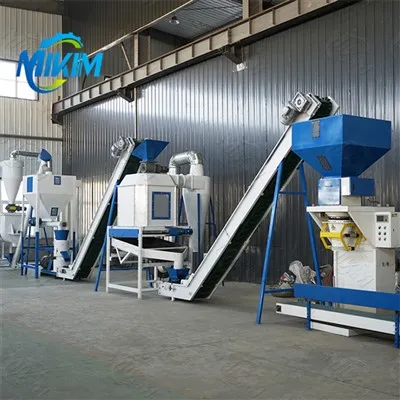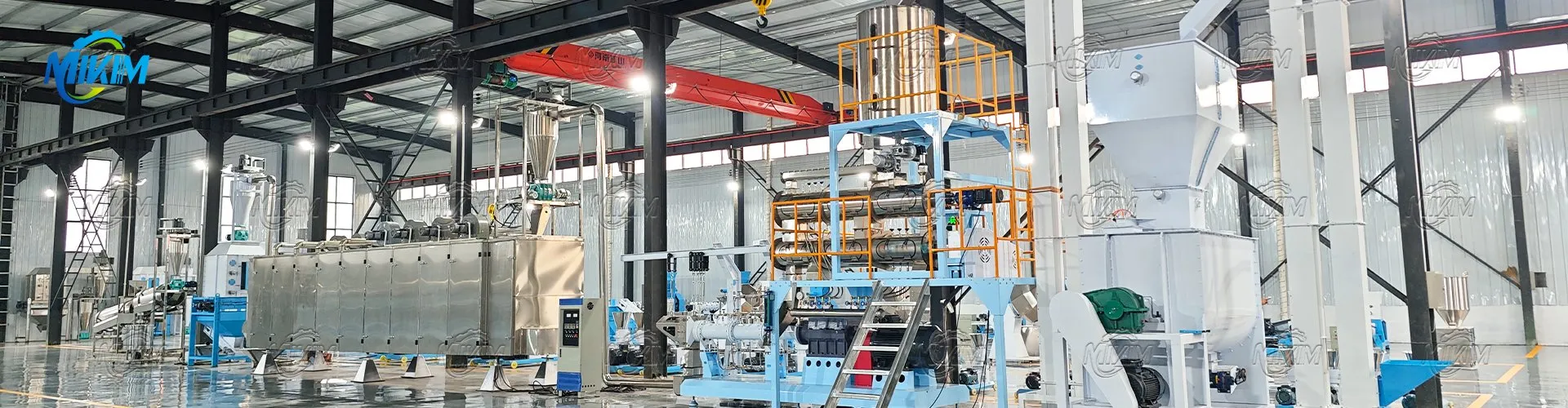
The General Process Of An Automated Cattle Feed Production Line
Leave a message
raw material
1.Roughage ingredients: Corn silage (30%-40%, core roughage for beef and dairy cows, rich in crude fiber and sugar, highly palatable), alfalfa meal (15%-20%, high-quality legume forage, supplementing protein and crude fiber, increasing milk production in dairy cows), wheat straw meal (10%-15%, low-cost roughage, needs to be crushed to 1-2cm). Length (avoid excessively coarse feed to prevent impact on pelleting);
2.Concentrate feed ingredients: Corn (15%-25%, energy supplement, high dosage for beef cattle fattening, slightly lower dosage for dairy cattle lactation), soybean meal (5%-10%, protein supplement, high dosage for dairy cattle lactation), wheat bran (5%-8%, dietary fiber supplement, promotes intestinal motility);
3. Functional ingredients: Calcium carbonate (1%-2%, calcium supplement, prevents osteoporosis and lactation fever in dairy cattle), sodium bicarbonate (0.5%-1%, regulates rumen pH, improves crude fiber digestibility), vitamin premix (0.3%-0.5%, contains vitamins A and D, promotes growth and calcium absorption), mineral premix (0.2%-0.4%, added selenium and cobalt, prevents selenium deficiency and anemia in cattle).
Operating procedures
1. Roughage Processing: Dehydrate silage to 60%-65% moisture content, then feed it together with alfalfa and wheat straw into a pulverizer and grind to a length of 1-2 cm.
2. Concentrate Grinding: Feed corn and soybean meal into a hammer mill and grind to 60-80 mesh. Store separately from the roughage.
3. Mixing and Conditioning: According to the formula, feed roughage and concentrate into a twin-shaft paddle mixer and mix for 20-25 minutes. After mixing, convey the mixture to a conditioner and condition with steam (pressure 0.3-0.5 MPa) for 30-40 seconds.
4. Pelletizing: Change the corresponding ring die (8-10mm for beef cattle, 6-8mm for dairy cattle), start the pellet mill, and adjust the roller gap (0.2-0.3mm) to produce loose pellets.
5. Drying and Cooling: Feed the wet pellets into a mesh belt dryer (temperature...) 55-65℃), after drying, transfer to a cooling machine, cooled to room temperature by a combination of natural air and forced ventilation;
6. Screening and Packaging: Start the grading screen to remove lumps, and send qualified granules into the packaging machine (set to 50kg/bag or 100kg/bag), and store them in the warehouse after packaging.


Final product display

about Us
MIKIM is a high-tech enterprise integrating R&D, production, and sales. Its feed extrusion equipment utilizes a high-temperature, high-pressure process, which sterilizes, improves puffing density and digestibility, and saves 8%-15% on feed costs. Pellet diameters are adjustable from 1-16 mm, and it features controllable cutting and floating adjustment to suit the needs of fish, shrimp, crab, and pet food. Core components are sourced from international brands and undergo special treatment, ensuring stability and durability while balancing safety, efficiency, and peace of mind.
Qualifications and Honors

Customer visit

FAQ
1. What is the price of the Automated Feed Pellet Equipment?
The price ranges from approximately $25,000-$65,000
2. Do you provide maintenance services for your customers?
Yes, we offer comprehensive after-sales maintenance services to our customers.