What Are The Key Points For Selecting And Using A Fish Food Pellet Making Machine?
Leave a message
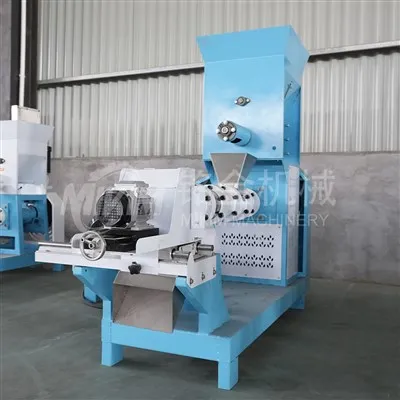
The key to selecting a fish feed maker machine is to clearly define your own needs and match the equipment's performance specifications. First, determine the equipment's capacity based on the production scale. For small-scale farming (less than 500 livestock or poultry, or less than 100,000 aquatic animals), a small single-screw extruder with an hourly output of 500-1000 kg is suitable, with an investment cost of 30,000-50,000 yuan. For medium-to-large-scale production (more than 1000 livestock or poultry, or more than 500,000 aquatic animals), a twin-screw extruder with an hourly output of 1-3 tons is required, with an investment cost of 100,000-200,000 yuan. Second, select the equipment type based on the type of feed. Aquatic feed and pet food require high mixing precision and gelatinization, so a twin-screw extruder should be used; for ordinary livestock feed, a single-screw extruder can be used to reduce costs. Key performance indicators to focus on include: First, gelatinization degree; high-quality extruders should produce feed with a gelatinization degree of over 80%, which can be determined by testing the feed's water solubility index. Second, pellet formation rate; this should be over 95% to avoid raw material waste. Third, energy consumption; electricity consumption per ton of feed should be controlled below 80 kWh to reduce operating costs. Furthermore, after-sales service is crucial; choose brands with local service networks to ensure timely repairs in case of malfunctions.
Precautions for using a fish feed pellet mill should revolve around "safety, efficiency, and quality." Before starting, check the connections of all components to ensure the screw and barrel are free of foreign objects and the lubricating oil level is normal. During startup, run the machine unloaded for 3-5 minutes until the speed stabilizes before slowly feeding material to avoid overloading the equipment due to sudden feeding. During production, process parameters must be monitored in real time, and temperature and speed adjusted according to raw material characteristics: When processing coarse fiber raw materials (such as straw), the extrusion temperature should be increased to 110-120℃, and the screw speed reduced to 100-150 r/min to ensure full gelatinization of the raw materials; when processing concentrated feed (such as corn and soybean meal), the temperature can be reduced to 80-90℃, and the speed increased to 200-300 r/min to improve production efficiency. Feeding must be kept uniform, and the feeding speed should be precisely controlled through a frequency converter to avoid excessive pressure fluctuations within the machine, which could lead to poor pellet formation. Simultaneously, operators must take safety precautions, wearing protective gloves and goggles to avoid contact with high-temperature and rotating parts.
Maintenance is crucial for extending the service life of the fish food pellet maker and requires establishing a system of "daily cleaning and regular maintenance." After each day's production, residual raw materials in the hopper, feeder, and barrel must be cleaned to prevent mold contamination of the next batch of feed; compressed air should be used to blow away dust from the equipment surface to keep it clean. Regular maintenance should be performed according to the equipment manual. Check the wear of the screw and barrel weekly; replace them promptly if wear is severe. Lubricate the transmission system every two weeks to ensure smooth operation. Check the heating device and temperature sensor monthly to ensure accurate temperature control. For vulnerable parts (such as the die head and cutter), keep 1-2 sets on hand to avoid production disruptions in case of malfunction. A feed mill in Jiangsu Province extended the service life of its extruder from 3 to 5 years and reduced the equipment failure rate by 60% through standardized maintenance, significantly improving production efficiency.



about Us
We offer:
One-Year Whole Machine Warranty Service
On-site Installation, Commissioning, and Technical Guidance
24/7 Online Technical Support
Qualifications and Honors

Customer visit

FAQ
1. What is the price of the floating fish feed pellet machine?
The price ranges from approximately $4,500-$50,000
2. Do you provide maintenance services for your customers?
Yes, we offer comprehensive after-sales maintenance services to our customers.