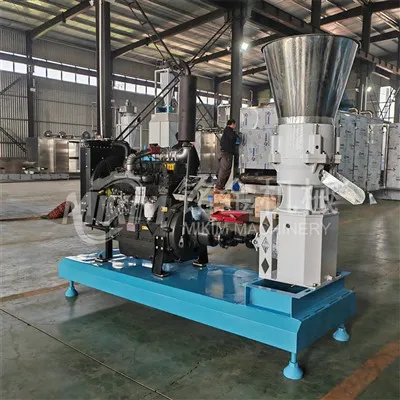
What Factors Affect The Pelleting Effect Of Pellet Feed Processing Equipment?
Leave a message
Raw material characteristics are fundamental to pelleting results. First, there's the moisture content. The ideal moisture content for pig and sheep feed ingredients (corn, soybean meal, wheat bran) is 13%-15%. Excessive moisture causes the feed to stick together in the die, resulting in "die blockage" and rough pellet surfaces. Insufficient moisture leads to poor flowability, making it difficult to form a compact structure during pelleting, resulting in loose pellets. Second, there's the particle size. For fattening pig feed, corn needs to be ground to 40-60 mesh, while for piglet feed, it needs to be 60-80 mesh. Uneven particle size leads to inconsistent stress during pelleting, resulting in some pellets lacking compactness. The protein content of ingredients like soybean meal also has an impact. When the protein content exceeds 25%, the raw material becomes sticky, requiring the addition of coarse fiber ingredients like wheat bran to adjust viscosity and prevent excessive pellet sticking.
The parameters of the Hay pellet machine are crucial for ensuring pelleting results. The specifications of the ring die directly determine the pellet quality. For pig feed, the ring die aperture should be 3-5mm, while for sheep feed, it should be 4-6mm depending on feeding habits. The ring die compression ratio (the ratio of the effective length of the ring die to the aperture) needs to be controlled between 1:6 and 1:8. Too low a compression ratio results in loose pellets, while too high a ratio leads to excessive hardness, making them difficult for pigs and sheep to chew. The gap between the pressure roller and the ring die needs to be precisely adjusted to 0.1-0.3mm. Too large a gap results in insufficient material compression, while too small a gap exacerbates component wear, leading to burrs on the pellet surface. The pellet mill speed also needs to be matched to the characteristics of the raw materials. When processing corn-based feeds, the speed should be controlled at 300-350 rpm, while for high-fiber sheep feeds, it should be reduced to 250-300 rpm to ensure the raw materials are fully compressed and shaped within the ring die.
Process control is the core of optimizing pelleting results. In the conditioning stage, saturated steam at 0.2-0.3 MPa is introduced to raise the raw material temperature to 85-90℃, ensuring full gelatinization of the starch and increasing the viscosity of the raw material. When the gelatinization rate reaches over 80%, the granule compactness is significantly improved. In the cooling stage, the freshly granulated high-temperature granules (above 80℃) must be slowly cooled to room temperature, with the cooling time controlled within 15-20 minutes. Excessive cooling will lead to a large temperature difference between the inside and outside of the granules, causing cracking; incomplete cooling will leave moisture residue, making the granules prone to mold. Furthermore, the feeding speed must be stable. A variable frequency feeder should be used to control the feed rate fluctuation within ±5%, avoiding load fluctuations in the granulator due to uneven feeding, which would affect the consistency of granule compactness.
Why choose us?
The MIKIM extruder is constructed entirely of food-grade 304 stainless steel, fully complying with food processing hygiene standards. It is corrosion-resistant, easy to clean, and eliminates potential contamination at the source. The core screw is made of high-quality alloy steel through special heat treatment, offering outstanding wear resistance and corrosion resistance. Combined with its integrated structural design, this significantly extends its service life. The entire machine has passed CE and ISO international authoritative certifications, aligning with global quality standards and ensuring safer and more reliable processing.
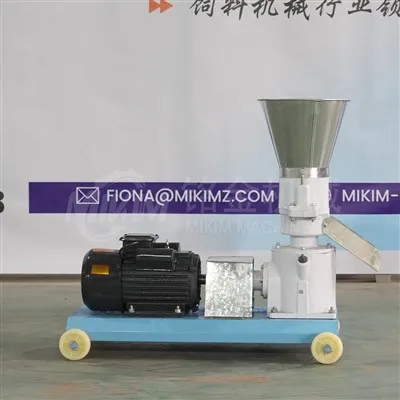
Our equipment


Our Services
We offer:
One-Year Whole Machine Warranty Service
On-site Installation, Commissioning, and Technical Guidance
24/7 Online Technical Support
Qualifications and Honors

Customer visit

FAQ
1. What is the price of the animal meal machine?
The price ranges from approximately $1,500-$50,000
2. How do you deliver to customers?
MIKIM Machinery's machinery delivery follows a complete process of "customized preparation - safe and fast delivery - precise handover - after-sales extension", with 3-day fast delivery, multi-layer protective packaging, global logistics tracking and 1-year warranty + on-site technical service to ensure that the equipment is delivered efficiently and in good condition and put into use smoothly.