


What Is The Right Way To Select A Floating Feed Machine?
Leave a message
The strength and stability of the extrusion system are paramount considerations. Calcium-rich raw materials such as shell powder and fish bone meal added to shrimp and crab feed have high hardness and require high-intensity extrusion to form a dense structure and improve foam resistance. Therefore, a high-torque twin-screw extruder must be selected, with a screw torque ≥150 N·m and an extrusion pressure of 15-20 MPa, 2-3 times that of ordinary extruders. Simultaneously, the screw and barrel must be made of wear-resistant alloy material (such as 38CrMoAl) and nitrided, with a surface hardness ≥HRC60, to prevent excessive wear from the calcium-rich raw materials and extend the equipment's service life to over 1.5 years.
The performance of the humidity control and conditioning system directly affects the feed's anti-dissolved properties. The optimal conditioning humidity for shrimp and crab feed is 17%-19%. An automatic fish food making machine equipped with a three-stage steam conditioner is required: first stage preheating, second stage humidification, and third stage insulation. This ensures thorough mixing of the raw materials and steam, achieving a starch gelatinization rate of over 90%. The resulting gel structure effectively encapsulates the calcium-rich components, reducing water loss. In addition, the equipment needs to be equipped with an online moisture meter to provide real-time feedback on the raw material humidity. When the humidity deviation exceeds 1%, the steam supply should be automatically adjusted to ensure the stable anti-soluble properties of each batch of feed.
Matching production capacity with auxiliary equipment is also crucial. Specialized aquaculture is typically small-scale, and an extruder with an hourly capacity of 100-200 kg is sufficient, but dedicated cooling and screening equipment is required. The cooling system should be a mesh belt cooler with a cooling time of ≥30 minutes to prevent mold growth due to insufficient moisture dissipation from the feed pellets. The screening equipment should be equipped with 2-3 layers of screens to separate substandard broken particles and oversized particles, ensuring a feed pellet uniformity of over 95%. Simultaneously, an integrated machine with raw material pre-treatment functions should be prioritized, as it can pre-crush hard raw materials such as shell powder, reducing the difficulty of subsequent processing.
Why choose us?
The MIKIM extruder is constructed entirely of food-grade 304 stainless steel, fully complying with food processing hygiene standards. It is corrosion-resistant, easy to clean, and eliminates potential contamination at the source. The core screw is made of high-quality alloy steel through special heat treatment, offering outstanding wear resistance and corrosion resistance. Combined with its integrated structural design, this significantly extends its service life. The entire machine has passed CE and ISO international authoritative certifications, aligning with global quality standards and ensuring safer and more reliable processing.
Our equipment

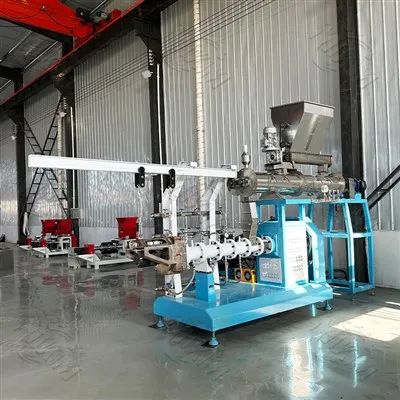
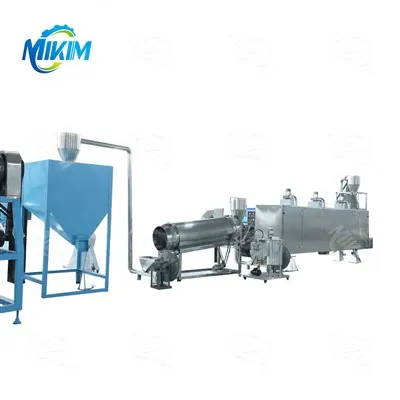
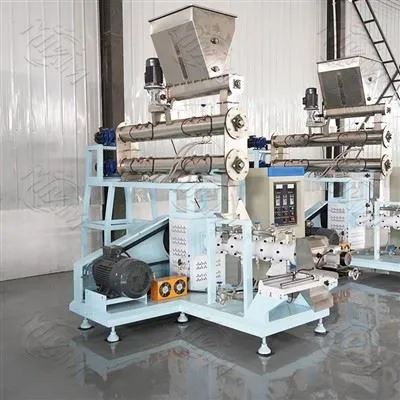
Our Services
We offer:
One-Year Whole Machine Warranty Service
On-site Installation, Commissioning, and Technical Guidance
24/7 Online Technical Support
Qualifications and Honors

Customer visit

FAQ
1. What is the price of the pet food extruders?
The price ranges from approximately $3,500-$50,000
2. Do you provide maintenance services for your customers?
Yes, we offer comprehensive after-sales maintenance services to our customers.


