

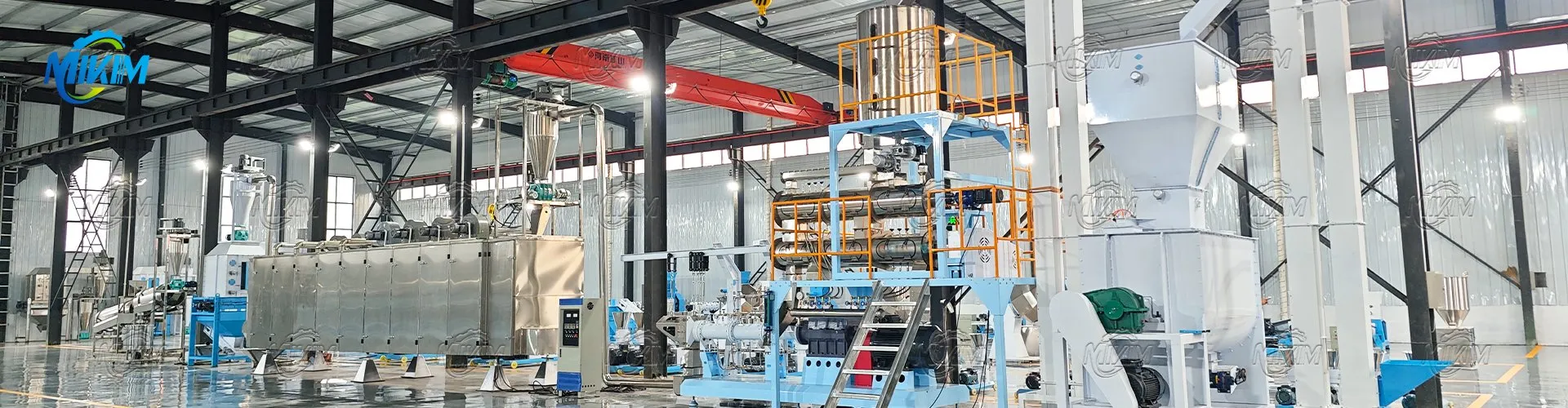
What Should I Do If The Feed Pellet Production Line Fails?
Leave a message
1. Equipment fault alarm: When the equipment has a fault alarm, the operation of the equipment should be stopped immediately and the cause of the fault should be investigated. For simple faults, you can solve them by yourself; for complex faults, you should contact professionals for repair in time.
2. Fault cause analysis: For equipment failure, a detailed fault cause analysis should be conducted to find out the root cause of the failure. During the analysis, it is necessary to record the fault phenomenon, occurrence time, operation process and other information to provide a basis for subsequent repairs.
3. Fault repair: According to the results of the fault cause analysis, the equipment is repaired. Pay attention to safety during the repair process to prevent secondary injuries. For parts that need to be replaced, products with reliable quality should be selected to ensure the safety and reliability of the equipment.

| Model | Capacity | Power | Dimension | Weight |
| 125 | 80-100kg/h | 3kw | 110*35*70 cm | 95 kg |
| 150 | 120-150kg/h | 4kw | 115*35*80cm | 100 kg |
| 210 | 200-300kg/h | 7.5kw | 115*45*95cm | 300 kg |
| 260 | 500-600kg/h | 15kw | 138*46*100cm | 350 kg |
| 300 | 700-800kg/h | 22kw | 130*53*105cm | 600 kg |
| 360 | 900-1000kg/h | 22kw | 160*67*150cm | 800 kg |
| 400 | 1200-1500kg/h | 30kw | 160*68*145cm | 1200 kg |
Equipment use training
1. Operator training: For new operators, training on the use of equipment and safe operating procedures should be conducted. The training content includes the working principle, operation method, maintenance and other aspects of the equipment. Through training, it is ensured that the operator can master the use of equipment and safe operating procedures.
2. Equipment maintenance training: For existing operators, equipment maintenance training should be conducted regularly. The training content mainly includes daily inspection, regular maintenance, troubleshooting and other aspects of the equipment. Through training, the maintenance awareness and ability of operators are improved.
In short, the maintenance and maintenance of feed machinery and equipment is the key to ensuring the normal operation of the equipment and extending the service life of the equipment. Only by doing a good job in daily inspection, regular maintenance, troubleshooting and other work of the equipment can the safe and stable operation of the equipment be ensured, providing strong guarantee for animal husbandry production.

