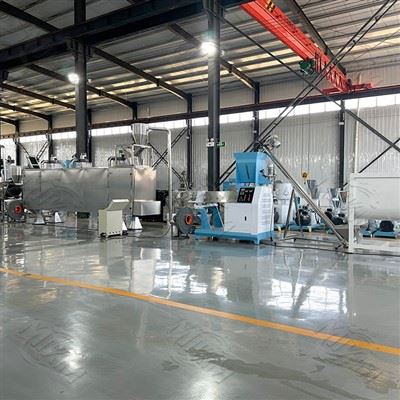
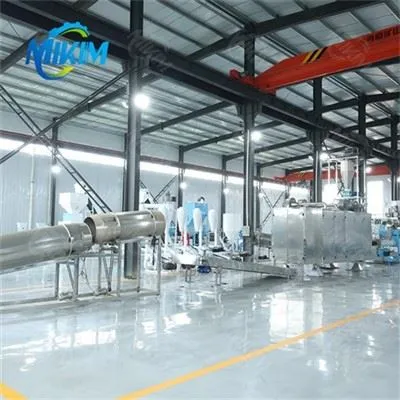
Ring Die Poultry Feed Pellet Production Line: Models and Capacity
Leave a message
What a Poultry Feed Pellet Production Line Includes
A poultry feed pellet production line is an integrated system of equipment and processes that turns loose raw materials such as corn, soybean meal, vitamins, and minerals into dense pellets of uniform shape. The continuous chain runs from raw material cleaning, crushing, batching, mixing, and conditioning to pelleting, cooling, and grading. Every stage prepares the material for the next one, so pellet quality depends on the performance of the whole line rather than on the pellet mill alone.
Process Steps in Sequence
Cleaning removes stones, metal fragments, and other impurities that would damage the dies and rollers.
Crushing reduces whole grains to a uniform particle size so that mixing and conditioning act evenly.
Batching weighs each ingredient against the formula, and mixing blends the batch into a homogeneous mash.
Conditioning injects steam to heat and moisturise the mash, which gelatinises starch and improves pellet binding.
Pelleting compresses the conditioned mash through the ring die, forming dense cylindrical pellets.
Cooling removes heat and surplus moisture so the pellets harden and stay stable in storage.
Grading separates fines from finished pellets, and the fines are returned to the process.
Model Specifications and Capacity
Ring die models are identified by the inner diameter of the die. The table below lists five common configurations with their drive and auxiliary power ratings.
| Model | Ring Die Inner Diameter | Capacity | Main Motor Power | Feeder Power | Conditioner Power |
|---|---|---|---|---|---|
| 320 | 320 mm | 2-5 t/h | 37 kW | 0.55 kW | 2.2 kW |
| 350 | 350 mm | 1.5-8 t/h | 55 kW | 0.75 kW | 2.2 kW |
| 400 | 400 mm | 2-10 t/h | 75/90 kW | 0.75 kW | 2.2 kW |
| 420 | 420 mm | 3-12 t/h | 110 kW | 1.5 kW | 5.5 kW |
| 508 | 508 mm | 4-20 t/h | 132/160 kW | 1.5 kW | 7.5 kW |
Ring die speed ranges from roughly 287 to 336 rpm depending on the model, and the roller outer diameter grows with the die so that effective pressing pressure is maintained. Capacity within each range depends on the formula, the die hole size, and the steam quality available at the conditioner.
Design Features That Affect Output
A precision gear main drive lifts output by about 20% compared with a belt drive, and keeps the torque steady under load.
High grade bearings and oil seals keep the machine quiet, stable, and low on maintenance.
An air suction system in the pelleting chamber lowers the temperature of the die and the rollers during long runs.
A variable frequency feeder maintains a consistent flow of mash, which stabilises pellet hardness and length.
Ring dies are available with several bore diameters, and a durable die keeps pellets smooth and service life long.
A compensation spring coupling gives a compact, low noise drive train with a low fault rate.
A plus size conditioner or a jacket type conditioner can be fitted to strengthen the conditioning effect.
Applications and Selection Notes
The line is widely used and its technology is mature. It suits poultry feed first, and also handles livestock and fish feed with the appropriate die and formula. When selecting a model, match the rated capacity to the target output and the shift schedule: the 320 model fits a small farm, while the 508 model serves a large commercial feed mill. Check the available electrical supply against the main motor power, and confirm the workshop height needed for the conditioner, the cooler, and the ducting. Feed size can be set by changing the die and the crusher screen, covering pellets for chicks as well as for adult birds.
Frequently Asked Questions
Q: What capacity can one line reach?
The five dies cover 2-5 t/h on the 320 model up to 4-20 t/h on the 508 model, with the exact figure depending on the formula and the die hole size.
Q: How is the correct model chosen?
Match rated capacity to daily feed demand and working hours, then check that the electrical supply covers the main motor power and that workshop height suits the conditioner and cooler.
Q: Why is conditioning important before pelleting?
Steam raises mash temperature and moisture, gelatinises starch, and activates natural binders, so pellets come out harder and more durable with less fines.
Q: Which raw materials can be pelleted?
Corn, wheat, soybean meal, bran, and similar grains and meals, combined with vitamin and mineral premix and, where required, a small amount of oil.
Q: Can the same line produce fish and livestock feed?
Yes. Poultry, livestock, and fish feed can all be produced on the same pellet line by changing the die, the formula, and the processing parameters.
Q: How does the drive type influence output?
A precision gear drive transmits torque more efficiently than a belt drive and raises output by roughly 20%, while reducing slip and maintenance work.