Animal Feed Premix Plant Pellet Production Line Selection Guide
Leave a message
What an Animal Feed Premix Plant Line Is
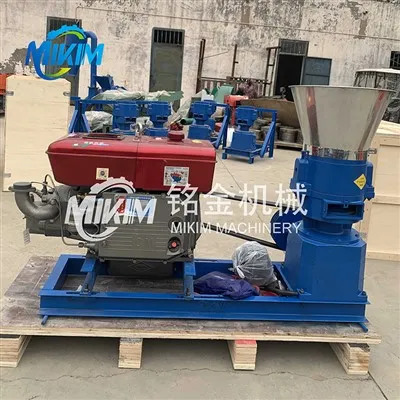
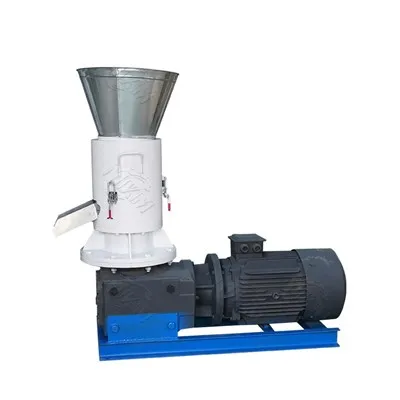
An animal feed premix plant production line is a complete system for producing pelleted feed on the farm or in a small feed mill. It handles feed for chickens, cattle, cows, pigs, rabbits, and other farm animals. The line links a grinder, a mixer, a pellet machine, a dryer, a seasoning unit, and a cooler, and complete feed mill projects can be arranged around these modules. Feed pellet size ranges from about 0.4 mm to 1.5 mm and is set by the model and the die configuration.
Which Animals and Formulas It Serves
Livestock feed for cattle, sheep, pigs, and goats is usually built from grains such as corn and soybeans, combined with roughage such as hay or silage and a protein supplement. Poultry feed for chickens, ducks, and geese typically mixes grains such as corn and wheat with protein sources such as soybean meal and animal by-products. Because the formula and the die can both be changed, a single line covers a mixed farm with several animal groups.
Model Parameters and Output
The table below lists seven typical models. Output values are the rated capacity of each configuration.
| Model | Output | Installed Power | Dimension (L x W x H) |
|---|---|---|---|
| 65 | 150 kg/h | 80 kW | 17 x 1.5 x 2.2 m |
| 70 | 250 kg/h | 100 kW | 20 x 1.5 x 2.2 m |
| 85 | 500 kg/h | 150 kW | 30 x 1.5 x 2.6 m |
| 90 | 1000 kg/h | 180 kW | 40 x 2 x 3.5 m |
| 95 | 1500 kg/h | 200 kW | 45 x 2 x 3.5 m |
| 120 | 3000 kg/h | 245 kW | 60 x 3 x 3.5 m |
| 140 | 5000 kg/h | 290 kW | 78 x 3.8 x 3.5 m |
How On-Farm Production Lowers Feed Cost
Feed accounts for 60-80% of total farm production cost, so reducing it improves profitability directly. Producing pellets on site cuts out intermediate distribution cost: purchased feed carries manufacturer profit, warehousing, transport, and distributor margin, which together can account for 20-30% of the sale price. Processing locally available raw materials such as farm corn and straw removes those intermediaries and can reduce feed cost by 100-300 yuan per ton. On-farm production also cuts raw material waste, because green straw, silage, and grain processing by-products such as bran and soybean meal residue can be worked into the formula instead of being discarded.
Batching Accuracy and Formula Flexibility
The line controls the raw material ratio precisely, with a mixing error inside 0.5%, which avoids the spillage and uneven blending that occur with manual mixing, and it lifts raw material utilisation above 98%. The formula can also be adjusted as raw material prices move. When corn becomes expensive, the share of straw powder and bran can be raised while nutritional value is maintained, so the farm is no longer a passive price taker and the cost structure stays under control.
Layout, Installation, and Operation
Small lines up to 500 kg/h fit inside a single hall and can be fed by hand or by a small screw conveyor, while the 3000 kg/h and 5000 kg/h configurations need a dedicated silo or bin group, a batching scale, and a taller building for the dryer and cooler. Power supply should be checked against the installed power figure of the chosen model, and the building height must clear the cooler discharge and the ducting. Operators need only basic training, but the die, rollers, and screens should be inspected on a fixed schedule to keep pellet quality steady.
Frequently Asked Questions
Q: What is the process flow of the line?
The standard flow is grinding, mixing, pelleting, drying, seasoning, and cooling, with cleaning and batching steps added for larger mills. Each stage improves pellet uniformity and stability.
Q: Which animals can this line make feed for?
It produces pellets for chickens, ducks, geese, pigs, cattle, cows, sheep, goats, rabbits, and similar livestock and poultry, depending on the formula and the die size.
Q: How is one model chosen over another?
Match the output to daily feed demand and working hours. A 150 kg/h model suits a small farm, while the 3000 kg/h and 5000 kg/h models serve large mills and commercial operations.
Q: How does on-farm production lower cost?
It removes manufacturer and distributor margin, uses local and by-product raw materials, cuts waste through precise batching, and lets the formula follow raw material prices.
Q: What feed sizes can be produced?
Pellet size runs from about 0.4 mm to 1.5 mm and is adjusted by changing the model and the die configuration, so it covers young animals as well as mature livestock and poultry.
Q: Are separate dryers and coolers needed?
Yes, for stable storage. Pellets leave the machine hot and moist, and drying and cooling remove the surplus heat and moisture so the pellets harden and keep well.