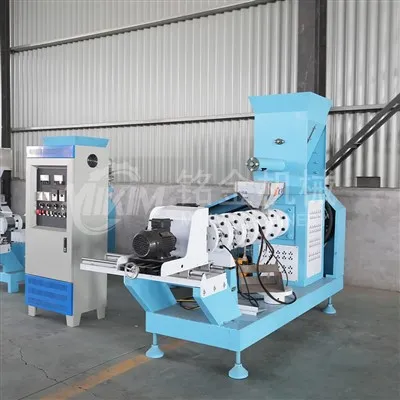
1-20 T/H Livestock and Poultry Feed Pellet Production Line Selection Guide
Leave a message
What Is a 1-20 T/H Animal Feed Pellet Line?
A 1–20 t/h animal feed pellet production line is a complete system that turns raw materials into finished feed pellets. It covers crushing and mixing of raw materials, pelletizing, cooling and screening, and it can be fitted with a high-precision pellet packaging system. The line is designed with a small footprint, relatively low electric power demand and low start-up cost, which makes it an attractive option for newcomers to feed production while still supporting the output of larger commercial operations.
Because capacity is specified as a range, the same line concept can be scaled from a farm-scale unit up to a regional feed plant, with the pellet mill, cooler, screener and packer sized to the chosen throughput.
Supported Feed Types and Pellet Specifications
The line supports a wide range of formulations. Livestock feed can be produced for cattle, sheep, horses, rabbits and camels, and poultry feed for chickens, ducks, geese and quail. Sinking fish and shrimp feed can also be produced, and through customization the line can make grass-containing pellets, such as straw or alfalfa formulations, for cattle, sheep and horses.
Different animals and different growth stages need different pellet sizes. The following values are typical examples.
| Animal / growth stage | Typical pellet size |
|---|---|
| Chicks | About 2 mm broken feed |
| Laying hens | 4–5 mm |
| Piglets | 3–3.5 mm |
| Growing pigs | 5–6 mm |
With customized dies the line can produce pellets in various specifications, which expands the product types a feed plant can offer and increases market coverage.
Main Technical Parameters
The general configuration of the line is summarized below; detailed values depend on the customized design.
| Parameter | Value |
|---|---|
| Capacity | 1–20 tons per hour |
| Installed power | According to the customized design |
| Floor area | About 40 m² |
| Height | 5–11 m, customized |
| Supported feed types | Livestock feed, poultry feed, sinking fish and shrimp feed |
| Supported pellet size | 2–12 mm |
The height figure matters because the line is arranged vertically: material flows from grinding and mixing at the top through the pellet mill, cooler and screener to the packing station below. A structure of 5–11 m is therefore needed depending on the layout chosen, while a compact arrangement with about 40 m² of floor space is enough for the machinery itself.
Customized Formulas for Farm-Specific Nutrition
Nutrient requirements vary significantly between farms, depending on the livestock breed, the growth stage and the farming objective, such as increasing milk production or optimizing lean meat percentage. The line's PLC control system precisely adjusts the ratios of protein, energy, crude fibre and minerals such as calcium and phosphorus. For example, finishing pig feed commonly contains 20–22 % protein and lactating dairy cow feed 18–20 % protein.
Specific ingredients can also be added for a farm's needs, such as probiotics for sows, which helps eliminate the nutritional mismatch of purchased general-purpose feeds and improves livestock performance. Because the formula is stored as a recipe in the control system, switching between breeds or growth stages is a matter of recalling the correct recipe rather than re-setting every feeder by hand.
Matching Pellet Form to Animal Feeding Habits
By replacing the mould, the line produces feed in different physical forms, for example 1–2 mm fine pellets for piglets, 3–5 mm coarse pellets for fattening pigs and 5–8 mm columnar feed for beef cattle. The correct form matches the chewing ability and feeding habits of each animal.
Young stock: piglets and chicks need fine or broken pellets because coarse pellets are difficult for them to chew and are easily dropped.
Growing and finishing stock: medium pellets give a good balance between intake rate and chewing time.
Ruminants: beef cattle and dairy cows need a coarser pellet or columnar feed, because fine powder can reduce rumen function.
Choosing the right pellet form therefore avoids low feeding willingness and digestion problems, and it also reduces feed waste at the trough.
FAQ
Q: What capacity range does the line cover?
The line is designed for 1–20 tons per hour, with the pellet mill, cooler, screener and packer sized to the throughput you choose. This range covers everything from a small commercial plant to a larger regional feed operation.
Q: Which animals can the line feed?
It produces livestock feed for cattle, sheep, horses, rabbits and camels, poultry feed for chickens, ducks, geese and quail, and sinking fish and shrimp feed. Grass-containing pellets for ruminants can also be produced with a suitable die.
Q: How is pellet size changed?
Pellet size is set by the die or mould. Changing the die gives a different pellet diameter, so the same line can switch between 2 mm feed for chicks and larger pellets for cattle and sheep within the 2–12 mm range.
Q: Can the line hold several different recipes?
Yes. The PLC control system stores recipes and adjusts the ratios of protein, energy, crude fibre, calcium and phosphorus, so a plant can move between formulations for different species and growth stages without manual re-setting.
Q: How much space and height are required?
The machinery needs about 40 m² of floor area, and the overall structure height is 5–11 m depending on the layout and the vertical flow chosen. Detailed values follow the customized design of the plant.
Q: What power demand should be planned for?
Installed power depends entirely on the selected capacity and configuration, so it is calculated with the design. Planning the motor starting load and the feed grinder together normally gives the most economical result.