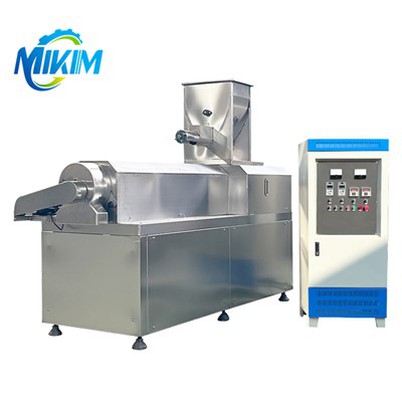
Animal Processing Dogs and Cats Dry Floating Food Production Line
Leave a message
Product introduction
1. Specialized for Aquatic Feed Requirements
Unlike terrestrial animal feed lines, it focuses on solving aquatic-specific challenges:
Produces pellets with controlled "water stability" (pellets retain shape in water for 1–4 hours to avoid dissolution and nutrient leaching, preventing water pollution and feed waste).
Adjusts pellet density to create floating, slow-sinking, or sinking pellets (matching the feeding layers of different aquatic species-e.g., floating pellets for tilapia, sinking pellets for catfish).
2. Integrated Continuous Processing
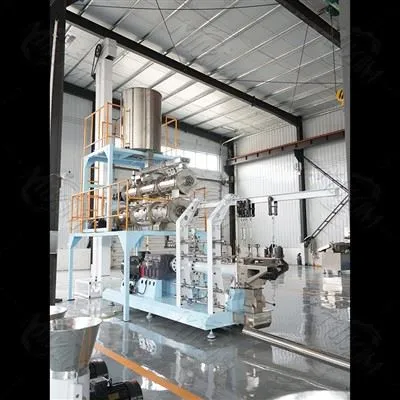
It covers the entire production chain of fish feed pellets, with no disjointed manual links. The typical core process flow includes:Raw material crushing → Ingredient mixing (precision weighing of macro/micro nutrients) → Extrusion pelleting (high-temperature, high-pressure processing to shape pellets and kill bacteria) → Low-temperature drying (retains heat-sensitive nutrients like omega-3) → Pellet cooling (prevents moisture regain) → Screening (removes broken pellets) → (Optional) Coating (adds oil or attractants) → Packaging.
3. Automated and Precise Control
Equipped with PLC (Programmable Logic Controller) systems and intelligent monitoring tools to ensure stability and accuracy:
Automates parameter control (e.g., extrusion temperature 110–140°C, drying time, mixing ratio) to avoid nutrient loss or substandard pellets caused by human error.
Uses high-precision weighing systems (error ≤0.1%) to ensure micro-ingredients (e.g., astaxanthin for salmon flesh color, probiotics for shrimp immunity) are added accurately, meeting the strict nutritional needs of aquatic species.
4. Compliance with Aquaculture Safety Standards
It is designed to meet global aquatic feed safety regulations (e.g., EU Regulation (EC) No 1831/2003, China's National Standard for Aquatic Feed Safety):
Integrates impurity removal devices (magnetic separators, metal detectors, vibrating sieves) to eliminate harmful substances (iron filings, stone chips) from raw materials, preventing aquatic organism injury.
Adopts food-grade stainless steel (SS 304/316) for key equipment components, ensuring no heavy metal leaching and facilitating cleaning to avoid cross-contamination.



Product parameters
| Name | Power(kw) | Voltage(v) | Weight(kg) | Size(mm) | Capacity(kg/h) |
| Mixer | 7.5 | 380v/50hz | 222 | 850x530x1040 | 40-50kg/time |
| Spiral feeder | 1.5 | 100 | 850x750x2450 | With the host | |
| Steam generator | 72 | 200 | 900x800x1200 | 100 | |
| Twin screw extruder | 35 | 1473 | 2500x1000x1800 | 220-300kg /h | |
| Air conveyor | 0.75 | 41 | 2000x600x1900 | With the host | |
| Dryer | 40 | 2000 | 5300x1200x1900 | With the host | |
| Seasoning machine | 3.5 | 234 | 3100x900x1800 | With the host |
Product advantages
Labor Cost Savings and Operational Simplicity
Aquatic feed production involves heavy tasks (e.g., handling 50kg bags of fish meal, mixing large batches) and requires strict parameter control. Production lines simplify operations and cut labor costs:
High automation: From raw material lifting, mixing, extrusion, drying, to cooling and packaging, the entire process is controlled by PLC systems. Only 2–3 operators are needed to monitor the line (e.g., check parameter screens, replace raw material bins), compared to 10–15 workers for manual production of the same output.
Easy operation and maintenance: The human-machine interface (HMI) displays real-time parameters (temperature, pressure, output) and alarms for abnormalities (e.g., blocked extruders). Most lines also feature self-cleaning functions (e.g., CIP-Clean-in-Place systems) for key components (extruders, drying chambers), eliminating the need for time-consuming disassembly and manual scrubbing.
Standardized processing: Designed in accordance with international aquafeed standards, ensuring parameters (e.g., moisture content ≤12%, crude protein accuracy ±1%) meet regulatory limits. This avoids feed being rejected by farms or regulatory authorities.
Complete traceability: Integrated with MES (Manufacturing Execution Systems), the line automatically records raw material sources (supplier batch numbers, inspection reports), processing parameters (extrusion time, drying temperature), and finished product testing results (microbial count, nutrient content). If a feed batch is suspected of quality issues, manufacturers can quickly trace the cause and recall products, protecting brand reputation and fish farm interests.
Finished product display
All kinds of floating and sinking fish feed, crab feed, shrimp feed, and pet food can be made by our machines:


FAQ
1. What is the price of the aquaculture feed pellet production line?
The price ranges from approximately US$10,000.00 - 65,000.00.
2. Do you provide maintenance services for your customers?
Yes, we offer comprehensive after-sales maintenance services to our customers.
For more information on process flow design, equipment layout, factory construction plans, individual equipment pricing, or turnkey project proposals, please feel free to contact us!!!