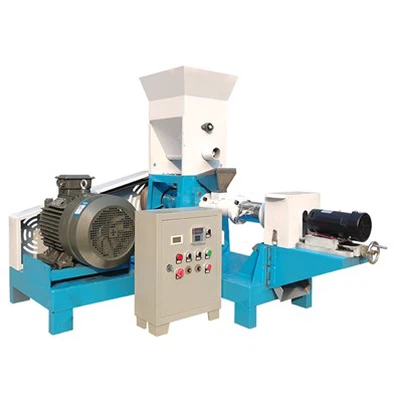
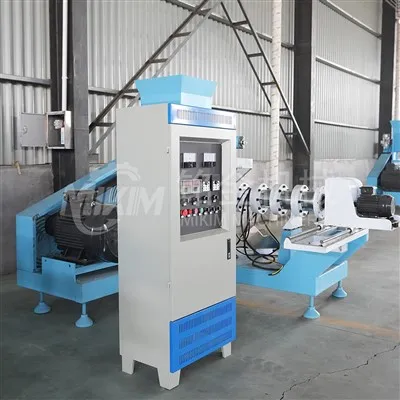
Dog Food Extrusion Production Line: Models and Process Flow
Leave a message
What a Dog Food Extrusion Production Line Includes
A dog food extrusion line produces all kinds of dry pet food, and the moulds are designed to give the shapes that a customer needs. The line is fully automatic: material is fed, extruded, cut, dried, oil sprayed, and packed in one continuous pass. It offers many models, flexible equipment configuration, a wide choice of raw materials, and simple operation, which together raise the production efficiency and quality of pet and fish feed. Because the extruder cooks the dough under pressure, the line can shape high-fat and high-protein mixes that a simple pelleting press handles poorly.
Dry Type and Wet Type Extruders
The line is available with two extruder types. The dry type is simpler and suits low-moisture formulas, which keeps the flow short and the investment lower. The wet type adds water and steam during processing, which improves starch gelatinisation and produces a more uniform, higher-quality pellet for premium pet food and floating fish feed. The choice depends on the formula, the target product, and the budget of the producer. Dry extrusion is often adequate for standard kibble, while wet extrusion is preferred when buoyancy, density, and surface finish are critical to the product.
Full Process Flow of the Line
The standard flow is: milling machine, mixer, conveyor, extruder, conveyor, dryer, conveyor, flavoring machine, cooling machine, lifter, and packing machine. Each step has a defined job in the chain.
Milling reduces the grains to flour of consistent fineness
Mixing blends the formula evenly, including micro ingredients
The extruder cooks and shapes the dough under pressure
The dryer removes moisture down to the correct level
Flavoring adds taste and oil to the pellet surface
Cooling stabilises the kibble, and the lifter feeds the packing machine for bagging
Model Parameters and Output
The table below lists the main parameters of four typical models.
| Model | Power | Yield | Weight |
|---|---|---|---|
| 100 | 37 kW | 700-1000 kg/h | 750 kg |
| 120 | 55 kW | 1200-1500 kg/h | 850 kg |
| 135 | 75 kW | 1500-1800 kg/h | 950 kg |
| 160 | 90 kW | 2000-2400 kg/h | 1200 kg |
Yield is quoted for a standard kibble formula and a standard die. Pellet size and shape are set by the mould, so a change of product usually needs only a mould change rather than a change of machine, which keeps the line flexible for small product runs.
Ingredients, Hygiene and Nutritional Advantages
Extruded pet food is produced under high-temperature conditions that kill micro-organisms, insect eggs, and pathogenic bacteria in the feed, which improves product quality and reduces digestive tract diseases in pets. Extrusion also improves digestion and absorption, because the cooking process makes starch and protein more available to the animal.
Most dog food pellets contain both plant and animal protein.
Plant protein sources: corn flour, rice flour, wheat flour, soybean flour, and peanut cake powder
Animal protein sources: fish meal, chicken meal, crab meal, and squid meal
Other ingredients can be added according to local requirements, and the line can also process high-fat, high-protein raw materials such as fresh fish and bone to increase the energy density of the feed.
Frequently Asked Questions
Q: What is the difference between the dry type and wet type extruder?
The dry type is simpler and suits low-moisture formulas, while the wet type adds water and steam to improve starch gelatinisation and produce a more uniform pellet for premium pet food and floating fish feed.
Q: What output do the four standard models deliver?
Model 100 gives 700-1000 kg/h at 37 kW, model 120 gives 1200-1500 kg/h at 55 kW, model 135 gives 1500-1800 kg/h at 75 kW, and model 160 gives 2000-2400 kg/h at 90 kW.
Q: Which equipment makes up the standard process flow?
Milling machine, mixer, conveyor, extruder, conveyor, dryer, conveyor, flavoring machine, cooling machine, lifter, and packing machine.
Q: Can the line produce shapes other than standard kibble?
Yes. Moulds are designed to make different shapes according to the requirement for the target product, so the shape is a matter of mould design rather than of machine type.
Q: Which raw materials can be used for dog food pellets?
Plant protein sources such as corn flour, rice flour, wheat flour, soybean flour, and peanut cake powder are combined with animal protein sources such as fish meal, chicken meal, crab meal, and squid meal.
Q: Can the same line also run floating fish feed?
Yes. With the wet type extruder and the appropriate mould, the line produces floating fish feed as well as dog and cat food, which improves the return on one equipment set.