Animal Poultry Fish Feed Pellet Line: Process Flow and Models
Leave a message

Overview of the Six-Stage Feed Pellet Machine Line
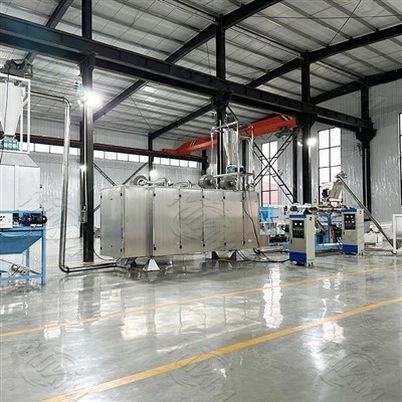
This production line processes raw materials into finished feed pellets through six standard stages: cleaning and sieving, grinding, automatic batching and mixing, pelleting, cooling, and crumbling and packing. Each stage uses dedicated equipment, and the design of every stage affects the quality, output, and cost of the final feed. A line that is balanced across all six stages runs at a steady rate, while a weak stage anywhere in the chain becomes the bottleneck for the whole plant.
Cleaning, Sieving and Grinding
On receiving materials, the plant uses granule cleaners and flour cleaners to remove dust and debris, and a magnetic cylinder removes iron and metal particles. Cleaned materials are conveyed to the next process. This protection step prevents stones and metal from damaging the crusher and the pellet die.
Grinding is performed by a hammer mill with direct drive, scientifically arranged hammers, and an optimised hammer-sieve clearance, which together produce uniform finished fineness. Second-strike crushing technology in the chamber improves efficiency, and multiple screen sizes are optional. The quick-open door and the elastic-pressure screen mechanism allow fast screen changes and easy operation and maintenance. Grinding fineness directly influences pelleting quality and the power consumed per tonne of feed, so screen selection is a production decision rather than a maintenance detail.
Automatic Batching, Mixing and Pelleting
The dosing and batching system builds formulations according to the nutritional needs of different animals, using specific devices to weigh each ingredient accurately. Mixing then blends the metered ingredients into a uniform distribution. The process uses two batching scales and a number of batching bins; micro ingredients are added manually and checked with a check weigher. After batching, materials enter the mixer and are output through conveyors and elevators. Accurate batching is the foundation of consistent feed nutrition.
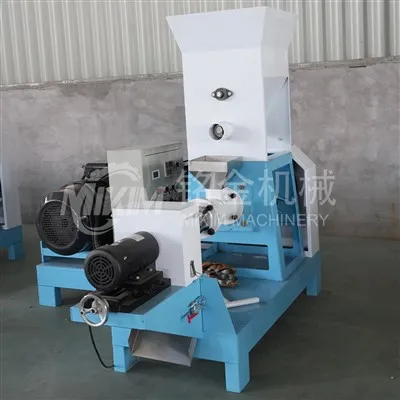
In the pelletizing stage the main drive uses a high-precision gear drive, which delivers about 20% higher output than a belt drive. High-grade bearings and oil seals keep the machine efficient, stable, and low in noise, and an air-suction temperature-reducing system serves the granulating chamber. The stainless steel feeder with a frequency-controlled motor ensures consistent pellet quality, and single or double stainless conditioners pre-cook the raw materials before pelleting. Maintenance features include a ring-die lifting device and an automatic gear-oil cooling system for the gearbox.
Cooling and Crumbling
The latest octagonal cooling box design has no cooling dead ends. Closed-feeder feeding into the air zone gives a significant cooling effect, and material is discharged evenly and stacked uniformly in the chamber. A slide-valve reciprocating discharge mechanism moves smoothly and reliably with small residue. After cooling, the finished pellet temperature is no higher than ambient plus 3-5 degrees Celsius, which is suitable for pellet cooling and safe for immediate bagging.
Pellet diameter is set by the die hole, while pellet length can be adjusted by the feed pellet crumbler. The roller-type double-roller crumbler is the ideal equipment for crushing pellets such as chicken, duck, and goose feed into crumbles for young animals, which cannot yet consume whole pellets.
Model Specifications
The table below lists the main parameters of six typical models of the line.
| Model | Capacity (t/h) | Main motor (kW) | Screw feeder (kW) | Conditioner (kW) | Ring die inner diameter (mm) |
|---|---|---|---|---|---|
| 250 | 1-2 | 22 | 0.75 | 2.2 | 250 |
| 320 | 2-5 | 37 | 0.75 | 2.2 | 320 |
| 350 | 1.5-8 | 55 | 0.75 | 2.2 | 350 |
| 400 | 2-10 | 75/90 | 0.75 | 2.2 | 400 |
| 420 | 3-12 | 110 | 1.5 | 5.5 | 420 |
| 508 | 4-20 | 132/160 | 1.5 | 7.5 | 508 |
Overall line dimensions range from 2300 x 1300 x 2100 mm to 3500 x 1500 x 2900 mm. Ring dies with multiple bore diameters are optional, and a high-quality ring die gives long service life and smooth, high-quality pellets. Capacity depends on the formula and the die specification, so the model numbers should be read together with the intended diet.
Frequently Asked Questions
Q: What are the six stages of the feed pellet machine line?
Cleaning and sieving, grinding, automatic batching and mixing, pelleting, cooling, and crumbling and packing.
Q: Why is the cleaning and sieving stage necessary before grinding?
Granule and flour cleaners remove dust and debris, and a magnetic cylinder removes iron and metal particles, which prevents stones and metal from damaging the crusher and the pellet die.
Q: Why does grinding fineness affect production cost?
Grinding fineness directly influences pelleting quality and the power consumed per tonne of feed, so screen selection and hammer-sieve clearance have a direct effect on both pellet durability and energy cost.
Q: How much more output does the gear drive give than a belt drive?
The high-precision gear drive on the main motor delivers about 20% higher output than a belt drive, with lower noise and more stable running.
Q: What finished pellet temperature is safe for immediate bagging?
After the octagonal cooling box, the finished pellet temperature is no higher than ambient plus 3-5 degrees Celsius, which is safe for immediate bagging.
Q: Which equipment turns whole pellets into crumbles for young animals?
The roller-type double-roller crumbler is used to crush pellets such as chicken, duck, and goose feed into crumbles for young animals that cannot yet consume whole pellets.