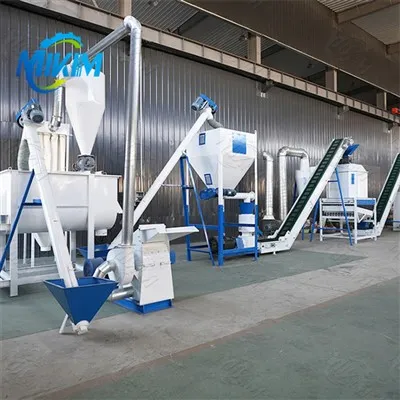
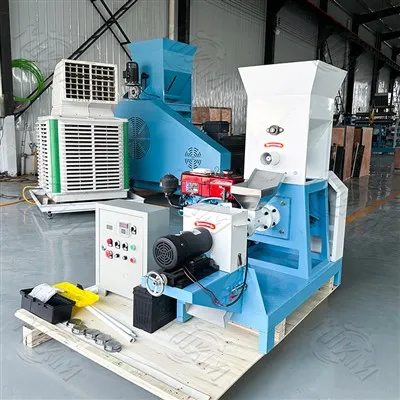
Application and Operation Points of Small Floating Fish Feed Extruder Line
Leave a message
Equipment installation and commissioning are fundamental. Small production lines typically use single-screw extruders with an hourly capacity of 0.2-0.5 tons. During installation, the extruder must be fixed on a flat surface to avoid excessive vibration during operation. The distance between the equipment and the raw material crusher and mixer should be controlled at 1-2 meters to ensure smooth material transport. When wiring, ensure proper grounding to avoid the risk of electric shock. During commissioning, run the machine empty for 10 minutes to check if the screw rotates smoothly without jamming or abnormal noise. Then, add a small amount of raw material for trial production, adjusting the barrel temperature (110-120℃ for ordinary fish feed) and screw speed (150-200 r/min), observing the pellet formation until the pellet surface is smooth and the water resistance time meets the standard.
Raw material pretreatment and parameter matching are crucial. Small-scale production lines typically use conventional raw materials such as corn, soybean meal, and fishmeal. These need to be pre-crushed to 80-100 mesh to ensure uniform particle size and prevent clogging of the extruder molds. The moisture content of the raw materials should be controlled between 15% and 18%. Excessive moisture can cause pellet sticking, while insufficient moisture results in poor extrusion. Different parameters are set for different types of fish feed: when producing floating carp feed, the barrel temperature is increased to 125℃ and the screw speed is adjusted to 180 r/min to enhance extrusion; when producing sinking grass carp feed, the temperature is lowered to 110℃ and the speed is adjusted to 200 r/min to reduce extrusion.
Daily operation and maintenance must be standardized. Before starting the machine, check the hopper for foreign objects and clean any residual raw materials from the mold holes. During production, continuously monitor the equipment's operating status. If abnormal pellet hardness occurs, adjust the pressure parameters promptly. If blockage occurs, stop the machine immediately for cleaning; do not force it to restart. After production, rinse the barrel and screw with clean water to remove residual raw materials and prevent mold growth. Regularly check the wear of the screw and die, replacing them promptly when wear is severe to ensure optimal extrusion.
Compared to small-scale pet food production lines for cats and dogs, fish feed pellet extruders place greater emphasis on precise temperature and pressure control, while pet food equipment focuses more on the uniformity of raw material mixing and the protection of heat-sensitive components. By mastering these operational points, small-scale aquaculture farmers can produce high-quality feed using fish feed pellet extruders, reducing farming costs.
Related equipment



about Us
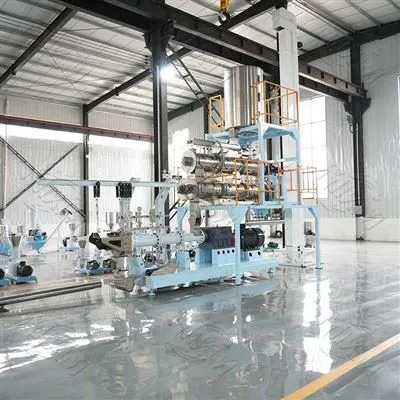
MIKIM's fish feed pellet production lines and supporting machinery offer excellent value for money. Not only are they affordable, eliminating middlemen markups and allowing small and medium-sized enterprises (SMEs) and fish farmers to purchase complete sets of equipment at reasonable costs, but they also boast exceptional efficiency. The fully automated process, from raw material crushing and precise ingredient mixing to extrusion pelleting and maturation, is completed in one continuous flow. This results in high starch gelatinization rates and uniform pellet formation, significantly improving production efficiency and feed quality, truly achieving "low cost, high output." Choosing a MIKIM fish feed pellet production line means enjoying comprehensive pre-sales and after-sales service, including 24-hour online customer support, a one-year warranty on the entire machine, professional on-site installation, commissioning, and maintenance, and a stable supply of spare parts. Customers can buy with confidence and use with peace of mind, with both excellent value and service quality!
Customer visit

Certificate of Honor

FAQ
1. What is the price of the pet food extruder machine?
The price ranges from approximately $1,500-$55,000
2. Do you provide maintenance services for your customers?
Yes, we offer comprehensive after-sales maintenance services to our customers.
If you would like to learn more about MIKIM machinery, please contact us. We offer one-stop service and welcome your inquiries!!!