


Can fish food makers improve feed quality
Leave a message
Fish farmers who have used extruded feed know that fish and shrimp fight fiercely for feed made by extruders, grow faster, and are less prone to disease. Some say this is a "placebo effect," but actual data shows that fish and shrimp fed extruded feed have a 10%-15% higher survival rate and a 7-10 day shorter growth cycle than those fed regular feed. This is because extruded feed pelleting machines improve feed quality. Is this its main characteristic? Specifically, in what ways does it improve quality?
Improved Digestibility: Ensuring Fish and Shrimp Absorb Everything They Eat
1.Feed produced by ordinary pellet mills doesn't fully break down the starch and protein in the raw materials, placing a heavy digestive burden on fish and shrimp (for example, corn starch has a digestibility of only 60%). The high-temperature, high-pressure environment of an extrusion pellet mill significantly improves digestibility:
2. Fully Gelatinized Starch: Digestibility Increases from 60% to 90% High temperature (110-160℃) and high pressure allow the starch in the raw materials to be completely gelatinized (gelatinization degree exceeds 90%), like cooking raw rice into cooked rice, making it easier for fish and shrimp to digest. For example, when sea bass eats extruded feed, the starch digestibility increases from 65% with ordinary feed to 92%, meaning that for the same 1 pound of feed, extruded feed provides 30% more energy, resulting in faster growth for fish and shrimp.
3. More Optimal Protein Denaturation: More Efficient Absorption High temperature allows for moderate (not excessive) denaturation of proteins, breaking down their complex structure and transforming them into small peptide molecules that can be directly absorbed by the fish and shrimp's digestive system. For example, the absorption rate of crude protein in fishmeal is only 70% in ordinary feed, but can be increased to over 85% in extruded feed, reducing protein waste and lowering the nitrogen content in feces (reducing water pollution).
Enhancing Palatability: Making Fish and Shrimp "Want More and More to Eat"
1. Extruded feed has significantly better palatability than regular feed, mainly thanks to two "tricks": 1. Generating Natural Aroma: No Need for Too Many Attraction Agents
High-temperature heating causes the amino acids (such as glutamic acid) and reducing sugars in the raw materials to undergo a Maillard reaction, producing a natural aroma similar to toasted bread or roasted grains-this aroma is highly attractive to fish and shrimp. For example, grass carp will actively swim towards it after smelling it, eliminating the need for expensive attraction agents (saving 5% on additive costs).
2. Softer Pellets: Suitable for Fish and Shrimp of Different Sizes
Extruded feed pellets contain air bubbles, resulting in a softer texture (like soft bread) than regular feed. Small fry can easily chew them, and adult fish can eat them without difficulty. Regular feed pellets are dense and hard, making them difficult for small fry to chew, easily leading to uneven feeding (some fish eat too much, while others don't get enough).
Enhancing Safety: Ensuring Fish and Shrimp "Eat Without Getting Sick"
1. The high-temperature, high-pressure environment of an extrusion pellet mill also acts as a "natural sterilizer": Killing Harmful Bacteria: Such as E. coli and Salmonella A high temperature of 110-160℃ for 20-30 seconds can kill over 90% of harmful bacteria in raw materials (such as E. coli in corn), preventing fish and shrimp from developing enteritis and gill rot. Ordinary pellet mills only operate at 80-90℃, which is insufficient to kill these bacteria, easily leading to illness in fish and shrimp.
2. Destroying Toxins: Such as Aflatoxin Raw materials (especially corn and peanut meal) are prone to aflatoxin growth (highly toxic to fish and shrimp). Ordinary pellet mills cannot destroy this toxin, but the high temperature and pressure of an extrusion pellet mill can reduce aflatoxin toxicity by over 80%. Even if the raw material is slightly moldy, it can be safely used after extrusion (of course, severely moldy raw materials should not be used).



Why Choose Us
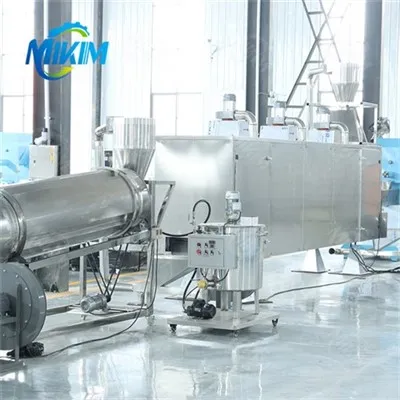
MIKIM boasts extensive experience in poultry feed pellet production lines, significantly reducing the incidence of poultry diseases. Its equipment is not only widely used across various industries domestically but also exported to Southeast Asia, Europe, Africa, and South America, earning a high reputation internationally. This global presence not only demonstrates the adaptability and competitiveness of its products, but also demonstrates the company's experience in adapting to diverse market standards and logistics conditions, enabling it to provide a stable supply chain for its overseas customers. Whether serving large domestic farms or cross-border feed companies, MIKIM can leverage its global service network to ensure a consistent, high-quality experience.
For more information on process flow design, equipment layout, factory construction plans, individual equipment pricing, or turnkey project proposals, please feel free to contact us!!!

FAQ
1. What is the price of the Pellet feed extruder?
The price ranges from approximately $5,000-$36,000
2. Do you provide maintenance services for your customers?
Yes, we offer comprehensive after-sales maintenance services to our customers.


