


Does a fish feed floating pellet making machine Make Floating Feed?
Leave a message
content
Common Problem 1: Poor buoyancy of feed, sinking quickly after entering water (most frequent occurrence)
The core cause is insufficient starch gelatinization and insufficient extrusion pressure in the floating fish feed making machine, resulting in the failure to form a porous structure inside the pellets, making their density greater than that of water. Solutions:
1. Adjust the barrel temperature, increasing the temperature of the middle and rear sections of the barrel by 5-10℃ (ensuring a temperature of 140-160℃) to extend the maturation time of the raw materials in the barrel and ensure sufficient starch gelatinization;
2. Adjust the die pressure, increasing it to 1.0-1.2MPa. By reducing the die orifice diameter, the extrusion pressure of the floating fish feed maker machine is increased, promoting material expansion and forming a porous structure;
3. Optimize the raw material ratio, increasing the proportion of starch-based raw materials (to 35%-45%) and reducing raw materials with excessive moisture content, while ensuring that the raw material particle size meets the standard (80-100 mesh);
4. Check the screw speed and appropriately reduce the speed to extend the extrusion and maturation time of the raw materials in the barrel.
Common Problem 2: Feed Pellets Collapse and Quickly Disperse After Being Placed in Water
The main causes are improper raw material moisture content, over-expansion, and incomplete cooling, resulting in a loose pellet structure that cannot be shaped. Solutions:
1. Adjust the raw material moisture content to 16%-19%. If the moisture content is too low, add water and stir well. If the moisture content is too high, add a small amount of dry raw material to adjust.
2. Adjust the extrusion parameters of the floating fish food pellet maker machine. Lower the barrel temperature by 5-10°C, appropriately increase the screw speed, and reduce the extrusion time to avoid over-expansion.
3. Improve the cooling and shaping process. Extend the cooling time to 20-25 minutes to ensure the pellets cool to room temperature. If the pellet moisture content is too high, increase the drying time to control the moisture content below 12%.
4. Inspect the die head, clean any residue from the die head orifice, and replace severely worn die heads to ensure uniform pellet formation.
Common Problem 3: Feed Pellet Adhesion and Irregular Formation
Causes: The floating feed extruder machine's barrel temperature is too high, the feeding speed is too fast, and the die head is clogged, causing the extruded pellets to fail to separate quickly and adhere together. Solutions: 1. Reduce the temperature of the front section of the barrel (adjust to 120-125℃) to avoid excessive plasticization and adhesion of the raw materials; 2. Control the feeding speed, appropriately slowing it down to ensure the raw materials enter the barrel evenly and at a constant speed, avoiding excessive feeding that leads to material accumulation and adhesion; 3. Clean the die head promptly, cleaning the die head orifices every hour of production to prevent residual clumps from clogging the orifices and causing pellet adhesion; 4. During the cooling process, spray a small amount of food-grade talcum powder (spray evenly, avoiding excessive application) before the pellets cool to prevent adhesion.
Common Problem 4: Burnt Feed Pellets with an Unpleasant Odor
Causes: The floating feed making machine's barrel temperature is too high, and the raw materials remain in the barrel for too long, causing the raw materials to burn and deteriorate. Troubleshooting Tips: 1. Immediately reduce the temperature of each section of the barrel to the standard range (front section 120-130℃, middle section 140-150℃, rear section 150-160℃), and continue production after the temperature stabilizes; 2. Appropriately increase the screw speed to shorten the residence time of the raw material in the barrel and avoid overheating; 3. Clean the screw and barrel. After stopping the machine, disassemble the screw and barrel and clean out any burnt material residue to prevent it from affecting subsequent production; 4. Inspect the raw material. If any parts are spoiled or clumped, immediately screen and remove them, and replace with fresh raw material.
Common Problem 5: Unstable Floating Time, Large Batch Variations
Causes: Inaccurate parameter adjustment of the floating fish feed extruder machine, fluctuations in raw material ratios, and inadequate equipment maintenance, resulting in significant differences in buoyancy between different batches of feed. Solutions include: First, establishing a parameter recording system. For each batch of production, record parameters such as raw material ratio, humidity, barrel temperature, pressure, and rotation speed to ensure consistent parameters in subsequent production. Second, strictly controlling raw material quality to ensure stable raw material ratios and uniform particle size and humidity to avoid batch-to-batch differences. Third, regularly maintaining the equipment, checking the wear of the screw and die, replacing vulnerable parts promptly, and regularly calibrating the equipment's temperature and pressure sensors to ensure accurate parameters. Fourth, after each batch of production, sampling tests should be conducted on buoyancy. If the floating time is not up to standard, parameters should be adjusted promptly.
Related equipment
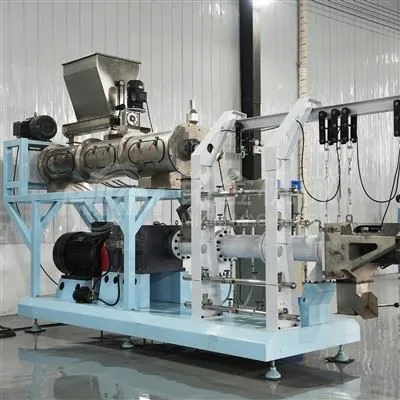


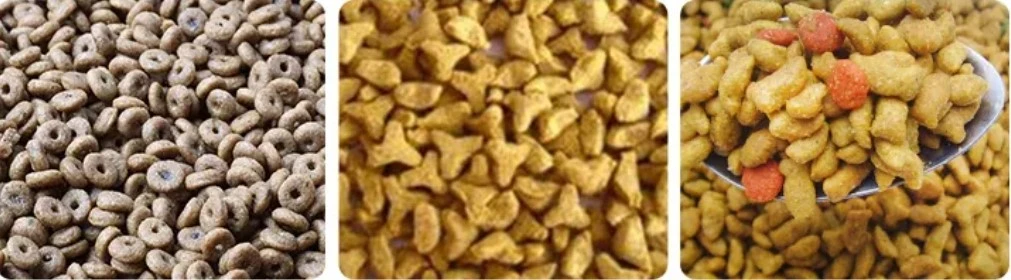
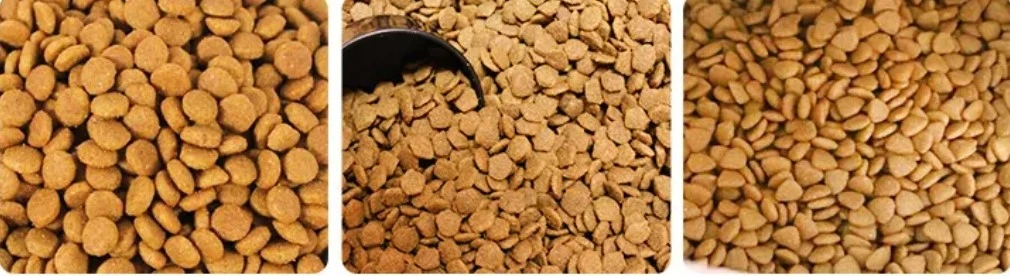
Finished Product Display
about Us
MIKIM's fish feed pellet production lines and supporting machinery offer excellent value for money. Not only are they affordable, eliminating middlemen markups and allowing small and medium-sized enterprises (SMEs) and fish farmers to purchase complete sets of equipment at reasonable costs, but they also boast exceptional efficiency. The fully automated process, from raw material crushing and precise ingredient mixing to extrusion pelleting and maturation, is completed in one continuous flow. This results in high starch gelatinization rates and uniform pellet formation, significantly improving production efficiency and feed quality, truly achieving "low cost, high output." Choosing a MIKIM fish feed pellet production line means enjoying comprehensive pre-sales and after-sales service, including 24-hour online customer support, a one-year warranty on the entire machine, professional on-site installation, commissioning, and maintenance, and a stable supply of spare parts. Customers can buy with confidence and use with peace of mind, with both excellent value and service quality!!!
Customer visit

Certificate of Honor

FAQ
1. What is the price of the best Automatic Dog Food machine?
The price ranges from approximately $1,500-$55,000
2. Do you provide maintenance services for your customers?
Yes, we offer comprehensive after-sales maintenance services to our customers.
To explore which twin screw pet food machine model is suitable for your product line, view our full range of equipment or contact our team for a customized production plan.


