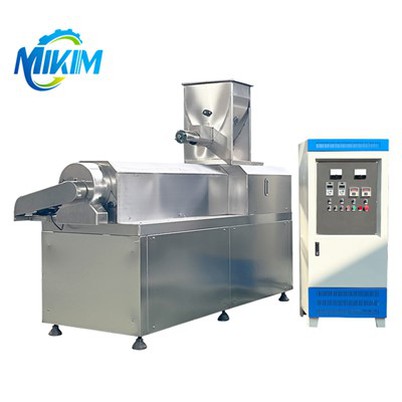
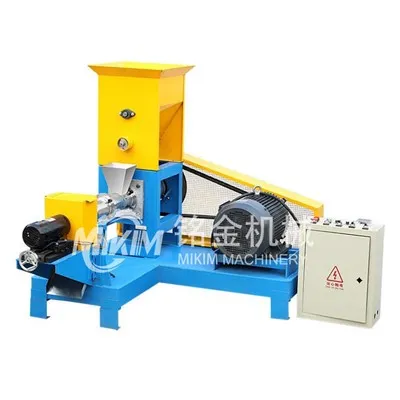
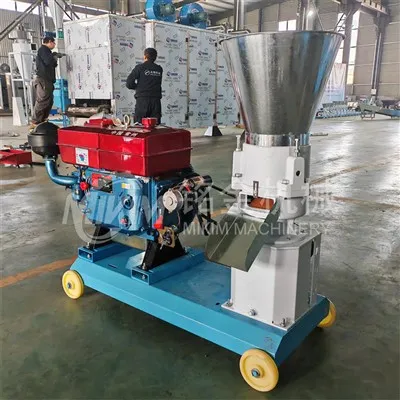
Floating Fish Feed Pellet Making Machine: DGP Series Line Guide
Leave a message
What a Floating Fish Feed Pellet Making Machine Does
A floating fish feed pellet making machine, also called a fish feed extruder, turns powdered ingredients into aquatic feed pellets for fish, catfish, shrimp, crab and other species. The extruder cooks and shapes the mash under controlled temperature and pressure, producing a porous pellet structure that keeps the feed floating at the water surface.
Floating time can be adjusted by changing the degree of extrusion, so one line can be matched to different species and feeding habits. For small and medium farms raising catfish, tilapia and shrimp, this flexibility is the main reason floating feed extrusion has become the standard route.
Raw Material Requirements
Typical floating fish feed recipes use corn meal, flour, wheat middling, wheat bran, rice bran, soybean meal, cottonseed meal, fish meal, bone meal and meat meal. The material should be in powder form with a moisture content of about 20%-25% and a fineness of 60-80 mesh, so that it blends evenly and gelatinizes completely during extrusion.
Formula adjustments follow the target species. Carnivorous fish need a higher share of fish meal, while omnivorous species tolerate more plant-based ingredients without losing growth performance.
Moisture content: about 20%-25% before extrusion
Fineness: 60-80 mesh for even blending and full gelatinization
Protein source: fish meal level set by species, not by habit
Protein meals: soybean, cottonseed, bone and meat meals as formula allows
Dry Type and Wet Type Machines
Fish feed machines are classified as dry type and wet type, and the choice changes both the equipment list and the operating cost.
The dry type machine is simple and easy to operate and works without a steam supply, which suits farms with limited utilities and modest output. The wet type machine is fitted with a conditioner and requires a steam boiler as supporting equipment; at the same motor power it delivers higher yield and more thorough starch gelatinization, which matters when high expansion and stable floating behaviour are required.
| Item | Dry type | Wet type |
|---|---|---|
| Steam supply | Not required | Steam boiler required |
| Conditioner | Not fitted | Fitted |
| Starch gelatinization | Basic | More thorough |
| Output at equal motor power | Lower | Higher |
| Best fit | Small farms, simple operation | High expansion, stable floating feed |
Technical Specifications of the DGP Series
The DGP series covers a wide capacity band, from 500 kg/h up to 1800-2000 kg/h, with main motor power from 37 kW to 132 kW. Separate feeder and cutter motors keep ingredient dosing and pellet cutting synchronized.
| Parameter | DGP-100 | DGP-120 | DGP-135 | DGP-160 | DGP-200 |
|---|---|---|---|---|---|
| Capacity (kg/h) | 500 | 600-700 | 800-900 | 1000-1200 | 1800-2000 |
| Main motor (kW) | 37 | 55 | 75 | 90 | 132 |
| Feeder motor (kW) | 1.5 | 1.5 | 1.5 | 2.2 | 3 |
| Cutter motor (kW) | 1.5 | 1.5 | 2.2 | 2.2 | 3 |
| Screw diameter (mm) | 100 | 120 | 135 | 160 | 200 |
| Weight (kg) | 1500 | 1800 | 2000 | 2500 | 3200 |
Different moulds can be selected to produce pellets with diameters from 1 mm to 20 mm in various shapes. The screw sleeve uses an inlaid alloy steel strip structure, which keeps service life long even under continuous operation.
Applications and Selection Tips
Floating fish feed lines are used for catfish and tilapia farms that feed at the water surface, for shrimp ponds that need small-diameter sinking or slow-sinking pellets, and for crab culture where pellet shape and water stability are critical. The adjustable extrusion degree lets the same line produce pellets of different density and floating behaviour for different ponds.
Match capacity and motor power to planned output: a DGP-100 suits a small farm producing around 500 kg/h, while a larger operation should look at the DGP-200 at 1800-2000 kg/h. Choose the mould diameter according to the target species, since pellet size drives eating efficiency and floating behaviour. For wet type operation, plan the steam boiler and conditioner in the layout from the start.
Keep raw material moisture near 20%-25% and fineness at 60-80 mesh
Verify available electrical supply against installed motor power
Inspect the screw sleeve and die on a fixed interval, because wear changes pellet shape and floating stability
Run a trial batch after every mould change
FAQ
Q: How is floating behaviour controlled?
By the degree of extrusion. Changing the extrusion conditions alters pellet density and the porous structure, which sets how long the pellet stays at the surface.
Q: Do I need a steam boiler?
Only for a wet type machine. The wet type uses a conditioner and a steam boiler; the dry type runs without steam and is simpler for small farms with limited utilities.
Q: What moisture and fineness should the raw material have?
About 20%-25% moisture and 60-80 mesh fineness. That combination blends evenly and gelatinizes fully, which supports stable pellet expansion.
Q: Which DGP model fits a small farm?
The DGP-100 at 500 kg/h with a 37 kW main motor. Larger farms can step up through the DGP-120, DGP-135 and DGP-160 to the DGP-200 at 1800-2000 kg/h.
Q: Can one line make both floating and sinking pellets?
Yes. Selecting a different mould and adjusting the extrusion conditions changes pellet density, so the same extruder can produce floating, slow-sinking or sinking feed for different species.
Q: What pellet diameters are available?
Moulds cover 1 mm to 20 mm. Small diameters suit shrimp and young fish, while larger diameters are used for adult catfish and tilapia.